
What Is Injection Molding?
Injection molding is a manufacturing technique that uses a mold to shape molten material into a desired form. The material is injected into a mold under high pressure, and once cooled, it solidifies into the exact shape of the mold cavity. This process is ideal for producing high volumes of parts with consistent quality and intricate designs.
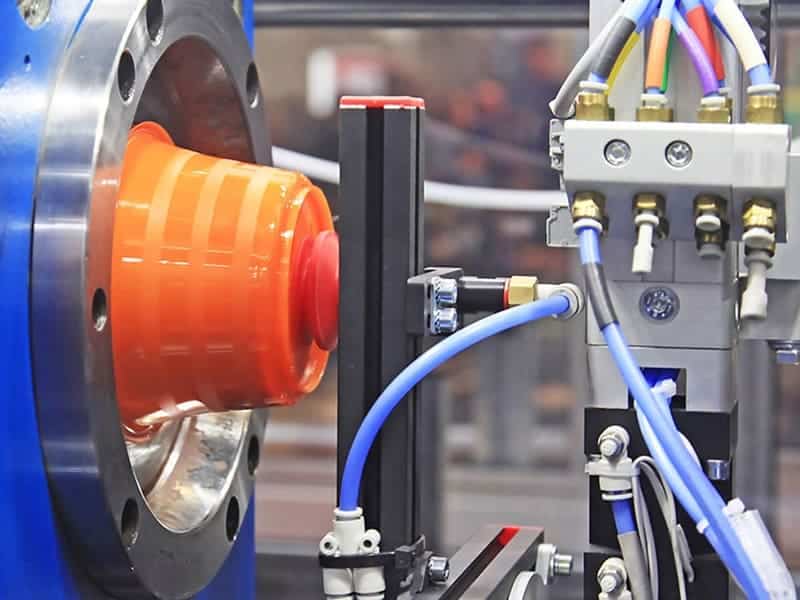
The injection molding process begins with the melting of plastic or other material, which is then injected into a mold cavity. The material is kept under pressure until it cools and solidifies, at which point the mold is opened, and the part is ejected. The process can be highly automated, with minimal intervention required once the system is set up, making it suitable for large-scale manufacturing.
The Evolution of Injection Molding Technology
Injection molding has evolved significantly since its inception. Early molds were manually operated, and the materials used were relatively limited. However, with advancements in material science, computer-aided design (CAD), and automation, modern injection molding allows for the production of parts with greater precision and complexity at faster rates. These technological improvements have expanded the range of materials available and increased production efficiency.
How Injection Molding Works
Injection molding works by melting the raw material, which is then injected into a mold cavity through a nozzle. The mold is held under high pressure, forcing the molten material to fill every crevice of the mold. After a set cooling time, the part solidifies and is ejected from the mold. The cycle is then repeated with new material to create the next part.
Step-by-Step Process of Injection Molding
Take a deep look at the Step-to-Step to Injection Molding Process
Nine Types of Injection Molding
1. Multi-Shot Injection Molding
Multi-shot injection molding injects two or more different materials into a single mold in sequence, forming a part with multiple layers or distinct material properties in one molding cycle. It is a good fit for products that need soft-touch grips, multi-color designs, or a combination of rigid and flexible materials in a single component.
2. Gas-Assisted Injection Molding
Gas-assisted injection molding introduces nitrogen or another gas into the mold cavity during filling to hollow out thicker sections of the part. This suits parts where reducing material weight and usage matters, while still maintaining structural strength and a clean surface finish.
3. Water-Assisted Injection Molding
Water-assisted injection molding uses pressurized water instead of gas to hollow out the interior of a molded part, creating internal channels while the outer surface solidifies. It works well for parts with thick sections or complex geometries that need faster cooling cycles and a smoother interior surface than gas-assist can typically achieve.
4. Thin-Wall Injection Molding
Thin-wall injection molding forms parts with very thin and uniform wall sections using fast injection speeds and precise pressure control. It is typically used for lightweight and material-saving components such as packaging, electronics housings, or consumer product casings where wall thickness needs to stay minimal and consistent.
5. Micro Injection Molding
Micro injection molding produces extremely small parts, sometimes weighing only fractions of a gram, using specialized micro-scale equipment and molds. It is suited to miniature components in medical devices, electronic connectors, or precision instruments where tight tolerances are needed at a very small scale.
6. Precision Injection Molding
Precision injection molding relies on specialized equipment and mold designs to hit tight dimensional tolerances and refined surface finishes. It is the choice for parts where dimensional accuracy is critical, such as aerospace components or medical devices.
7. Rapid Injection Molding
Rapid injection molding uses low-cost and fast-turnaround tooling, such as aluminum molds or 3D-printed inserts, to produce parts in days rather than weeks. It works well for prototyping, bridge production, and low-volume runs before a project commits to full production tooling.
8. Scientific Injection Molding
Scientific injection molding relies on data-driven, decoupled process control, separating the fill, pack, and hold phases while monitoring cavity pressure and temperature to keep every cycle repeatable. It fits high-volume production where part-to-part consistency and documented process data are essential, such as medical devices or other regulated industries.
9. Clear Injection Molding
Clear injection molding shapes optically transparent materials while carefully controlling flow and cooling to avoid haze, streak lines, or internal stress that would distort clarity. It is the right approach for parts where transparency is functional, like lenses, light covers, or medical device windows.
Learn all the Types of Injection Molding Processes
Understanding Injection Molding Materials
In injection molding, material selection plays a pivotal role in determining the properties, functionality, and cost-effectiveness of the final product. With a variety of materials available, understanding their properties and applications is critical for optimizing the molding process. Below, we explore the most commonly used materials in injection molding and their unique characteristics.
Thermoplastics
Thermoplastics are the most common choice in injection molding because they melt, flow, and re-solidify without a permanent chemical change, which means scrap and runners can be reprocessed.
- Common types: Polyethylene (PE), polypropylene (PP), polycarbonate (PC), polyvinyl chloride (PVC)
- Typical uses: Consumer goods, packaging, automotive parts, electronics housings
Thermosets
Thermosets undergo a permanent chemical cure during molding. Once set, they can’t be re-melted or reprocessed, which trades away recyclability for heat resistance and rigidity.
- Common types: Epoxy, phenolic, melamine resins
- Typical uses: High-heat environments, electrical components, industrial parts needing dimensional stability
Elastomers and Rubber Materials
Elastomers aren’t a separate material category. Each one is either a thermoplastic or a thermoset underneath. What makes it an elastomer is elasticity: it stretches to several times its original length and springs back to shape. Natural rubber and silicone cure through cross-linking, which locks the material’s shape and gives it resistance to compression set under sustained load.
- Thermoplastic elastomers (TPE): Processed like thermoplastics and are reprocessable.
- Rubbers (silicone, natural rubber): Cured like thermosets and are not reprocessable.
- Typical uses: Seals, gaskets, cushioning, vibration isolation
Biodegradable Plastics
Biodegradable plastics such as PLA, PBS, and PHA offer a lower-impact alternative to standard petroleum-based plastics, breaking down naturally after their service life. They are commonly used in packaging, disposable food-service items, and short-life consumer goods where compostability matters more than long-term durability.
Key Components of the Injection Molding Machine
The Injection Unit
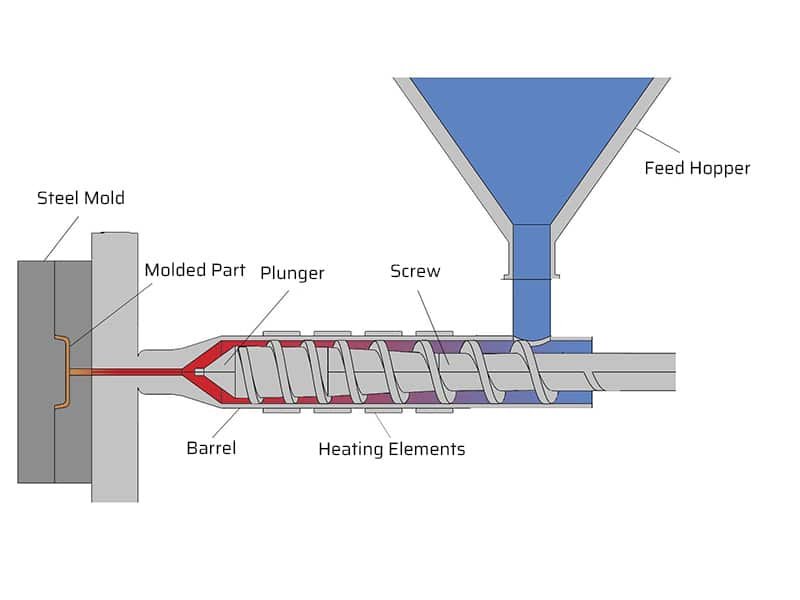
The injection unit is where the material is injected into the mold cavity. It consists of a heated barrel, a screw, and a nozzle. The screw rotates to melt the material, and then it is injected into the mold through the nozzle under high pressure.
The Clamping Unit
The clamping unit holds the two halves of the mold together during injection. It applies enough force to keep the mold closed and prevent material from leaking out under pressure.
The Ejector Mechanism
The ejector mechanism removes the molded part from the mold once it has cooled. It typically uses pins or a plate, driven by the clamping unit, that push the part out of the cavity without causing damage.
The Mold: Types and Materials
Unlike the injection unit, clamping unit, and ejector mechanism, the mold is separate tooling that attaches to the machine and shapes each part. Molds are typically made from high-strength materials like steel or aluminum, and their design depends on the complexity of the part being produced. Common features include cooling channels, ejector pins, and gates.
Find out all the injection mold types and how does it classified.
Factors Influencing the Injection Molding Process
There are 8 important injection molding parameters. The injection molding parameters and several factors can significantly affect the outcome of the injection molding process. From temperature control to cycle times, each of these variables must be carefully balanced to ensure the production of high-quality, cost-effective molded parts.
Temperature Control
Temperature control is a critical factor in injection molding, as it impacts material flow, curing rates, and part quality. The optimal temperature settings will vary based on material type and part geometry. Maintaining the correct temperature throughout the injection molding process ensures that the material flows smoothly into the mold and solidifies consistently, preventing defects like warping, sink marks, or short shots.
Injection Speed and Pressure
The injection speed and pressure at which material is introduced into the mold have a significant impact on part quality. Too high a speed can cause the material to flow too rapidly, leading to air entrapment, flashing, or uneven filling. Conversely, too low a speed can result in incomplete fills or poor mechanical properties. Similarly, the injection pressure must be carefully controlled to ensure proper filling of the mold while preventing defects such as flashing, sink marks, or internal voids.
Cycle Time
Cycle time is a crucial factor in injection molding, as it dictates both production rates and cost efficiency. Optimizing cycle time involves balancing speed with precision. Shortening the cycle time can increase throughput, but if done improperly, it may compromise part quality. Thus, it is essential to ensure that cycle time is optimized for both production efficiency and part performance.
Cooling Time
Cooling time typically accounts for the largest share of the total cycle, so it has an outsized effect on both part quality and throughput. The right cooling time depends on wall thickness, material, and mold temperature, and it’s usually fine-tuned alongside the cooling channel design. Cooling too briefly can leave the part soft enough to warp, shrink unevenly, or deform during ejection, while cooling longer than necessary adds cost without improving the part.
Clamping Force
Clamping force holds the two mold halves together while molten material is injected under pressure. Too little, and the mold can crack open slightly, letting material escape and leaving flash. Too much adds unnecessary wear without improving part quality. The right amount depends on the part’s projected area and is calculated for each mold.
Mold Design and Development
Mold design is a critical aspect of the injection molding process, directly influencing both the functionality and aesthetics of the final product. Effective mold design ensures efficient manufacturing, reduces defects, and maximizes the performance of the molded parts. A well-designed mold can also optimize cycle times and reduce production costs. Here’s a deeper look into the key elements of mold design and development.
Designing for Manufacturability: The Key Considerations
Designing for manufacturability (DFM) is a crucial concept in mold design, as it focuses on creating products that are easy to manufacture while minimizing complexity, cost, and potential issues. Key considerations include the ease of material flow, the need for part ejection, and the precision required for the mold’s dimensions.
DFM principles ensure that the design can be efficiently scaled for mass production, without sacrificing part integrity or quality. Moldability considerations such as parting lines, the number of cavities, and ease of maintenance should be evaluated from the outset. Simplifying the design, while ensuring that functionality is not compromised, is vital for achieving cost-effective, high-quality molded parts.
Defects of Injection Molding
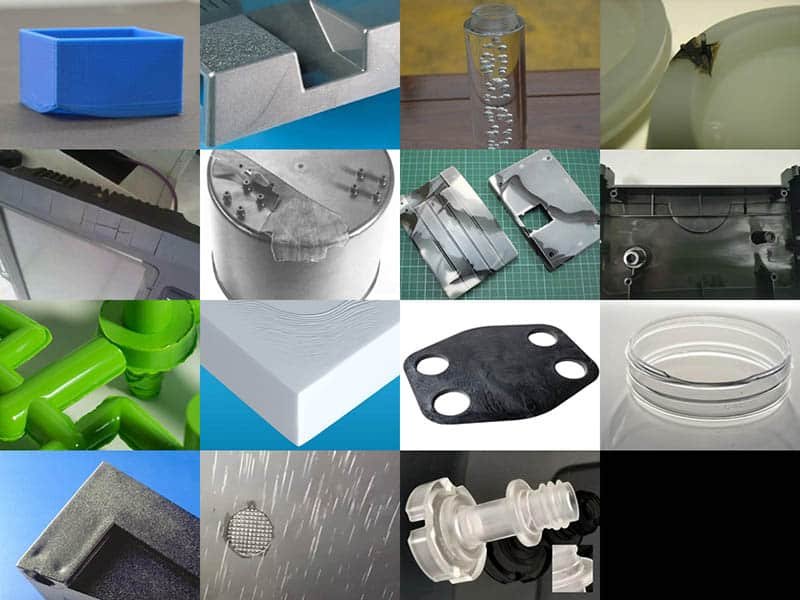
Even with careful attention to detail, defects can occur in the injection molding process. Injection molding defects can take many forms, including surface imperfections, dimensional inconsistencies, and mechanical weaknesses. Common issues include warping, sink marks, short shots, and flash. Identifying the root causes of these defects is essential to implement effective corrective actions, whether by adjusting processing parameters, revising mold design, or changing material choices.
Injection Molding Defects
Warping and Shrinkage
Warping occurs when uneven cooling or residual stresses cause a part to deform after it’s ejected from the mold. This is a common defect in thin-walled parts or those with inconsistent thickness. Shrinkage is the contraction of the material as it cools and hardens, and if not properly controlled, it can cause dimensional inaccuracies or warping.
The key to preventing warping and shrinkage is to ensure uniform cooling, maintain appropriate mold temperatures, and optimize the material’s properties and flow behavior.
Air Traps and Voids
Air traps occur when pockets of air become trapped in the mold cavity, leading to incomplete filling, voids, or surface blemishes. These defects are often caused by insufficient venting or improper mold cavity design.
To prevent air traps and voids, it’s essential to ensure that venting is properly integrated into the mold design, allowing air to escape during the injection process.
Surface Finish Problems
Surface finish defects, such as scratch marks, tool marks, or blow holes, can impact the aesthetic quality of a part. These issues often arise from improper mold surface preparation, material contamination, or temperature inconsistencies.
Remedies involve improving mold surface quality, controlling material properties, and adjusting processing conditions to prevent blemishes.
Flash and Gate Marks
Flash refers to excess material that escapes from the mold cavity and forms a thin, unwanted layer along the parting line. Gate marks are the visible marks left on the part at the gate entry point. Both can be avoided by adjusting gate design, controlling injection pressure, and ensuring that the mold is correctly aligned during the molding process.
Learn all the types of injection molding defects.
Benefits of Injection Molding
Injection molding is one of the most widely used manufacturing processes due to its many advantages, especially for mass production of complex, high-precision parts. This technique offers a range of benefits.
Quality Control in Injection Molding
Injection molding is one of the most widely used manufacturing processes, known for producing high-precision parts in large volumes. However, achieving consistent quality in every product requires a stringent approach to quality control. The quality control process ensures that each part produced meets the required standards, minimizing defects and optimizing production efficiency.
Quality Assurance in Molding
Quality assurance (QA) in injection molding is crucial to maintaining consistency, reliability, and precision across production runs. The injection molding process involves many variables — material properties, mold design, machine settings, and environmental factors — all of which can impact the final product. Without a robust QA framework, even the smallest inconsistency could lead to defective parts, costly reworks, or even complete batch failures.
QA processes typically begin at the design phase, where engineers ensure that the mold design is optimized for efficient manufacturing and that the materials used meet the desired mechanical properties. During the production process, QA teams continuously monitor key metrics, from temperature and pressure to cycle times, to guarantee that each mold cycle produces a part that meets predefined tolerances.
Measuring Part Dimensions and Tolerances
Accurate measurements of part dimensions and tolerances are fundamental in injection molding. These measurements determine whether the part can be used in its intended application or needs adjustments. During the molding process, tools such as calipers, micrometers, and digital measuring devices are used to assess the critical dimensions of molded parts. For instance, if the part requires a precise fit in an assembly, it is essential that every dimension falls within the acceptable tolerance range.
Tolerance levels are defined based on the application requirements. Tight tolerances are necessary for high-precision components, such as those used in medical devices, while less stringent tolerances may be sufficient for less demanding applications. Dimensional measurement, combined with a well-defined tolerance system, ensures that parts meet specifications, reducing defects and minimizing post-production rework.
Visual Inspections vs. Automated Testing
Visual inspection and automated testing are two of the primary methods used in quality control for injection molding. Visual inspections are often the first step in detecting surface defects such as discoloration, cracks, or scratches. Operators can visually inspect each part to ensure it meets cosmetic and functional requirements. While effective for identifying obvious flaws, visual inspections are limited by human judgment and the inspector’s ability to detect minor defects.
On the other hand, automated testing systems, such as machine vision systems, offer a more efficient and accurate approach to quality control. These systems use cameras and sensors to detect imperfections, measure dimensions, and verify the part’s integrity in real-time. The use of automated systems can significantly reduce the time spent on inspections while increasing accuracy and repeatability.
Process Control: Ensuring Consistency and Precision
Process control plays a pivotal role in maintaining the consistency and precision of injection molding operations. Various factors, including machine settings, material properties, and environmental conditions, must be tightly controlled to ensure the production of high-quality parts. Key process parameters such as injection pressure, mold temperature, and cycle time are continuously monitored to prevent deviations that could lead to defects.
Effective process control ensures that each part is produced with the same characteristics, regardless of production volume or time elapsed. By establishing standard operating procedures (SOPs) and leveraging advanced monitoring systems, manufacturers can achieve tighter control over the molding process, enhancing overall efficiency and reducing the likelihood of defective parts.
Mold Testing and Validation
Mold testing and validation are essential steps in the injection molding process to ensure that molds perform as expected. Before production begins, prototype molds are tested to assess their performance and identify any issues that might arise during full-scale manufacturing. This testing phase often includes a series of trial runs where parameters such as material flow, cooling efficiency, and mold integrity are thoroughly evaluated.
Mold validation also involves assessing the mold’s durability and resistance to wear and tear over time. High-quality molds are crucial for producing consistent parts, and proper testing helps to identify potential weaknesses that could lead to production delays or part defects. Mold testing and validation are key to ensuring that the manufacturing process runs smoothly and that the final product meets all required specifications.
Injection Molding Applications Across Industries
Injection molding’s versatility makes it indispensable across various industries. From automotive to consumer electronics, injection molding enables the mass production of parts with high precision, making it a favored choice for manufacturers worldwide.
Automotive Industry: Lightweight, High-Precision Components
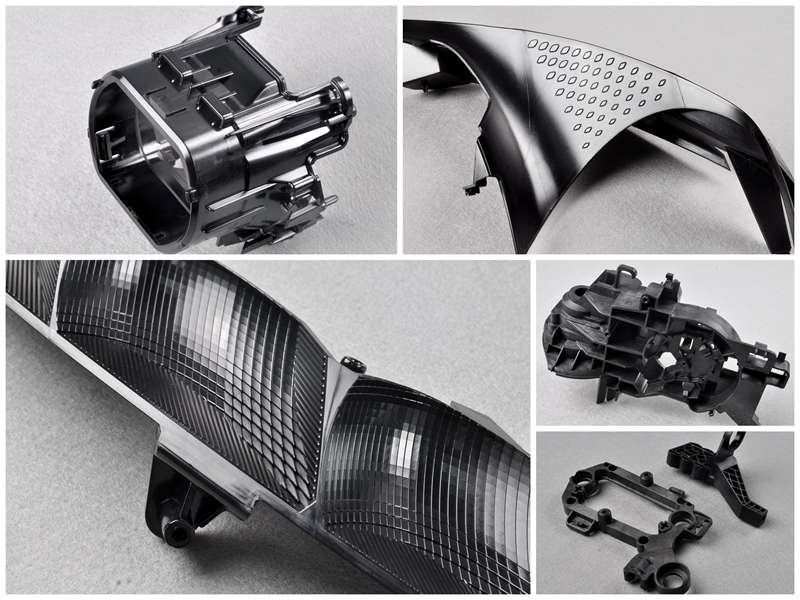
In the automotive industry, injection molding is used to create lightweight, high-precision components that are crucial for vehicle performance and safety. Parts such as dashboards, interior components, and under-the-hood applications are commonly produced using this method. Advanced polymers and reinforcing materials make it possible to produce parts that offer durability and strength while reducing overall vehicle weight.
Medical Devices and Pharmaceutical Packaging
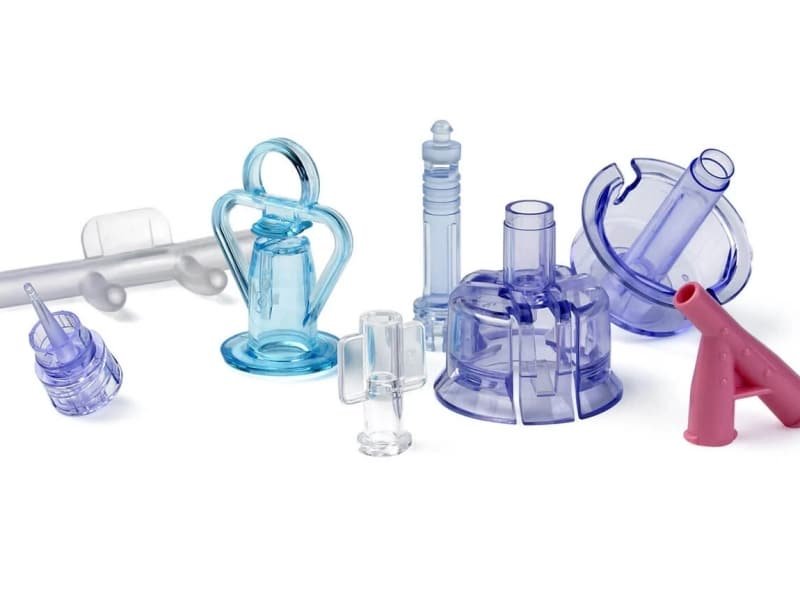
The medical and pharmaceutical industries rely heavily on injection molding to produce components that meet stringent regulatory standards. From syringes and diagnostic tools to drug packaging, injection molding ensures that products are manufactured with high precision and consistency. The ability to mold complex geometries with tight tolerances is critical for medical devices, where even the smallest error can lead to functionality or safety issues.
Consumer Electronics: Durability Meets Design

Injection molding plays a vital role in the production of consumer electronics, where both durability and design are key. Smartphone housings, laptop covers, and electronic enclosures are often injection molded to achieve sleek, lightweight designs that also offer impact resistance. In this sector, the ability to produce parts with fine details and precise dimensions allows for intricate designs that meet both aesthetic and functional requirements.
Packaging Solutions: From Bottles to Caps
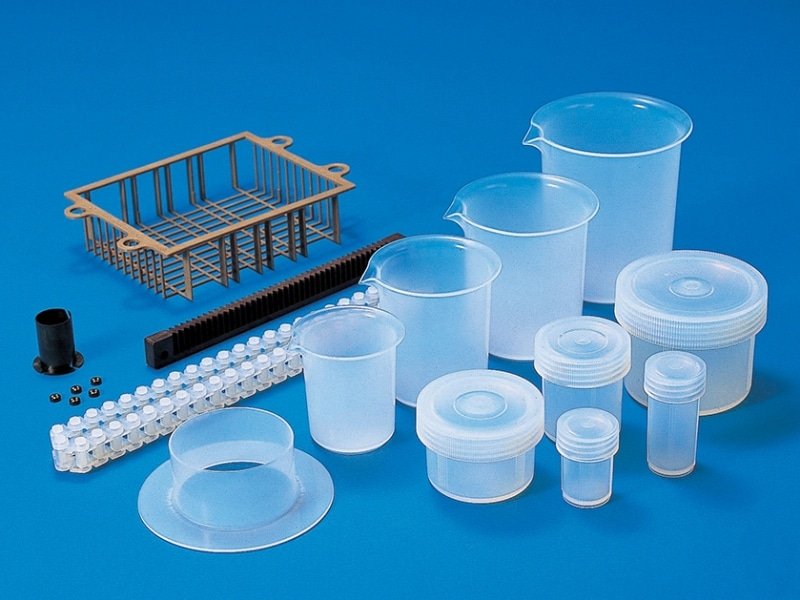
Injection molding is a dominant process in the packaging industry, where speed, consistency, and cost-effectiveness are paramount. Products such as bottles, caps, and containers are molded with high precision to ensure that they function as intended, whether for food, beverages, or pharmaceuticals. The flexibility of injection molding allows for the production of various shapes and sizes, making it an ideal solution for packaging needs.
Home Appliances: Injection Molding’s Role in Efficiency
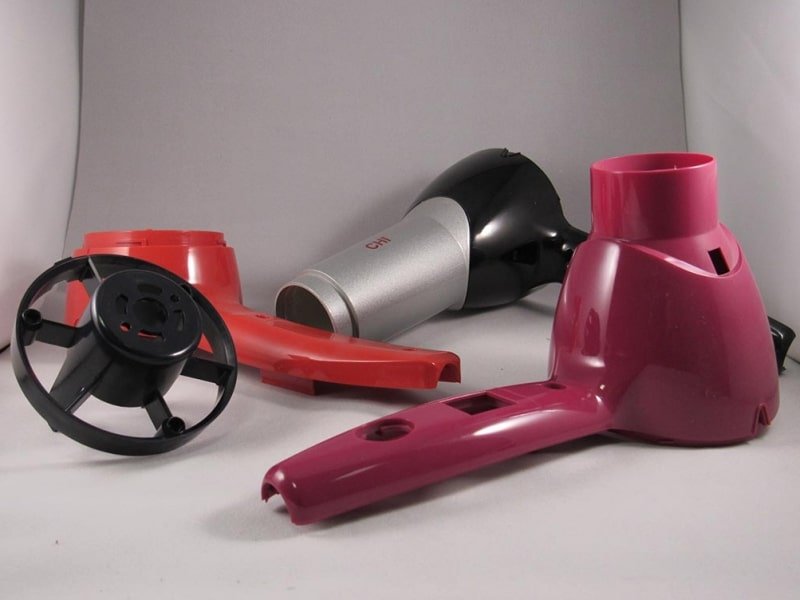
Home appliances, from refrigerators to washing machines, often require injection-molded components for housing, buttons, and various internal parts. Injection molding offers a cost-effective and reliable method of producing these parts in large volumes, helping manufacturers meet high demand while maintaining product quality. With the growing trend toward energy-efficient appliances, injection molding also plays a role in optimizing the production of lightweight and high-performance components.
Choosing an Injection Molding Service Provider
When selecting an injection molding service provider, choosing the right partner is paramount to the success of your project. A skilled and reliable injection molding company can not only ensure the production of high-quality parts but can also help you navigate challenges related to materials, design, and production schedules.
A good injection molding service provider should offer a combination of technical capabilities, excellent customer service, and a track record of successful projects. Working with a well-established company that has invested in the latest technology and has experienced personnel will provide you with peace of mind that your project will be executed to the highest standards.
Evaluating Injection Molding Companies: Key Criteria
When evaluating potential injection molding companies, it is important to assess a few critical criteria to ensure you’re partnering with a provider that aligns with your needs and expectations.
- Technical Capabilities: Assess the company’s range of services and capabilities. Do they have the right equipment to handle your material specifications and part designs? Can they accommodate the complexity of your parts, whether they are simple, multi-cavity, or complex geometries?
- Experience and Reputation: An experienced company will not only have the technical knowledge to handle your project, but also the problem-solving skills that come with handling a diverse set of challenges. Look for companies with a proven track record in your industry or a similar application.
- Certifications and Standards: Depending on the industry, certifications such as ISO 9001 or industry-specific certifications (e.g., ISO 13485 for medical devices) may be essential to ensure that quality standards are being met.
- Capacity and Flexibility: Does the injection molding company have the capacity to scale production if your demand increases? Can they provide flexibility in adjusting production timelines or volumes if needed?
- Customer Support: A reliable molding partner should provide robust customer support, from the initial consultation through to delivery. They should offer clear communication, quick response times, and be open to collaborating on troubleshooting and resolving issues.
The Importance of Experience and Expertise
In injection molding, experience and expertise are essential for producing high-quality parts with minimal defects. Skilled professionals who understand material properties, molding techniques, and potential production challenges can optimize the process and improve results.
Experienced injection molding companies can also suggest the best practices for mold design, material selection, and process optimization based on their extensive knowledge. They are also likely to be proficient in spotting potential design or manufacturing issues early on, preventing costly delays and minimizing the chances of production setbacks.
Additionally, experienced companies often have an established relationship with mold makers, material suppliers, and other industry partners, which can streamline your project timeline and reduce costs.
Understanding Lead Times and Production Costs
When working with an injection molding service provider, understanding lead times and production costs is crucial for planning and budgeting your project.
- Lead times refer to the amount of time it takes from the initial design phase to the delivery of finished parts. This timeline can vary significantly depending on the complexity of the mold design, material sourcing, production schedules, and potential delays. A reliable injection molding partner should be transparent about lead times and provide you with a detailed project schedule that accounts for all stages of production.
- Production costs are another critical factor to consider when choosing a service provider. Injection molding costs are influenced by several variables, such as material choice, mold complexity, production volume, and cycle time. It’s important to understand how these factors will affect the overall cost of your parts.
Erye has years of experience in injection molding; our engineer has compiled 12 Useful Tips to Reduce Injection Molding Cost for you.
How to Work with Your Injection Molding Partner
Effective collaboration with your injection molding service provider is essential for ensuring a smooth, efficient production process. Establishing clear communication channels from the outset and setting expectations can help avoid misunderstandings and delays.
Provide Detailed Specifications
Ensure that your provider has a clear understanding of your part design, material specifications, tolerances, and any other unique requirements from the very beginning. The more detail you can provide, the easier it will be for them to recommend optimal solutions.
Discuss Design for Manufacturability (DFM)
Work closely with your provider during the design phase to make sure your part is optimized for the molding process. They can provide feedback on draft angles, wall thickness, and gate placements, which can save you both time and money in the long run.
Stay Involved During the Prototyping Phase
If you’re developing a new part or working with new materials, prototype molds are an essential step. Regular updates from your molding provider during prototyping ensure that issues are identified early, and adjustments can be made before moving to full-scale production.
Plan for Testing and Quality Assurance
Quality control is crucial to successful injection molding. Set up a plan with your provider for inspecting parts throughout the production process, including visual inspections, dimensional checks, and functional testing.
Address Issues Promptly
If any production challenges arise, address them promptly with your injection molding partner. Open, clear communication can help resolve issues quickly and prevent minor problems from escalating into major setbacks.
By following these best practices and maintaining a collaborative relationship with your injection molding provider, you can ensure that your project is completed on time, within budget, and with the quality you expect.
Conclusion
Injection molding has a profound impact on modern manufacturing, offering unparalleled precision, efficiency, and versatility across industries. As the technology continues to evolve, it opens up new opportunities for sustainable production and advanced design capabilities. To get started with injection molding, it’s essential to work with experienced partners who understand the intricacies of the process and can help guide you toward the best solutions for your specific needs. Preparing for the future of injection molding means staying abreast of emerging trends and technologies, ensuring that your business remains at the forefront of innovation.