Injection molding is a versatile manufacturing process that transforms raw materials into intricate, high-volume components. There are several common types of injection molding processes like gas-assisted injection molding, metal injection molding, liquid silicone injection molding, etc. This article delves into the diverse world of types of injection molding techniques, exploring the key differences between these different types of injection molding.
1. Gas-Assisted Injection Molding
Gas-assisted injection molding is one of the most famous types of injection molding processes. The hollow area formed by adding nitrogen or other inert gases to the mold can reduce the final weight of the product. It can effectively manufacture hollow components such as storage containers and automotive instrument panels. This process is now being adopted in different industries where cost efficiency and lightweight products are the end goal.
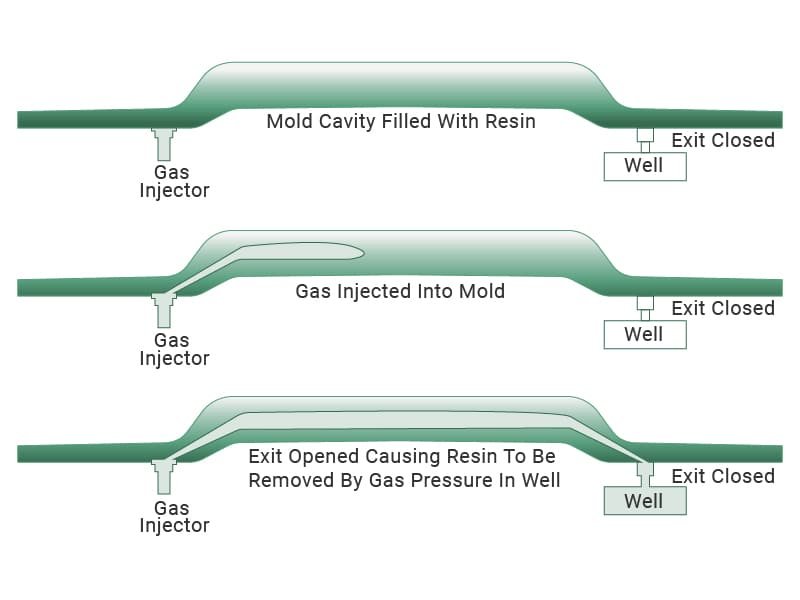
Advantages of Gas-Assisted Injection Molding
- Lightness and cost-effectiveness: Gas-assisted injection molding produces lighter parts, making it highly suitable for the automotive and aerospace sectors.
- Eliminating sink marks: The gas ensures pressure distribution, minimizing sink marks.
- Enhanced aesthetics: Reduced material consumption leads to a smoother surface finish.
2. Water-Assisted Injection Molding
Another common type of injection molding is water-assisted injection molding, it uses a pressurized stream of water to hollow out sections of a part during the molding process. This technique is an evolution of gas-assisted molding, providing superior cooling and hollowing for certain designs. It is particularly useful for creating parts with uniform wall thicknesses or hollow structures.
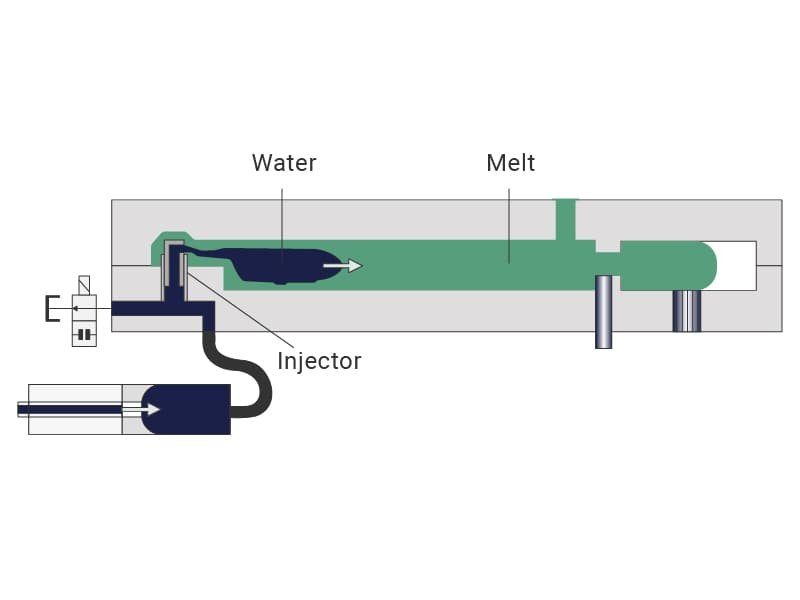
Advantages of Water-Assisted Injection Molding
- Efficient Cooling: Water’s superior thermal conductivity accelerates cooling, reducing cycle times and improving productivity.
- Lightweight Parts: Creates hollow sections in components, reducing weight without compromising strength.
- Material Efficiency: Hollow areas can reduce material usage, saving costs and enhancing sustainability.
- Improved Surface Quality: Produces parts with smoother internal and external surfaces compared to other hollowing methods.
- Complex Geometries: Ideal for manufacturing intricate designs, such as automotive components and pipes.
3. Thin-wall Injection Molding
Thin-wall injection molding is known for manufacturing lightweight and delicate components with a wall thickness, which brings significant benefits.
The decreased wall thickness of the molded part enables cooling, resulting in shorter production cycle times. This process is widely adopted in the consumer electronics and packaging industries, where lightweight, cost-efficient, and visually appealing components are necessary.
Advantages of Thin-wall Injection Molding
- Weight reduction: The result gives a lightweight finish, perfect for consumer electronics and packaging materials.
- Faster cycle times: The wall thickness is less than 1 mm, which allows faster cooling and high production capacity.
- Material savings: This usage of thin walls results in less material, which helps save the overall use of materials.
4. Low-Volume Injection Molding
Low-volume injection molding is an injection molding method designed for producing smaller quantities of plastic parts compared with traditional high-volume manufacturing. It uses standard injection molding principles while focusing on flexibility and adaptability for projects with limited production requirements. This approach is commonly used for pilot production, bridge manufacturing, and specialized components across industries.
Advantages of Low-Volume Injection Molding
- Reduced tooling costs and faster production: Low-volume injection molding requires less expensive tooling options, making it suitable for prototypes and small-batch production.
- Design validation and flexibility: It allows manufacturers to test product designs, materials, and functions before committing to high-volume manufacturing.
- Faster time to market: Shorter tooling lead times and streamlined production help accelerate product development cycles.
5. Clear Injection Molding
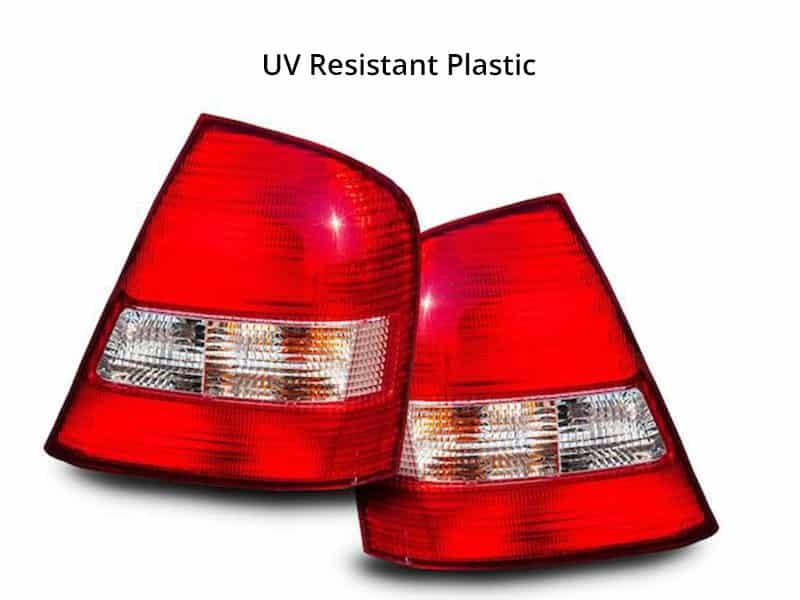
Clear injection molding is a specialized injection molding process used to manufacture transparent plastic parts with high optical clarity and consistent surface quality. By using optical-grade materials and precise mold designs, this process helps minimize defects that can affect transparency. It is widely used in industries such as medical devices, automotive lighting, consumer electronics, and optical components where appearance and light transmission are important.
Advantages of Clear Injection Molding
- High repeatability and production efficiency: Optimized tooling and processing conditions ensure consistent part quality across production runs while helping lower unit costs for medium to high volume manufacturing.
- Excellent optical performance: Controlled molding conditions help maintain light transmission and reduce internal stress, ensuring transparent parts meet optical requirements.
- Design flexibility: This process enables the production of complex transparent components while maintaining functional and aesthetic requirements.
6. Precision Plastic Injection Molding
Precision plastic injection molding is a specialized injection molding approach used to manufacture plastic components that require strict quality requirements. Compared with conventional injection molding, this process places greater emphasis on process control, tooling precision, and inspection throughout production. It is commonly used for applications in medical devices, electronics, automotive, and aerospace where parts must meet demanding functional requirements.
Advantages of Precision Plastic Injection Molding
- Reliable part performance: Precision plastic injection molding helps produce components with stable mechanical and functional performance, supporting demanding applications where failure is not acceptable.
- Reliable production repeatability: Optimized molding conditions and process monitoring help maintain consistent results across continuous production runs.
- Reduced secondary operations: High-precision manufacturing can minimize the need for additional machining, trimming, or finishing processes, improving overall production efficiency.
7. Micro Injection Molding
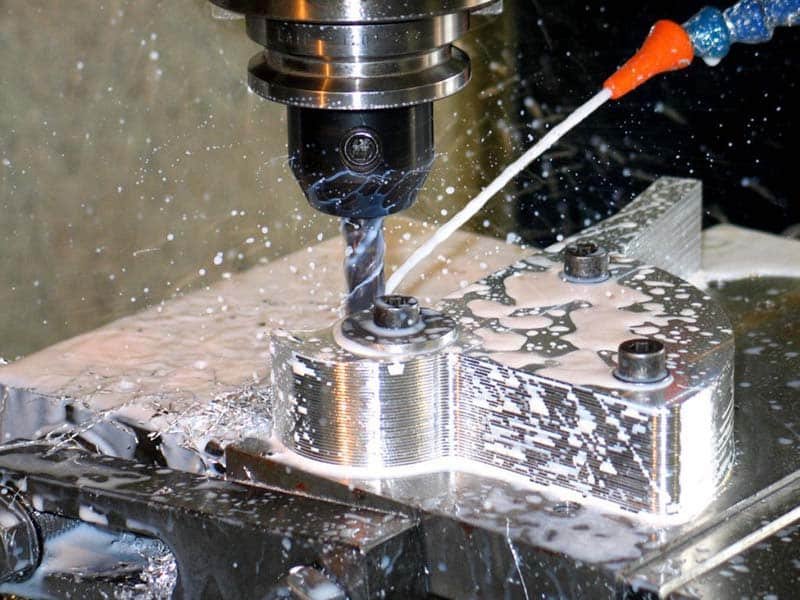
When discussing precision, the Micro injection molding process is the best choice. The process begins by forming a mold cavity that accurately replicates the target part geometry. Highly precise steel or aluminum molds with micro-scale features are manufactured using CNC machining and Electrical Discharge Machining, achieving micron-level or even submicron tolerances. This level of precision makes it possible to produce extremely small components.
With ever-increasing demands for miniaturization, this technology has gained great importance in healthcare, electronics, and related fields.
Advantages of Micro Injection Molding
- Accuracy: Capable of producing tiny parts with high precision.
- Miniaturization: This is ideal for compressed movement in technology.
- Minimizes material consumption: Lowers material expenses.
8. Reaction Injection Molding
Ever heard of the type of injection molding called reaction injection molding? It involves mixing two reactive liquid components inserted into a mold to complete the process.
In this process, they undergo a chemical reaction that produce durable and lightweight components. It works especially effectively in applications where maintaining structural integrity and reducing weight is essential, such as construction and the automotive industry.
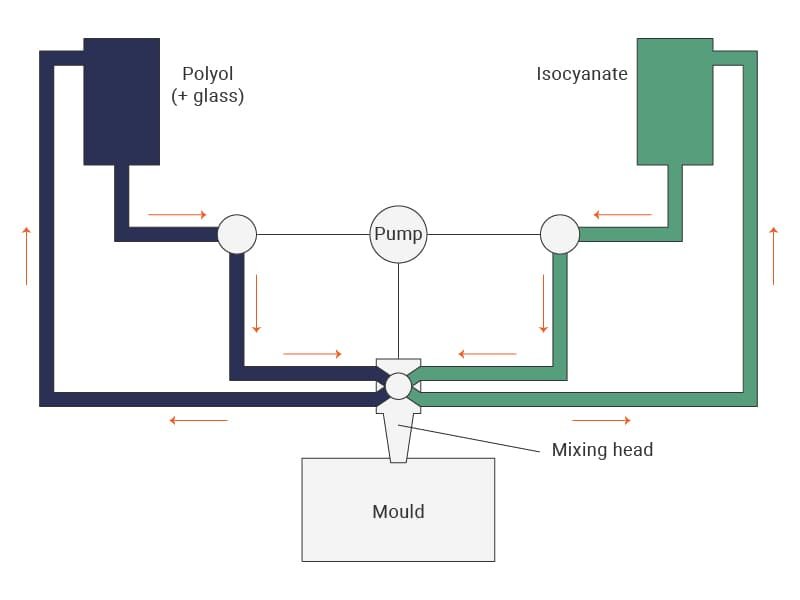
Advantages of Reaction Injection Molding
- Light as a feather: Compared to many other materials, RIM parts are lighter.
- Robust: Provides durable and lightweight components for a range of uses.
- Optimal production capacity: Able to effectively produce large components.
9. Scientific Injection Molding
Scientific injection molding is an advanced injection molding method that uses data-driven analysis and controlled processing parameters to achieve consistent part quality. By studying the relationship between injection speed, pressure, temperature, and material behavior, this method helps manufacturers optimize the molding process and reduce production variations. It is widely used in industries where precision, repeatability, and stable production performance are essential.
Advantages of Scientific Injection Molding
- Improved process consistency: Scientific injection molding establishes optimized processing parameters, helping maintain stable part quality throughout production.
- Reduced defects and waste: Data-based process control helps identify potential issues such as warpage, short shots, and dimensional variations before they affect production.
- Enhanced process predictability: Continuous monitoring and statistical analysis provide better control over production performance, helping reduce unexpected issues and improve planning.
10. Two-Shot Injection Molding
Two-shot injection molding is an advanced type of injection molding process that combines two different materials or colors into a single molded part through two sequential injection stages. By using a specialized mold with multiple cavities or rotating mechanisms, this process can create multi-material components with improved functionality and appearance. It is widely used in industries such as automotive, consumer electronics, and medical devices where product integration and design flexibility are important.
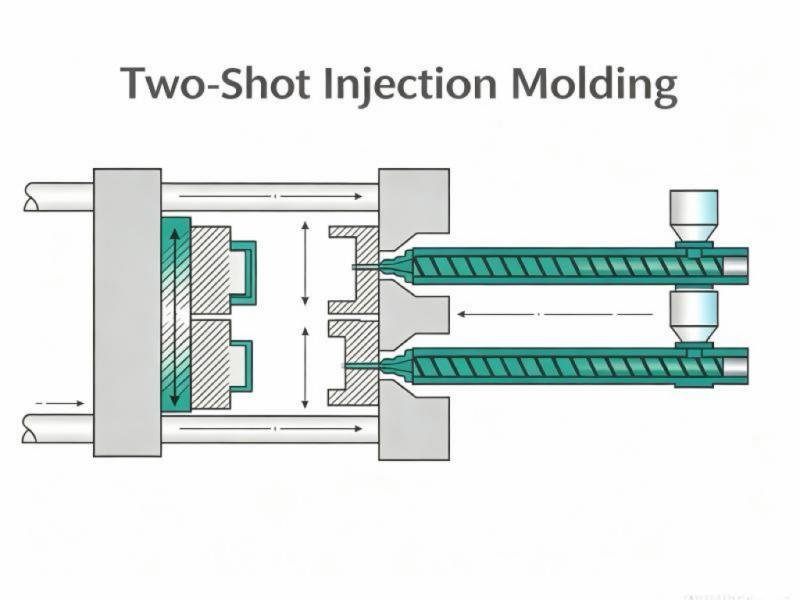
Advantages of Two-Shot Injection Molding
- Cost efficiency: Two-shot injection molding combines multiple materials into one component, reducing assembly steps and overall production costs.
- Improved product functionality: Different materials can be combined to provide enhanced properties, such as soft-touch surfaces, improved grip, or chemical resistance.
- Enhanced aesthetics: Multiple colors or textures can be molded in a single process, creating visually appealing parts with consistent appearance.
Conclusion of Types of Injection Molding
Injection molding is now considered the backbone of modern manufacturing as it offers a multi-faceted approach to lightweight manufacturing and affordable solutions. These manufacturing processes have the sole vision of providing benefits to enhance productivity, reduce go-to-market time, and cost efficiency. The next time you use a daily life commodity, remember that injection molding is a critical process that shapes our environment. As a professional injection molding factory, we can provide you with different types of injection molding services.