How to Ensure Precision Plastic Injection Molding

precision injection molding
In This Article
    Add a header to begin generating the table of contents
    Scroll to Top

    High precision plastic injection molding has become a critical manufacturing process when standard methods fall short. The process demands exact control over every variable. Small changes in temperature or pressure create measurable differences in the final part. That is why companies turn to high precision injection molding for components where even a single micron matters.

    What Is High Precision Plastic Injection Molding

    High precision plastic injection molding produces plastic components to tolerances that standard injection molding cannot reach. Typical standard tolerances range from ±0.005 to ±0.020 inches. Precision plastic injection molding routinely achieves ±0.001 inches or tighter. It is the result of closed-loop controls, specialized equipment, and documented process discipline.

    Standard Injection Molding vs. Precision Plastic Injection Molding

    Comparison between standard injection molding and high precision plastic injection molding illustrates the differences clearly.

    The table below summarizes the main distinctions:

    Aspect Standard Injection Molding Precision Plastic Injection Molding
    Dimensional tolerance ±0.127 mm to ±0.5 mm ±0.025 mm or tighter
    Surface Quality General finish High-quality finish, low defects
    Post-machining requirement Common Minimal or none
    Material Range Common thermoplastics High-performance plastics, reinforced materials

    Applications of High Precision Plastic Injection Molding

    The applications of precision injection molding extend across industries where accuracy and reliability are critical. Typical areas include:

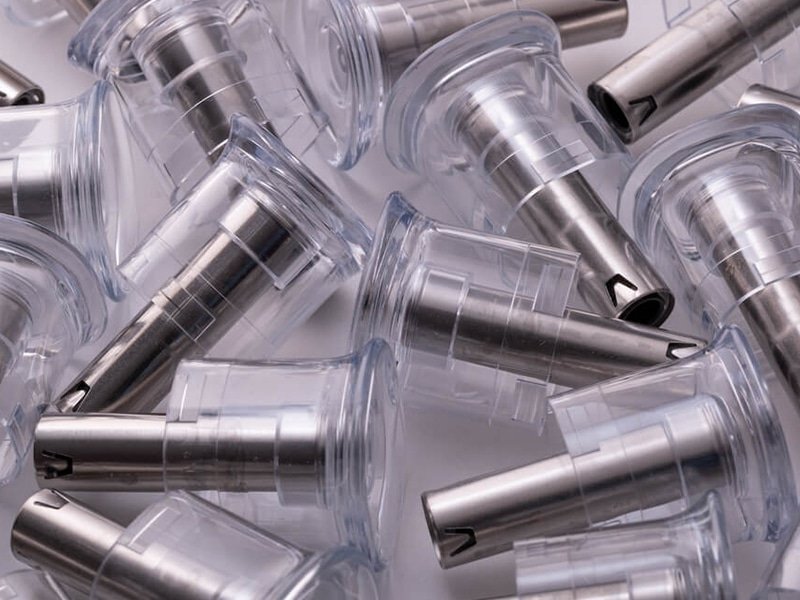
    Medical Devices: Components like syringe barrels, surgical instruments, and microfluidic parts.

    Automotive Components: Components such as sensor housings, connectors, and precision mechanical parts.

    Electronics: Connectors, miniature housings, and high-density assemblies.

    High-Precision Industrial Components: Instruments, valves, and precision gears used in machinery.

    Precision Gears
    Precision Gears

    Methods for Improving Precision Plastic Injection Molding

    Choose the Right Materials 

    Material selection determines how much the part will shrink and how stable the dimensions will remain in precision plastic injection molding. Choose grades with shrinkage below 0.8 % where possible, as lower shrinkage supports tighter tolerances.

    Common choices for precision plastic injection molding include:

    Polyoxymethylene (POM, also known as Acetal): POM is semi-crystalline with a shrinkage of 1.8–2.5 %. POM excels in precision gears, bushings, connectors, and sliding components in automotive sensors or medical delivery systems.

    Polycarbonate (PC): PC is an amorphous polymer with a shrinkage of 0.5–0.7 %. PC suits tight-tolerance parts like medical device housings, automotive lighting lenses, and electronic enclosures.

    Acrylonitrile Butadiene Styrene (ABS): ABS is an amorphous material with a shrinkage of 0.4–1.6 % (typically 0.5–0.8 % in standard grades). ABS works well for electronic housings, automotive trim, and consumer prototypes needing ±0.05 mm tolerances.

    Polyphenylene Sulfide (PPS): PPS is a semi-crystalline engineering plastic with a shrinkage of 0.6–1.4 % (Glass-filled PPS variants drop shrinkage to 0.2–0.5 %). It withstands continuous temperatures up to 240 °C.  PPS is ideal for automotive under-hood parts, electrical connectors, and pump components requiring precision fit and thermal stability.

    Leverage Automation in Production 

    Automation is widely used in precision plastic injection molding to reduce process variation and improve consistency. By integrating automation into the production line, the key steps in the injection molding process can achieve tighter tolerances in precision injection molding.

    Robotic Part Handling: Robotic systems are commonly used to remove parts directly from the mold. Consistent removal timing prevents deformation caused by prolonged heat exposure and reduces variation introduced by manual handling.

    Automated Material Feeding and Drying: Automated drying and feeding systems ensure stable material conditions before injection, which improves melt flow consistency and reduces dimensional variation.

    Process Monitoring and Control: Modern injection molding machines often include sensors that monitor parameters such as injection pressure, melt temperature, and cycle time. Automated monitoring systems allow operators to detect deviations quickly and maintain the precision plastic injection molding process stable.

    Automated Inspection: The automated monitoring systems support continuous quality verification and help operators identify issues early, ensuring that precision requirements are maintained during high-volume manufacturing.

    Mold Design

    The mold is the single most important factor in precision plastic injection molding.

    Steel selection: P20 or H13 for prototypes, S136 or 420 stainless for high-volume production.

    Cavity surface: Surface finish must reach SPI A1 or better on all cavity surfaces. Any polishing mark above 0.05 µm Ra appears on the part.

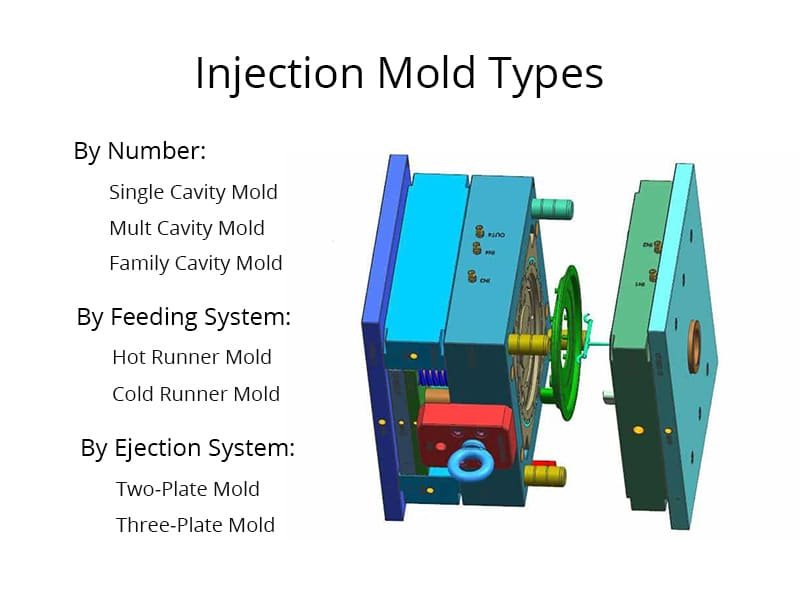
    Gate and runner design: Use valve gates for parts that require zero vestige and balanced filling. Hot-runner manifolds need individual zone control to keep temperature variation below 2 °C across all drops.

    Valve Gate
    Valve Gate

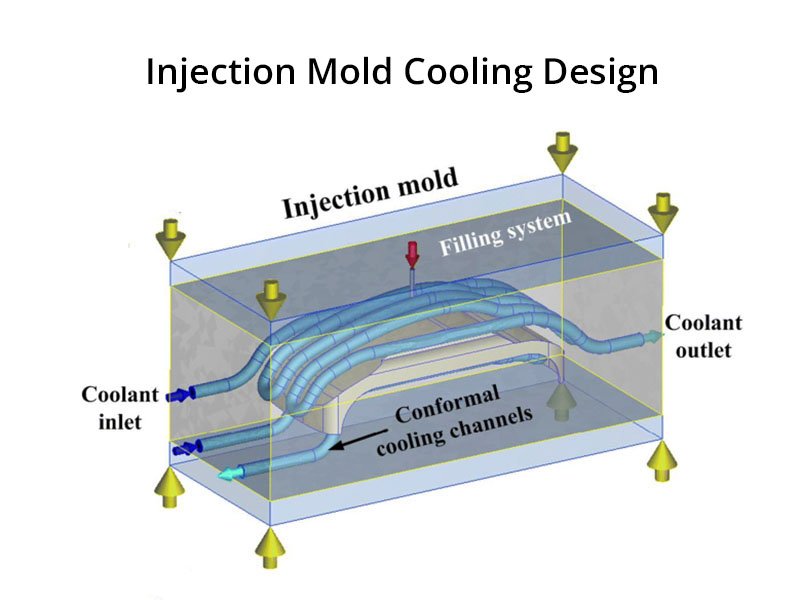
    Cooling design: Conformal cooling channels, designed with flow simulation software, reduce cycle time and keep mold surface temperature uniform within 1 °C.

    Cavity balance: Cavity balance is non-negotiable. Pressure transducers in each cavity must show filling pressure variation below 1 %. If one cavity fills 3 % faster, the parts will differ in weight and dimension.

    Venting design: Venting must be 0.01–0.03 mm deep and placed at the last-to-fill locations. Insufficient venting causes burn marks and short shots that ruin precision.

    DMF: Uniform wall thickness within 0.1 mm, draft angles of at least 0.5°, and radii of 0.3 mm minimum prevent stress concentrations and sink marks. Simulate the entire filling, packing, and cooling phases before cutting steel.

    Optimize the Production Process

    Optimize the process with scientific molding

    1. Establish the viscosity curve. Vary the injection speed from 50 mm/s to 300 mm/s at constant pressure and record fill time. Choose the speed that gives the flattest viscosity response.
    2. Set the transfer position so the part is 95–98 % filled at velocity control.
    3. Apply holding pressure in stages: high initial pressure to pack the gate, followed by a lower pressure to compensate for shrinkage without flash.

    Injection parameter control with tight limits

    • Temperature control must remain stable. Mold temperature is typically controlled within ±0.5 °C using closed-loop temperature controllers, while barrel zones are managed independently to maintain consistent melt conditions.
    • Cooling time should allow complete solidification and reduce internal stress. Uniform cooling channel design helps maintain consistent mold temperatures and prolong the cooling time, minimizing warpage in precision plastic injection molding.
    • Clamping force and machine movement also need to remain consistent. Proper clamping prevents flash and ensures stable mold alignment, supporting repeatable results in high precision injection molding.
      Injection Molding Clamping Force
      Injection Molding Clamping Force

    Monitor and record key process data every shot

    • Track peak cavity pressure, cushion position (±0.1 mm limit), screw recovery time, and temperatures via closed-loop systems.
    • Establish golden curves for pressure and position; set alarms for deviations >2–3 %.
    • Use SPC charts (X-bar/ R) on part weight and critical dimensions sampled every 30–60 minutes.

    Incorporate mold flow simulation upfront and validate

    • Run simulations (such as Moldflow) to predict fill patterns, pressure drops, and shrinkage before production.
    • Compare simulation vs. actual cavity pressure curves; refine parameters until the match is within 5–10 %.

    Master Shrinkage Control 

    Injection molding shrinkage is a major challenge in precision molding, as even minor variations can compromise dimensional accuracy. And, shrinkage control separates precision plastic injection molding from standard work. Three types exist: thermal, crystallization, and orientation.

    Thermal Shrinkage

    Thermal shrinkage occurs as the part cools from melt to room temperature. It is managed by uniform mold cooling and consistent packing pressure.

    Crystallization Shrinkage

    Crystallization shrinkage appears in semi-crystalline resins when molecules organize into ordered structures. Counter it with nucleating agents, higher mold temperatures, and longer holding times.

    Orientation Shrinkage

    Orientation shrinkage results from stretched polymer chains along the flow direction. Reduce it by placing gates to minimize flow length, slowing injection speed in the last 20 % of fill, and annealing parts at 80 % of the heat deflection temperature for two hours.

    Implement Strict Quality Control

    High-precision injection molding requires rigorous quality assurance to maintain standards. Quality control in precision injection molding is continuous, not final.

    First Article Inspection (FAI): Initial samples are measured extensively to confirm that the mold and process produce parts within specification.

    Statistical Process Control (SPC): Continuous monitoring of production ensures that variations remain within acceptable limits.

    Dimensional Measurement: Tools such as CMMs (coordinate measuring machines) and optical scanners verify tolerances.

    Visual and Functional Inspection: Parts are checked for defects such as surface blemishes, warping, or incomplete filling.

    Data Recording and Analysis: Tracking process data allows manufacturers to identify trends and correct potential issues before they affect large production batches.

    Partner with Experts for High-Precision Injection Molding

    Achieving consistent precision plastic injection molding requires equipment, experience, and process discipline. Our team focuses on high-precision injection molding, leveraging mold design, automation, material selection, and rigorous quality systems to deliver consistent, accurate parts. Welcome to contact us and get a high precision injeciton molding services.

    Share Article

    You May Also Like These Articles

    Surface finish in injection molding is a critical design consideration that significantly impacts both the

    In the design of plastic parts for injection molding, every feature, dimension, and detail requires

    When producing large plastic molding parts with complex structures, whether for automotive panels, industrial housings,

    When dealing with large part injection molding, such as automotive panels, industrial enclosures, or medical

    Injection molding ejector pins are crucial for ensuring injection molded parts are efficiently and safely

    Injection molding is popular in various industries, from automotive to healthcare, as a technical force

    Online Message

    If you are interested in our products, you can leave us a message via the form below and we will get back to you within 8 hours!