Achieving High Optical Clarity in Clear Injection Molding

Clear Injection Molding
In This Article
    Add a header to begin generating the table of contents
    Scroll to Top

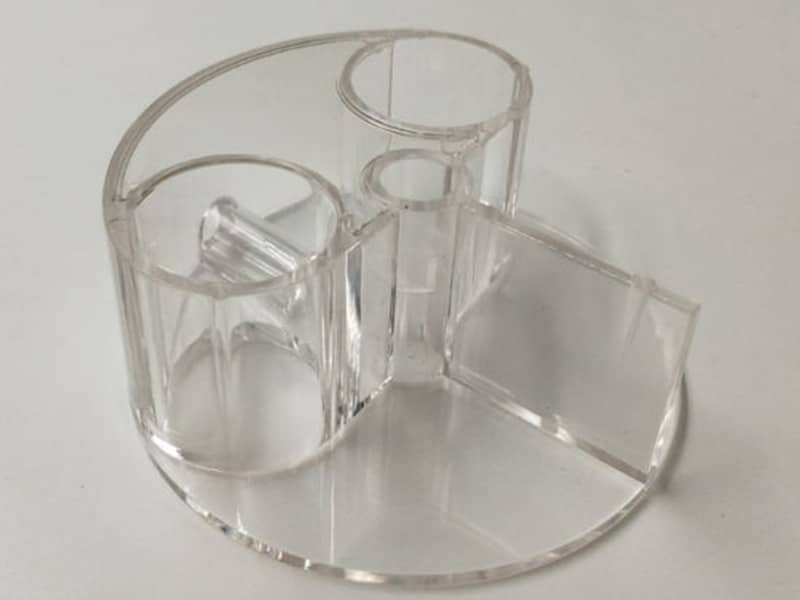
    Clear injection molding parts are commonly used in medical devices, electronic housings, lighting components, and fluid-handling systems where visibility, inspection, or light transmission is required. The dimensional stability, defect control, and repeatability are significantly higher than those of conventional molding projects.

    What is Clear Injection Molding?

    Clear injection molding, often referred to as transparent plastic injection molding in industrial practice, is a manufacturing process for producing plastic parts with high optical clarity and controlled surface quality. Unlike standard injection molding, this process places strict requirements on material selection, mold polishing, process stability, and contamination control. The goal is to minimize light scattering, internal stress, and surface imperfections that can reduce transparency.

    Advantages of Clear Injection Molding

    Clear injection molding enables high-volume production of consistent optical parts with complex geometries. Once tooling and process conditions are stabilized, repeatability is strong, and unit cost becomes competitive for medium to large production runs.

    Limitations of Clear Injection Molding

    The process is sensitive to contamination, moisture, and parameter variation. Tooling costs are higher due to polishing and precision requirements. Development cycles may also be longer due to iterative process tuning.

    Common Materials Used in Clear Injection Molding

    Material selection directly affects the final transparency and performance of injection molded parts. Each resin has different processing needs and property profiles. There are common materials used in clear injection molding.

    Polycarbonate (PC)

    Polycarbonate provides a balance between transparency and impact resistance and can withstand higher temperatures. It is commonly used in safety-related components, protective covers, and optical housings. However, it is sensitive to moisture and requires strict drying before processing. Improper handling can quickly lead to splay marks or reduced transparency. With correct processing, PC delivers consistent clarity in medium to high-volume custom runs. It is more expensive than some alternatives, but it reduces the need for thicker walls due to its toughness.

    PC Injection Molding
    PC Injection Molding

    Acrylic (PMMA)

    Acrylic, also known as PMMA. It provides excellent light transmission and a glass-like appearance, making it suitable for display lenses, light guides, medical device components, and cosmetic packaging.

    PMMA flows well during molding, which helps achieve smooth surfaces with fewer flow marks. However, it has lower impact strength than polycarbonate, so design adjustments such as ribs or material thickness may be needed for functional parts. Acrylic is often more cost-effective for applications where extreme durability is not required.

    PMMA Injection Molding
    PMMA Injection Molding

    Polypropylene (PP)

    PP can achieve semi-transparent or translucent effects depending on formulation and thickness. It is typically chosen for cost-sensitive applications where full optical clarity is not required. Its chemical resistance is a practical advantage in packaging and fluid containers.

    PP Injection Molding
    PP Injection Molding

    Polystyrene (PS)

    PS offers high clarity at a relatively low cost but has limited mechanical strength. It is suitable for disposable or low-stress applications, such as sample containers and packaging inserts.

    PS Injection Molding
    PS Injection Molding

    Light Transmissivity Through Popular Materials

    Choosing the right material is critical for achieving the desired clarity in clear injection molded parts. Below is a practical comparison of common clear resins, along with guidance for selecting materials based on application requirements.

    Material Typical Light Transmissivity Typical Haze Key Considerations
    PMMA (Acrylic) 92% – 93% <1% Highest clarity, excellent for lenses, display windows, light guides, medical fluid chambers
    PC (Polycarbonate) 88% – 90% 1% – 3% Good impact strength, slightly lower clarity than PMMA, suitable for protective covers, safety shields, outdoor housings
    PS (Polystyrene) 88% – 92% 1% – 2% Very clear but brittle, ideal for single-use applications, such as disposable containers, packaging inserts, low-cost lenses
    PP (Polypropylene) 70% – 85% 5% – 10% Semi-transparent only, suitable for translucent fluid containers, chemical-resistant housings

    Choose the Best Surface Finish for Optimal Clarity

    Surface finish is the defining factor in the optical performance of clear molded parts. Balancing transparency with cost efficiency and production feasibility should begin in the design phase.

    Mirror Polishing for Optical Clarity

    Mirror polishing utilizes a rigorous, multi-stage abrasive technique to eliminate micro-scratches and surface defects, maximizing light transmission. Flat or gently curved viewing zones, such as inspection windows, optical display lenses, medical fluid chambers, and premium electronic covers.

    The spec recommendation for mirror polishing standard:

    • SPI A-1: The best choice for zero-distortion optical quality (highly recommended for PMMA/Acrylic).
    • SPI A-2: Suitable for general transparent housings, offering a look while optimizing tooling budgets.

    Vapor Polishing for Complex Structures Parts

    When geometries get complex, manual mirror polishing can become cost-prohibitive or physically impossible. Vapor polishing solves this by using a controlled chemical vapor. Vapor polishing is suitable for polycarbonate (PC) parts featuring deep ribs, internal channels, intricate textures, or hard-to-reach recesses.

    If your part features both complex structures and a critical viewing window, our engineering team can combine localized mirror polishing on the mold with vapor polishing to deliver good clarity while controlling processing costs.

    Coatings for Additional Performance

    Post-molding coatings add functional properties while maintaining or enhancing clarity. Use coatings when your parts require extra protection such as UV resistance, chemical resistance, scratch resistance, or anti-fog performance.

    Plan for coating thickness (usually 0.01–0.05mm) during the design phase and ensure compatibility between resin and coating.

    Share your CAD designs with us early, and we will help you choose surface treatment methods and standards.

    Some Practical Tips Across All Finishes

    • Flat, high-clarity parts benefit most from resin coatings or mirror polishing.
    • For prototypes, consider delaying final polishing until production to save cost if optical quality is not critical at the evaluation stage.
    • Always review part geometry and surface exposure early in the design phase to match the optimal finish with functional and visual requirements.
    • Avoid mold release agents, as they can leave visible marks on clear surfaces.
    • Manual sanding and polishing are suitable for simple, low-volume prototypes but may increase cost and lead time.
    • Surface finishing choices should balance optical requirements with production costs and lead times.

    Key Design Considerations in Clear Injection Molding

    • Maintain uniform thickness to prevent uneven cooling, internal stress, and visible haze or distortion in optical areas.
    • Position gates to minimize weld lines, flow marks, and shear concentration that directly affect transparency.
    • Ensure sufficient draft to avoid ejection stress, surface scuffing, and optical damage during demolding.
    • Use optical-grade polishing (e.g., SPI A1/A2) since any micro-defect on the mold surface will transfer directly to the part.
    • Control material shrinkage behavior to avoid optical warpage and maintain stable assembly tolerances.

    Special Process Controls for Clear Injection Molding

    Unlike standard plastic molding, transparent resin molding instantly reveals every internal defect. Here is how Erye’s specialized process controls keep product quality:

    1. Contamination-Free Environment: Even a single grain of dust can ruin an optical part. We utilize clean production environments, dedicated material handling systems, and strict machine cleaning to eliminate haze and dark spots.
    2. Precision Defect Prevention: Clear resins are highly sensitive to processing conditions. We maintain strict control over drying, melt temperatures, and injection speeds to prevent bubbles, yellowing, and flow marks.
    3. Tooling & Ejection Optimization: To avoid the use of mold release agents, we optimize draft angles and gate designs on the mold. Combined with our SPI A-1/A-2 polishing, this ensures clean ejection and minimal weld lines.

    Common Defects in Clear Injection Molding

    Weld Lines and Flow Marks

    Weld lines occur where flow fronts meet and can be visible in clear parts. Flow marks appear as surface streaks. Strategic gate placement and process tuning reduce their impact.

    Splay marks and silver streaks

    Typically caused by moisture or trapped gas, these defects indicate insufficient drying or poor venting. Dry materials thoroughly and improve venting in the mold.

    Bubbles and voids

    They are often caused by shrinkage imbalance or trapped air. Internal voids reduce both mechanical strength and optical clarity. Add vents, control injection pressure, and ensure uniform cooling.

    Haze or cloudiness

    This is one of the most critical quality concerns in clear injection molding. It can result from material degradation, contamination, or incorrect processing conditions. Maintain stable temperatures, clean equipment, and handle resin properly.

    Burn marks and discoloration

    These are usually caused by overheating or insufficient venting and indicate unstable process control. Reduce melt temperature, improve venting, and adjust cycle times.

    How to Control Quality in Clear Injection Molding

    In clear injection molding, achieving consistent transparency requires a structured approach to quality control that spans the entire production process.

    The first step is ensuring the purity and consistency of the raw materials. Acrylic, polycarbonate, or other transparent resins must be free of impurities, moisture, and contaminants. Confirm to store and handle materials under strict conditions.

    During molding, use sensors and automated monitoring systems to maintain stable conditions, preventing defects like haze, bubbles, or flow lines.

    After molding, parts undergo visual and technical inspection. Advanced techniques such as computerized imaging or ultrasonic testing can detect internal defects invisible to the naked eye.

    Conclusion

    Clear injection molding is a specialized manufacturing process. Work with an experienced on-demand manufacturer from the design stage. This approach reduces lead times, tooling costs, and quality issues for your custom clear injection molding projects.

    Erye specializes in clear and translucent plastic injection molding for customers with specific customization needs. Contact our team with your part drawings or requirements to discuss material options, design feedback, and production solutions tailored to your project.

    FAQ

    UV Resistance in Clear Plastics: Why It Matters?

    UV exposure can cause yellowing, degradation, and loss of clarity in clear plastics over time. Choosing UV-resistant materials or applying protective coatings ensures long-term transparency and durability.

    How Does the Thickness of the Molded Part Affect Its Clarity and Strength?

    Thicker parts can increase the risk of internal stress, warpage, and haze, while thinner parts may be weaker or prone to cracking. Maintaining uniform wall thickness helps balance clarity and mechanical strength.

    How do you choose between acrylic and polycarbonate for clear parts?

    • Choose Acrylic (PMMA) if you need the highest optical clarity, best surface gloss, and lower cost. It is ideal for lenses, displays, and cosmetic parts, but it is more brittle and less impact-resistant.
    • Choose Polycarbonate (PC) if your parts need high impact strength and durability. It is much tougher than acrylic and works well for protective covers, machine guards, and automotive parts, though it has slightly lower light transmission and costs more.
    Share Article

    You May Also Like These Articles

    Thin wall injection molding is a specialized manufacturing process that focuses on creating lightweight plastic

    Injection molding undercuts is any protrusion or recessed feature on a plastic part that prevents

    Flash in injection molding is one of the most common plastic molding defects. It significantly

    Injection molding is a process that transforms raw materials into precisely engineered plastic components. Injection

    Sink marks in injection molding are a common yet troublesome defect that can compromise the

    Off topic, but a fun fact: When you look at a plastic bottle cap under

    Online Message

    If you are interested in our products, you can leave us a message via the form below and we will get back to you within 8 hours!