
Different types of CNC machines play different roles in making the parts used in everyday products. A laptop hinge, automotive shaft, medical component, or aluminum housing may all require CNC machining, but the machine used for each part can be quite different. Some configurations suit simple shapes, while others provide better access to complex surfaces or demanding features. Understanding these differences can help you identify the CNC machine that fits your machining requirements.
What Is a CNC Machine?
A CNC machine is the equipment used to perform CNC machining by following computer-controlled instructions. It follows programmed coordinates, speeds, feeds, and tool movements to remove material or perform other machining operations. The control system coordinates movements such as X, Y, and Z. Some CNC machines also use rotary axes such as A, B, or C to control additional movement. The CNC system can repeat the same movements across multiple parts, which helps maintain consistent dimensions and machining results.
1. CNC Milling Machines
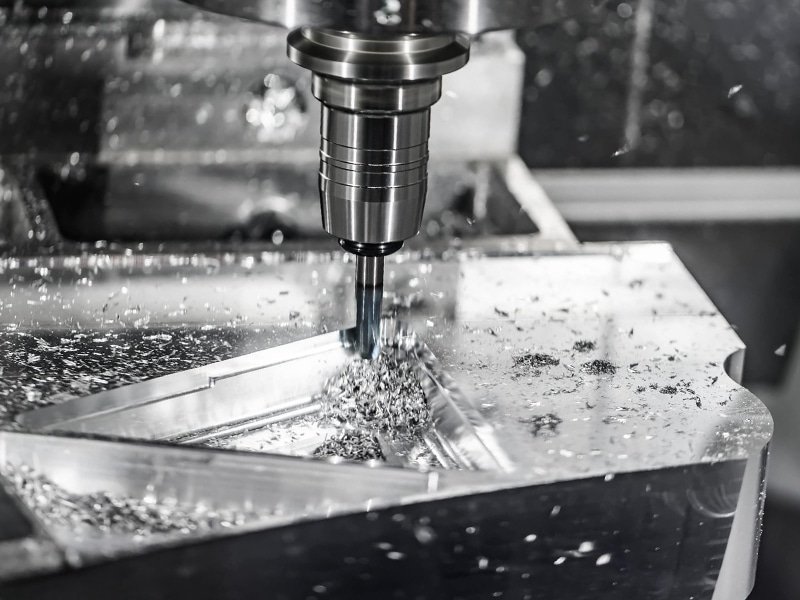
CNC milling machines use rotating cutting tools to remove material from a stationary workpiece. They can create pockets, slots, holes, contours, steps, and complex three-dimensional surfaces. CNC mills are widely used for milling, drilling, tapping, and other subtractive machining operations.
Vertical and horizontal machining centers are the two most common configurations for CNC milling. A vertical machining center has a spindle that moves vertically toward the workpiece. A horizontal machining center has a spindle positioned horizontally, which can improve chip evacuation and provide better access to multiple sides of certain workpieces.
Advantages
- High machining flexibility: CNC milling machines can handle simple prismatic parts as well as complex 3D geometries.
- Wide range of operations: A single machine can perform a wide range of machining processes such as face milling, pocketing, slotting, drilling, tapping, boring, and chamfering.
- Fewer process changes: Advanced 4-axis and 5-axis machines can complete multiple features in fewer setups.
Disadvantages
- Programming complexity: Complex geometries can require more programming time.
- Setup requirements: Multiple setups can increase alignment errors and machining time.
- Tool wear: Cutting tools gradually wear and can affect surface finish and dimensional accuracy.
- Limited tool access: Deep cavities and narrow features can be difficult to reach with standard milling tools.
2. CNC Router Machines

CNC router machines use a rotating cutting tool to remove material. Their basic machining process is very similar to that of CNC milling machines. The main difference is that CNC routers are generally optimized for larger work areas and lighter materials, while CNC milling machines offer higher rigidity for demanding metal-cutting applications. For a detailed comparison, see our article on CNC Mill vs CNC Router.
Advantages
- Large work area: Handles large sheets, panels, and oversized workpieces efficiently.
- High cutting speed: Supports fast material removal for repeated cutting and panel production.
- Low cutting force: Reduces tool deflection, vibration, and surface damage during machining.
Disadvantages
- Limited heavy-duty cutting: High material removal rates can reduce cutting stability and shorten tool life.
- Workpiece movement: Large sheets can shift or vibrate during machining, affecting dimensional accuracy and cut quality.
- Noise and vibration: High-speed spindle operation can generate significant noise and vibration, making the machining environment less comfortable.
- Surface finish variation: Improper tool selection or cutting parameters can leave rough edges, tool marks, or inconsistent surfaces.
3. CNC Lathes and Turning Machines
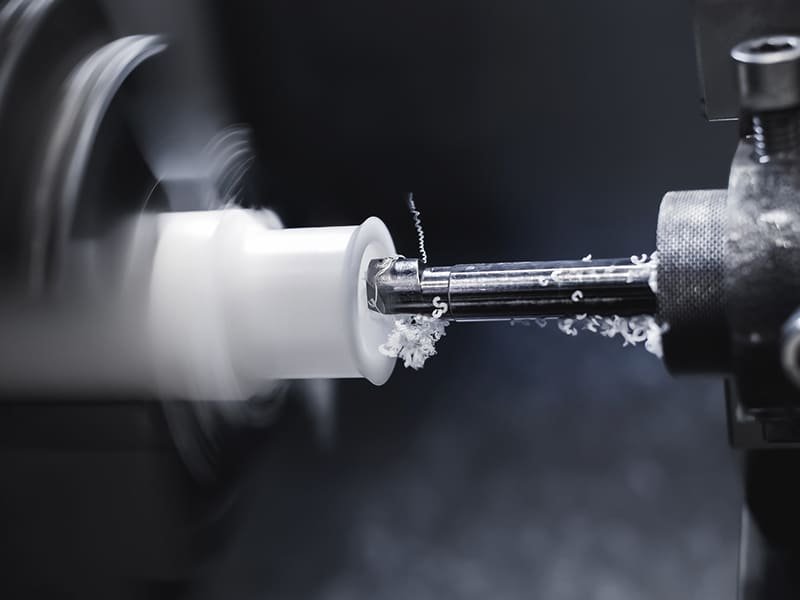
CNC lathes and turning machines rotate the workpiece while a cutting tool moves against its surface. This turning process is especially effective for parts with cylindrical, conical, or rotationally symmetrical shapes.
Different turning configurations are suited to different workpiece sizes and machining requirements. For example, a Swiss CNC lathe is a specialized configuration for small, slender, and high-precision components. The material receives support close to the cutting area, which helps control deflection during machining.
Advantages
- Ideal for rotationally symmetrical parts: Efficiently machines shafts, pins, bushings, rings, and other cylindrical or conical components.
- Lower machining cost: Efficient material removal and streamlined machining operations help reduce cycle time, labor, and overall processing costs.
- Consistent surface finish: Continuous workpiece rotation helps maintain uniform cutting conditions and reduces surface variation on cylindrical parts.
Disadvantages
- Limited prismatic machining: Complex pockets, slots, and flat-sided features can require additional milling operations.
- Chip management: Long, continuous chips may wrap around the workpiece or tool if they are not properly broken or evacuated, which can interrupt machining.
- Workholding requirements: The workpiece must be securely clamped and accurately aligned, which can add setup time.
4. Multi-Axis Machines

Multi-axis CNC machining controls more than three axes to reach complex surfaces from different directions. These machines add rotary movements to traditional linear axes, allowing the cutting tool or workpiece to change position and orientation during machining.
A 5-axis CNC machine is one of the most common multi-axis configurations. It can reduce the number of setups, and the additional rotary axes allow the cutting tool to maintain a more suitable orientation to curved surfaces, improving access and reducing secondary operations.
Advantages
- Complex geometry access: Reaches difficult angles and curved surfaces that are challenging for standard 3-axis machining.
- Improved tool orientation: Machines multiple sides of a part in fewer operations, helping reduce repositioning time and alignment errors.
- Reduced fixture requirements: Minimizes the need for custom workholding solutions when parts require machining from different directions.
Disadvantages
- Programming complexity: Requires advanced CAM programming strategies and more preparation time for complex tool paths.
- Higher equipment cost: Multi-axis machines and related tooling systems usually require greater initial investment.
- Higher operator skill requirements: Complex multi-axis operations require stronger machining knowledge and process experience.
5. CNC Electrical Discharge Machines (EDM)

CNC Electrical Discharge Machining (EDM) removes electrically conductive material through controlled electrical discharges. Two common EDM categories are wire EDM and sinker EDM. Wire EDM uses a continuously fed wire to cut precise profiles. Sinker EDM uses a shaped electrode to create a cavity or feature.
Advantages
- Hard material machining: Processes hard materials that can cause significant wear on conventional cutting tools.
- Intricate feature machining: Produces narrow slots, fine profiles, and delicate features that can be difficult to machine with physical cutting tools.
- Low mechanical cutting force: Reduces the risk of workpiece deformation when machining small, thin, or delicate features.
Disadvantages
- Material limitations: Only processes electrically conductive materials.
- Lower bulk removal rate: Removes material more slowly than conventional milling when large amounts of material need to be removed.
- Increased preparation time: Sinker EDM requires a shaped electrode for each specific cavity or feature, which can increase preparation time and cost.
- Post-processing requirements: EDM can leave a recast layer or heat-affected surface that may require additional finishing for certain applications.
6. CNC Laser Cutting Machine
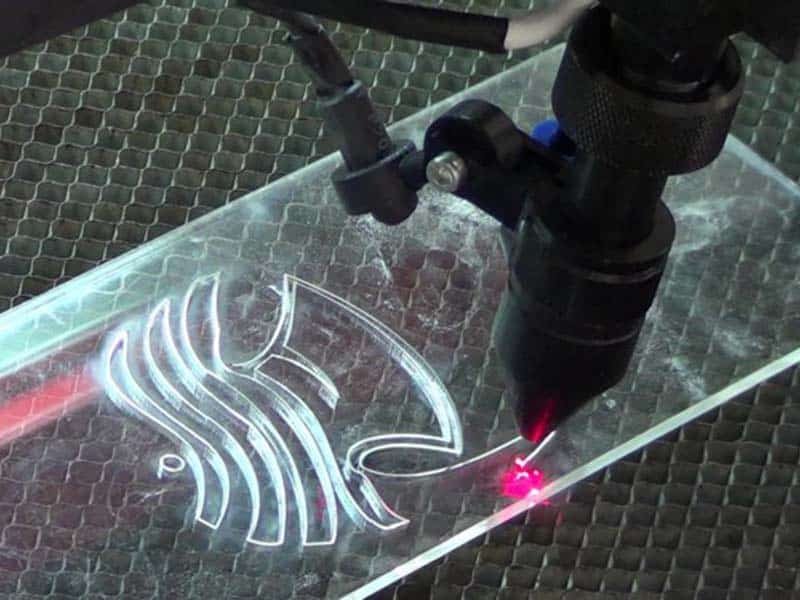
CNC laser cutting machines use a concentrated laser beam to heat and melt material along a programmed path, and assist gas helps remove molten material from the cut zone. Unlike EDM, laser cutting is not limited to electrically conductive materials. Depending on the laser system, it can process a broad range of materials.
Similar to CNC routers, laser cutters are often used for flat sheet materials, but they remove material through different methods. More details can be found in our comparison of CNC router vs laser cutter.
Advantages
- High cutting speed: Processes sheet and plate profiles quickly, improving production efficiency for repeated parts.
- Higher cutting precision: Produces narrow cuts with less material loss and supports fine, detailed profiles.
- Low mechanical force: Uses a non-contact cutting process, reducing workpiece deformation caused by mechanical cutting forces.
Disadvantages
- Heat-affected zone: Heat from the laser can alter the cut edge or nearby material, affecting surface quality and dimensional stability.
- Thickness limitations: Increasing material thickness can reduce cutting speed and make the process less efficient.
- Reflective materials: Highly reflective metals such as copper and brass can require specialized laser systems and process control, increasing machining complexity.
- Energy consumption: High-power laser systems can consume significant energy during extended cutting operations, increasing operating costs.
7. CNC Plasma Cutters

Like CNC laser cutting, plasma cutting is a thermal cutting process, but it uses a plasma arc rather than a focused laser beam to melt and remove material. During the process, compressed gas passes through the torch and is converted into a high-temperature plasma arc. The CNC system controls the torch movement along programmed paths, while the plasma arc melts the material and the gas flow helps remove the molten metal from the cutting area.
Advantages
- High cutting speed: Cuts suitable conductive metals quickly, reducing cutting time and improving overall production efficiency.
- Flexible profile cutting: Follows programmed paths to produce straight lines, curves, holes, and other profiles without dedicated cutting dies.
- Easy CNC automation: Simple digital programming allows operators to create, modify, and execute cutting paths efficiently.
Disadvantages
- Material limitations: Only processes electrically conductive materials, making it unsuitable for non-conductive materials such as wood, plastics, and ceramics.
- Lower edge precision: Plasma cutting may produce wider kerfs and rougher edges, requiring additional finishing for some applications.
- Slag formation: Molten material can leave slag or dross on the cut edge, increasing cleanup requirements.
8. CNC Grinding Machines

CNC grinding machines use an abrasive wheel to remove small amounts of material and achieve high dimensional accuracy and fine surface finishes. Unlike conventional cutting tools, grinding wheels remove material through abrasive action, making the process suitable for precision finishing after turning or milling. Common configurations include surface grinders, centerless grinders, and CNC cylindrical grinding machine systems.
Advantages
- Superior surface finish: Produces smooth surfaces with reduced roughness for functional and appearance requirements.
- Material efficiency: Removes only small amounts of material during finishing, helping reduce unnecessary material removal.
- Hardened material machining: Processes hardened metals that are difficult to cut with conventional tools.
Disadvantages
- Low material removal rate: Removes material slowly, making it unsuitable for applications requiring large amounts of material removal.
- Heat generation: Grinding heat requires proper control to prevent thermal damage and maintain part quality.
- Higher processing cost: The additional grinding operation can increase machining time and cost when extreme precision or surface finish is not required.
9. CNC Drilling Machine

CNC drilling machines create holes through programmed spindle rotation and axis movement. The machine controls tool position, feed rate, and drilling cycles to produce accurate holes according to the part requirements. Depending on the configuration, CNC drilling equipment can perform additional hole-making operations such as tapping, boring, and reaming.
Advantages
- Multiple tool capability: Automatic tool changes allow different hole sizes and operations to be completed efficiently.
- Lower equipment complexity: Uses a simpler machine structure compared with multi-function machining centers, which can reduce setup and maintenance requirements.
- Hole positioning accuracy: Maintains precise hole locations and spacing, improving part alignment and assembly fit.
Disadvantages
- Limited flexibility: Dedicated drilling equipment has fewer machining capabilities than full machining centers, limiting its ability to handle diverse operations.
- Deep-hole limitations: Requires specialized tooling and coolant systems for certain deep-hole applications, increasing process complexity.
- Workpiece limitations: Large or complex parts may require additional setups or more versatile CNC equipment.
10. CNC Waterjet Cutting Machine

CNC waterjet cutting machines use a high-pressure water stream, often mixed with abrasive particles, to erode material along a programmed path. The process is cold cutting, so it avoids the heat-affected zone associated with thermal cutting. The process is commonly used for sheet, plate, and complex-shaped components where flexible cutting capability is required. Cutting parameters such as water pressure, abrasive flow, material type, and thickness influence cutting speed and edge quality.
Advantages
- No thermal damage: Avoids significant heat generation during cutting, helping preserve material properties and reduce heat-related distortion.
- Material versatility: Processes a broad range of materials, including metals, composites, glass, stone, and ceramics.
- Material efficiency: Produces a narrow cutting path that helps optimize material usage and reduce unnecessary waste.
Disadvantages
- Lower cutting speed: Cuts thin sheet materials more slowly than some thermal cutting processes, reducing efficiency for high-speed production.
- Cutting taper: The cutting stream can create slight angle variation through thicker materials, affecting edge accuracy.
- Equipment maintenance: High-pressure systems require regular maintenance to maintain stable cutting performance.
Quick Comparison of Different Types of CNC Machines
The following table summarizes the key differences between different types of CNC machines. You can use this comparison to quickly identify the machine type that best matches your part requirements and machining needs.
| CNC machine type | Best suited for | Relative cost level |
|---|---|---|
| CNC Milling Machine | Prismatic and 3D parts | Medium |
| CNC Router | Large sheets and lighter materials | Low to Medium |
| CNC Lathe / Turning Center | Round parts | Medium |
| Multi-Axis Machine | Complex geometries and multi-face components | High |
| CNC EDM | Hard conductive materials | High |
| CNC Laser Cutting | Sheet and plate profiles, engraving | Medium to High |
| CNC Grinding | Precision finishing | Medium to High |
| CNC Drilling | Repeated hole patterns | Low to Medium |
| CNC Plasma Cutters | Conductive plate cutting | Low to Medium |
| CNC Waterjet Cutting | Thick or heat-sensitive materials | High |
Types of CNC Machines Based on Orientation
In addition to the machine types discussed above, CNC machines can also be classified based on their orientation, which describes how the spindle is positioned relative to the workpiece. The three common machining-center configurations are vertical, horizontal, and universal.
Vertical Machining Center
A vertical machining center has a vertically oriented spindle, which means the cutting tool approaches the workpiece from above. This configuration provides convenient access to the machining area and is commonly used for operations where the top surface of the part requires frequent machining.
Horizontal Machining Center
A horizontal machining center places the spindle horizontally, allowing the cutting tool to approach the workpiece from the side. This orientation can improve chip evacuation because chips can move away from the cutting area more easily during machining. The side-access machining structure of a CNC horizontal milling machine makes it suitable for parts that require machining on multiple surfaces.
Universal Machining Center
A universal machining center combines flexible spindle or rotary-axis arrangements to support machining from multiple directions. It typically integrates vertical and horizontal machining capabilities or uses rotary axes to achieve angular machining access, allowing more complex parts to be processed with fewer setups. Universal systems can reduce the need to move a part between different machines. They are useful when a part has several faces, angled features, or mixed machining requirements.
How to Select the Appropriate CNC Machine
Selecting the right CNC machine requires matching the machine capabilities with the specific requirements of each machining project. The following points provide some advice for choosing a suitable CNC machine.
- Part geometry: Choose CNC milling or multi-axis machines for prismatic parts, complex surfaces, and multi-face features. Choose CNC lathes for rotational parts such as shafts and bushings.
- Material type: Use laser, plasma, or waterjet cutting for sheet and plate materials depending on material type, thickness, and heat sensitivity. Use EDM for hard electrically conductive materials.
- Required accuracy and surface finish: Use milling or turning for general machining, and add grinding or EDM when tighter tolerances or finer finishes are required.
- Machining complexity: Use 3-axis machines for standard parts, and move to 4-axis or 5-axis machines when multiple surfaces, angled features, or complex curves require fewer setups.
- Budget and operating cost: Select the simplest machine that can meet the required part specifications to avoid unnecessary equipment investment and operating costs.
Conclusion
The best CNC machine is not always the most advanced option, but the one that best matches the part requirements. Understanding the strengths and limitations of different CNC technologies helps avoid unnecessary costs while achieving the required results.
With a wide range of CNC machining capabilities, our team can help evaluate part requirements and select the appropriate manufacturing process. Whether you need prototypes or production parts, our CNC machining services provide a practical solution based on your design, material, and performance requirements.