
What Does CNC Stand for?
CNC machining refers to a manufacturing process that uses computer-controlled machines to create complex parts and components with high precision. CNC stands for “Computer Numerical Control,” meaning machine-tool movement is guided by pre-programmed software, automating part creation with minimal human intervention. This highly versatile and efficient process can be applied to various materials, including metals, plastics, and composites, to produce a wide range of products across multiple industries.
The CNC Machining Process
What Is CNC Machining Manufacturing Process
The CNC machining process begins with the design of a part, typically created using CAD (Computer-Aided Design) software. Once the design is finalized, it is converted into machine-readable code, often referred to as G-code, through CAM (Computer-Aided Manufacturing) software. The G-code provides the CNC machine with detailed instructions on how to move, cut, and shape the material.
Once the programming is complete, the CNC machine is set up with the necessary tools, and the workpiece is secured onto the machine. The machine begins executing the commands, transforming the raw material into the desired part with precise movements and operations. Throughout the process, continuous monitoring ensures that the dimensions, shape, and finish meet the design specifications. After machining is complete, the part undergoes finishing steps, such as deburring, polishing, or heat treatment, before it is ready for use.
CAD/CAM Integration for CNC Machining
CAD and CAM software play an integral role in CNC machining, streamlining the entire process from design to production. CAD software is used to create the initial 3D design of a part, while CAM software generates the corresponding G-code that instructs the CNC machine on how to make the part.
Integration between CAD and CAM systems allows for a seamless flow of data, reducing the risk of errors and ensuring that the part is manufactured exactly as intended. This integration also enables simulation of the machining process in a virtual environment, optimizing tool paths and minimizing material waste before production begins.
Machine Setup and Calibration Procedures
Before machining begins, proper machine setup and calibration are essential to achieving high-quality results. The first step is to load the program into the CNC machine, ensuring that the G-code is accurate and up-to-date. Next, the appropriate tooling and fixtures are selected based on the part’s requirements. The workpiece is then carefully secured on the machine bed using clamps, vices, or custom fixtures.
Calibration is crucial to ensure the machine’s axes and cutting tools are aligned properly. This involves checking tool offsets, spindle speed, and feed rates to match the specifications in the G-code. A successful setup and calibration process ensures the machine will operate within tolerances and deliver consistent results throughout the production run.
Types of Machines in CNC Processes
CNC Mills: The Most Common Machine
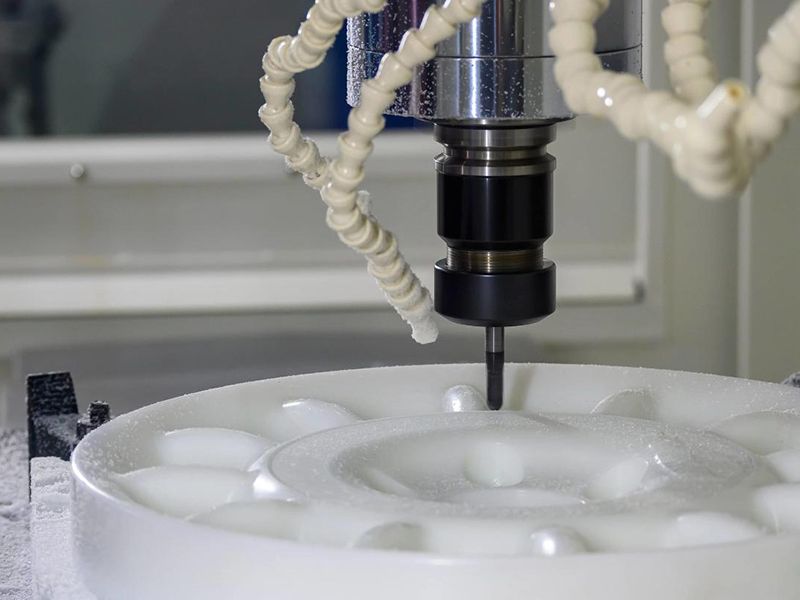
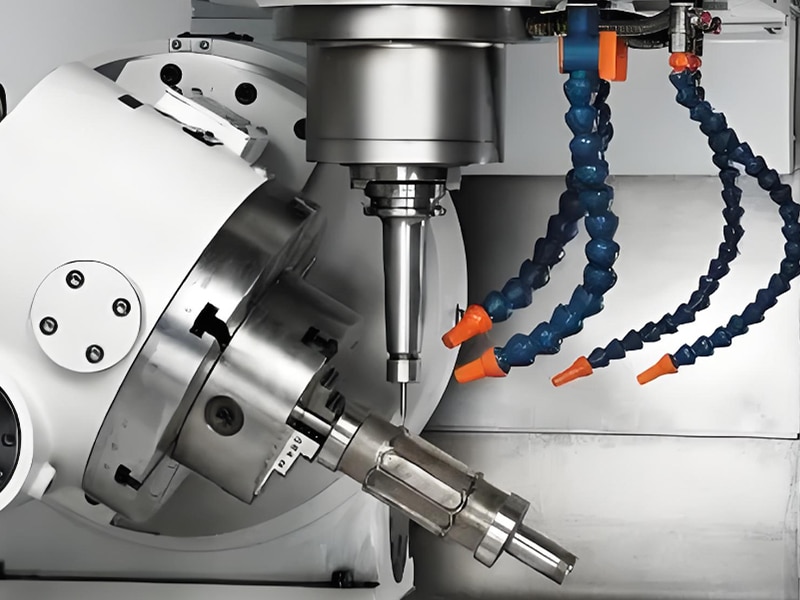
CNC mills hold the workpiece stationary on a table while a rotating cutting tool moves along multiple axes, typically X, Y, and Z on a 3-axis mill, with 4- and 5-axis versions available for complex geometries without repositioning the part. Common configurations include vertical machining centers, horizontal machining centers, and gantry-style mills for larger workpieces.
Learn our Precision CNC Milling Service
CNC Lathes: Efficiency in Rotational Parts
CNC lathes work the opposite way: the workpiece itself rotates while a stationary or slowly moving tool shapes it from the outside. This makes lathes the preferred machine for cylindrical parts like shafts, bushings, and threaded fittings. Many also include live tooling to mill flats or cross-holes without a second setup.
CNC Routers: Cutting Larger Materials
CNC routers are similar to CNC mills, but they are typically used for cutting larger sheets of material. The spindle rides on a gantry across a bed that can span several meters, cutting full sheets of wood, plastic, or composite panels in a single pass. CNC routers trade rigidity for speed and work envelope. This makes them the practical choice for large parts that don’t need machining-grade tolerances, like cabinetry, signage, or composite mockups.
CNC EDM (Electrical Discharge Machines): Fine Detail Work

CNC EDM machines shape material with electrical sparks rather than a cutting tool, eroding it away point by point between an electrode and the workpiece. Because there’s no mechanical cutting force, EDM can hold very tight tolerances on hard or heat-sensitive materials that resist conventional tooling. Common for fine features like small holes, narrow slots, and sharp internal corners.
CNC Laser Cutters: Speed and Precision for Thin Materials
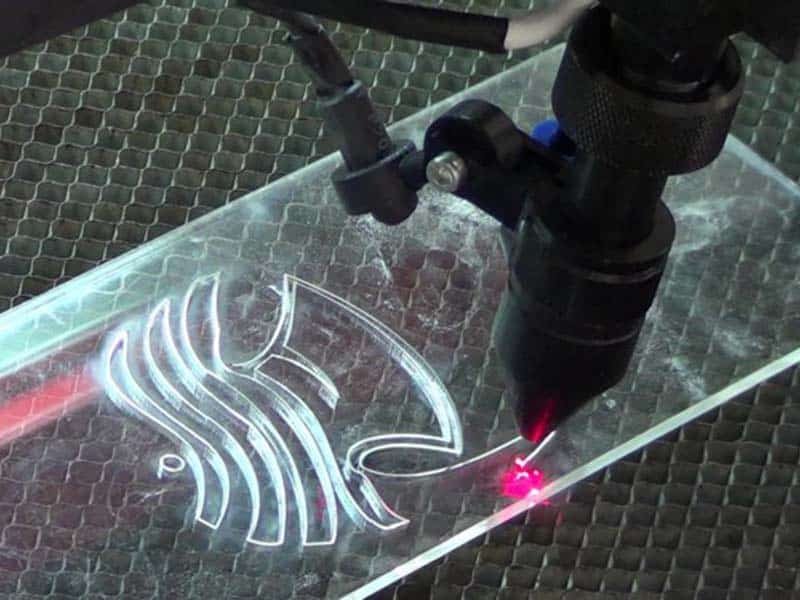
CNC laser cutters use a focused, high-powered beam instead of a physical tool, so there is no contact and virtually no tool wear. This makes them fast and precise on thin sheet stock, such as metal, plastic, or glass, with clean edges that need little finishing. It is commonly used in electronics and automotive sheet-metal work.
CNC Plasma Cutters: A Powerful Option for Metal Cutting
CNC plasma cutters melt through electrically conductive metals by using a high-temperature plasma torch guided along the cut path. They cut faster than laser on thick metal stock, though with a wider kerf and less edge precision. It is commonly used for industries that require large-scale metal fabrication with complex shapes, including the automotive and construction sectors.
Key Components of CNC Machining
CNC Controllers
Every CNC machine has a controller that reads the G-code and drives the machine’s motion in real time. Modern controllers use advanced algorithms to hold tighter accuracy and adapt to different part geometries, which is why newer CNC equipment can hold tighter tolerances than older machines.
CNC Machine Cutting Tools
Cutting tools such as drills, end mills, and reamers are selected according to the material and features being machined. Different tools are designed for specific operations, such as creating holes, cutting slots, or machining flat surfaces. The tool’s geometry and condition affect cutting performance, surface finish, dimensional accuracy, and machining time.

Workholding
Clamps, vices, and fixtures hold the workpiece in place during machining. The right workholding setup keeps the part stable throughout the cut, which is essential for maintaining tolerance and surface finish, especially on thin-walled or irregularly shaped parts.
Coolants and Lubricants
Coolants and lubricants manage heat and friction during cutting. Proper cooling extends tool life and protects the part from thermal distortion, which matters most on tight-tolerance parts and heat-sensitive materials.
Advanced CNC Machining Techniques
Multi-Axis CNC Machining
Multi-axis CNC machining adds rotational movement beyond the standard X, Y, and Z axes, letting the tool reach a part from multiple angles without re-fixturing, reducing both machining time and the alignment errors that come from repositioning. This makes it well suited to complex geometries in aerospace and medical device manufacturing, where several angles often need to be machined in a single setup.
You can see our multi-axis CNC machining guide for more details.

High-Speed Machining
High-speed machining uses higher spindle speeds, rapid tool movements, and optimized feed rates to cut faster without sacrificing part quality and reduces tool wear, which keeps throughput high even on complex geometries. It is particularly beneficial in industries that require the production of complex parts in short timeframes, such as automotive and aerospace.
You can see our high-speed machining guide for more details.
Precision CNC Machining
Precision CNC machining targets extremely tight tolerances, often down to the micron level. This is achieved through high-precision spindles, advanced controllers, and specialized tooling, paired with careful calibration and constant monitoring to hold those tolerances consistently across a run. This level of accuracy matters most in industries like aerospace, defense, and medical devices, where even a slight deviation can affect performance and safety.
You can see our precision CNC machining guide for more details.
Large CNC Machining
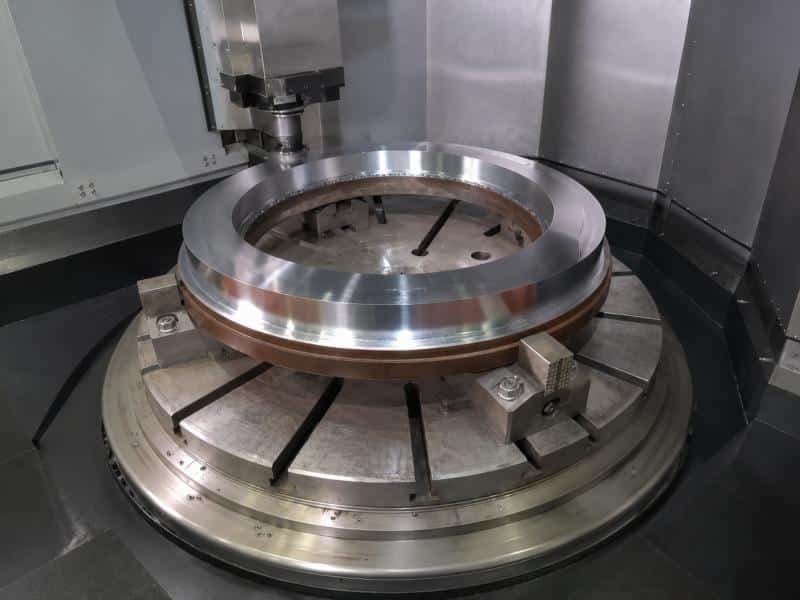
Large CNC machining handles oversized components that exceed standard machine bed and travel limits, requiring machines with extended travel and higher rigidity to hold accuracy across the full part. Thermal stability and fixturing become more critical as size increases. It is commonly used for structural components in heavy equipment, aerospace, and energy, where a single large part can replace an assembly of smaller pieces.
You can see our large CNC machining guide for more details.
Materials Used in CNC Machining
Metals in CNC Machining
Different metals machine very differently, which affects tool selection, cutting speed, and cycle time. Steel offers strength and heat resistance but generates more tool wear during machining. Aluminum cuts quickly with less tool wear, and its light weight and corrosion resistance make it common in aerospace and automotive parts. Titanium is more demanding to machine. Its low thermal conductivity concentrates heat at the cutting edge, requiring slower feeds despite its strength-to-weight advantages. Brass and copper machine easily and are valued for their conductivity.

Common Plastics in CNC Machining
Plastics generally machine more easily than metals, with lower cutting forces and faster material removal, though different plastics have different tolerances and finish. Some plastics hold their shape cleanly under the cutting tool, while others are prone to melting or chipping at high feed rates, or absorb moisture and shift slightly after machining. The differences directly affect how tight a tolerance can realistically be held and which plastic fits a given part.

Composite Materials in CNC Machining
CNC Machining in Different Industries
Automotive Industry: Precision Parts for Performance
In the automotive industry, CNC machining plays a pivotal role in producing precision parts that are vital to vehicle performance, safety, and efficiency, from engine parts to transmission housings. It is also used for rapid prototyping and small-volume production of specialized or performance vehicle parts.

Aerospace Manufacturing: Lightweight and Durable Components
In aerospace manufacturing, CNC machining produces lightweight yet durable components, from engine parts to structural elements and control systems, that can withstand extreme pressures and temperatures. CNC machining also ensures that these parts maintain precise tolerances, critical for ensuring the safety and reliability of aerospace systems.

Medical Devices: Ensuring Accuracy in Critical Applications
CNC machining plays a key role in medical device manufacturing, where surgical instruments, titanium implants, and diagnostic devices all depend on tight tolerances and smooth finishes to function safely in the body. This is why micron-level precision matters most, since it allows these parts to meet the rigorous standards the medical field demands.

Consumer Electronics: Tight Tolerances for Small Parts
CNC machining is used throughout consumer electronics production to shape smartphone casings, connectors, and circuit board components, holding the tight tolerances and clean finishes these parts need. It also produces prototypes and custom parts during design iteration, before a product moves into larger-scale production.

Defense and Military: High-Precision Components for Complex Systems
The defense and military sectors rely on CNC machining for the production of high-precision components used in weapons systems, vehicles, and communication equipment. It ensures that these components meet exact specifications and function reliably in mission-critical situations. It also machines hardened steels and composites into parts that can withstand harsh environments.

Choosing a CNC Machining Service Provider
When selecting a CNC machining service provider, it is essential to consider several key factors, including expertise, equipment capabilities, and the ability to handle the specific requirements of your project.
Evaluating CNC Machining Capabilities and Expertise
To ensure that your CNC machining service provider can meet your needs, it’s crucial to evaluate their machining capabilities and expertise. This includes reviewing the range of materials they can work with, the types of CNC machines they operate, and their ability to handle complex geometries and tight tolerances.
It is also worth considering their proficiency in advanced techniques such as multi-axis machining, high-speed machining, and precision machining. A capable provider will offer a comprehensive solution for your manufacturing needs and possess the technical know-how to overcome any challenges that arise during the machining process.
Lead Times and Cost Structures in CNC Machining
Understanding the lead times and cost structures associated with CNC machining is vital for managing expectations and ensuring timely delivery of your parts. Complexity, material availability, and required processes should be considered, not just a flat turnaround estimate.
Cost structures depend on factors like part quantity, material selection, and machining time. These factors can vary significantly from one project to another. When comparing CNC machining quotes, look for a service provider that offers transparent pricing and works with you to optimize the cost-efficiency of your project.
Working with a CNC Machining Provider
Clear, complete design files have a crucial impact on the smooth operation of the project. Ensure that your design specifications are clear and detailed, and provide the provider with any necessary CAD files or blueprints.
Communication is essential throughout the process, from initial design and prototyping to final production. By establishing clear expectations, offering feedback during each stage, and maintaining an open line of communication, you can ensure that the final product meets your quality standards.
Conclusion
CNC machining is a cornerstone of modern manufacturing. Whether creating complex aerospace components, medical devices, or automotive parts, CNC machining can offer unmatched precision, versatility, and efficiency. At Erye, our CNC machining service machines parts from prototype through production, matching the process, material, and tolerances to each project’s requirements. If you have a part in mind, upload your drawing to get started with a quote.