
On-demand manufacturing offers a flexible and efficient alternative to traditional manufacturing models. This innovative approach allows businesses to produce goods only when needed, minimizing waste, reducing inventory costs, and responding swiftly to market demands. By using advanced technologies such as 3D printing, CNC machining, and cloud-based platforms, on-demand production enables rapid prototyping and customization, making it an ideal solution for both small and large businesses.
What is On-Demand Manufacturing?
On-demand manufacturing, also known as custom manufacturing or cloud manufacturing, is a production model where products are made only when needed and in the required quantities.
Unlike traditional manufacturing, which involves producing large batches of products and storing them until they are sold, on-demand manufacturing produces parts based on actual customer demand, minimizing overproduction and excess inventory. This makes it especially valuable for startups and businesses requiring low-volume production. At the same time, larger companies can use this approach to reduce inventory risks and improve supply chain efficiency.
What Are the Technologies Used in On-Demand Manufacturing
On-demand manufacturing relies on a variety of technologies to deliver efficient, flexible, and high-quality products tailored to customer specifications. Below are some of the most essential technologies.
1. Injection Molding
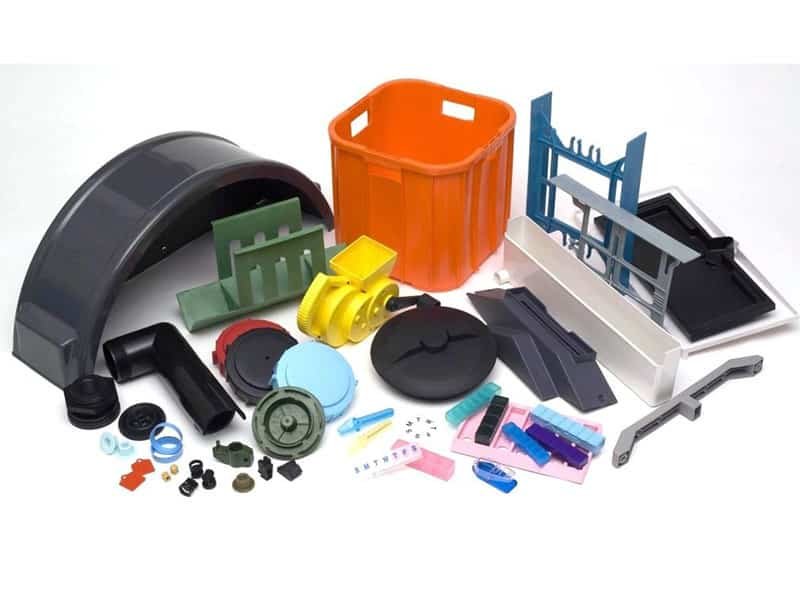
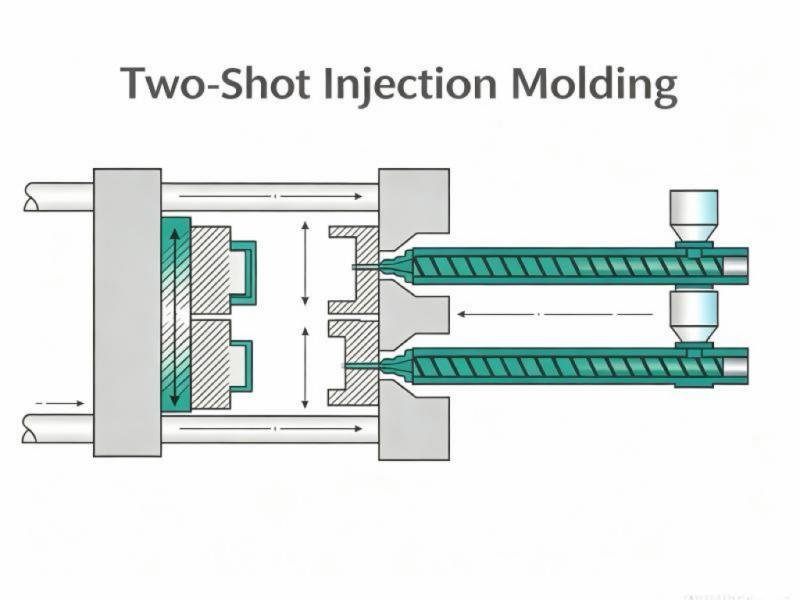
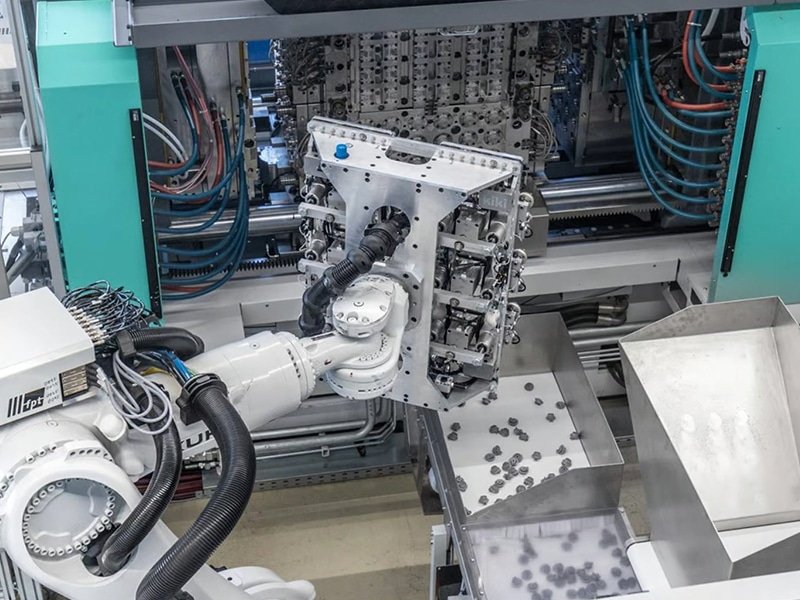
Injection molding, traditionally known for high-volume production, has become more suitable for on-demand manufacturing through advances in rapid tooling, aluminum molds, and 3D-printed mold inserts. The ability to produce high-quality parts quickly and cost-effectively is what makes injection molding a powerful tool for on-demand production, especially for industries requiring durable, high-performance parts.
Learn the guide for Injection Molding Manufacturing Process and Design Guide.
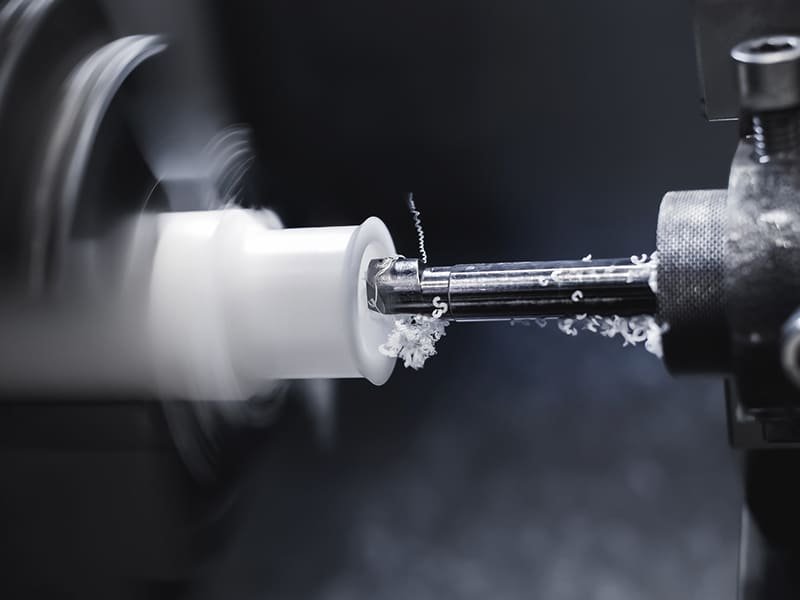
2. CNC Machining (Computer Numerical Control)
CNC technology is vital for on-demand manufacturing as it enables the production of parts with high accuracy and repeatability. It’s widely used for producing metal parts and components that require tight tolerances, making it a go-to solution for industries like aerospace, automotive, and medical. CNC machining offers flexibility without the high tooling costs of traditional methods, making it beneficial for low-to-medium volume production.
Learn the guide for CNC Machining Manufacturing and Design Guide.

3. 3D Printing (Additive Manufacturing)
3D printing is one of the most widely recognized technologies used in on-demand manufacturing. This process creates parts layer by layer from a digital model, making it particularly useful for rapid prototyping and creating one-off parts while minimizing material waste.

4. Robotics and Automation
Automation and robotics are increasingly being integrated into on-demand manufacturing to improve speed, accuracy, and consistency. Robots can perform tasks such as assembly, inspection, and quality control, allowing for faster production cycles and minimizing human error. Automated systems reduce the need for manual labor, lowering labor costs.
How Production Volume Affects On-Demand Process Selection
Production volume is one of the most important factors when selecting an on-demand manufacturing process. A process that makes sense for a few prototypes may not be the most economical choice for hundreds or thousands of parts.
For a small number of prototypes, CNC machining or 3D printing can avoid the upfront investment associated with production tooling. CNC machining can also remain practical for low-volume production when parts require high dimensional accuracy or are made from materials that are difficult to mold.
As production volume increases, the economics can change. For plastic parts with stable designs and recurring demand, injection molding can become more cost-effective because the initial tooling cost is spread across a larger number of parts.
For this reason, production volume should be considered together with tooling cost, part complexity, material, tolerances, and expected demand rather than used as the only factor in process selection.
Advantages of On-Demand Manufacturing
On-demand manufacturing offers numerous benefits that make it an attractive solution for companies of all sizes, especially in today’s fast-paced and competitive market. Below are some of the key benefits of on-demand manufacturing.
Flexibility in Production Volume
On-demand manufacturing allows production to adapt as demand changes. For very small production runs, CNC machining can be used without the need for dedicated tooling, making it practical to produce parts as needed. As demand increases, a rapid-tooled injection mold can support production of a few thousand units more efficiently. This allows production to scale in stages, ideal for businesses experiencing fluctuating demand or seasonal peaks.
Faster Time-to-Market
On-demand manufacturing, especially when combined with CNC machining and injection molding, allows for rapid prototyping and faster production cycles. CNC-machined parts can often be delivered within days, and aluminum or 3D-printed mold inserts can cut tooling time to a few weeks instead of the six to eight weeks conventional steel tooling requires. This significantly shortens the time it takes to bring products to market.
Customization and Flexibility
Whether it is a unique design, specific material requirements, or personalized features, on-demand manufacturing allows products to be tailored to specific customer needs and preferences. By using CNC machining, design changes can still be accommodated late in development, since a revised part only requires an updated toolpath rather than a new tool.
Support for Innovation and Prototyping
Considerations for On-Demand Manufacturing
While on-demand manufacturing offers numerous benefits, it’s important to consider the challenges that may arise with this approach.
Higher Unit Costs for Small Runs
Smaller quantities typically mean higher cost per unit. CNC machining avoids tooling costs but has higher per-part machining costs, while injection molding requires upfront mold investment that only pays off at higher volumes. For large and identical part quantities, traditional high-volume injection molding remains more cost-efficient.
Dependence on Technology
On-demand manufacturing relies heavily on CNC machining, injection molding, and cloud-based order management. Equipment issues can cause delays and tool wear affects CNC tolerances over long runs, while mold wear can gradually shift part dimensions in injection molding. Regular monitoring can help catch these issues early.
Risk of Supply Chain Disruptions
Material and logistics availability can affect lead times on either process. For example, a resin shortage can delay injection molding just as easily as a metal stock shortage delays CNC machining. Identifying alternative materials in advance helps reduce this risk.
Intellectual Property Concerns
Sharing CAD files for CNC machining or mold designs for injection tooling raises IP concerns. Strict agreements with manufacturing partners help ensure designs aren’t replicated or used without permission.