
A good injection-molded part should be designed with both manufacturing and assembly in mind. DFMA (Design for Manufacturing and Assembly) connects part design with the realities of manufacturing and assembly, helping ensure that a part can be produced and assembled as intended. In this guide, we will look at what DFMA means, why it matters, and how its principles can be applied to different manufacturing and assembly processes.
What Is DFMA
DFMA combines two related but distinct methods: Design for Manufacturing (DFM) and Design for Assembly (DFA). Together, they optimize both how the part gets made and how the parts go together.
DFM: Design for Manufacturing
DFM focuses on how individual parts are made. It examines whether a part can be produced efficiently, with the fewest possible steps, using the process it’s designed for. Different processes have different design requirements and limitations. Considering these requirements during the design stage can help prevent manufacturing difficulties, design changes, and production issues later on.
DFA: Design for Assembly
DFA focuses on how parts come together into a finished product. It examines whether the product can be assembled quickly in the fewest steps and with the lowest chance of error. Unlike DFM, DFA focuses on the interaction between multiple parts. It considers the number of assembly steps, part orientation, assembly sequence, and the requirements of each operation.
The Principles Behind DFMA
Effective DFMA focuses on making a product easier to manufacture and assemble while maintaining the required performance, quality, and functionality. The following principles can help simplify production and improve overall manufacturing efficiency.
- Minimize Part Count: Eliminate unnecessary components to reduce assembly steps and potential tolerance stack-up. Where possible, integrate multiple functions into an existing component rather than adding separate parts.
- Standardize Components: Use common connectors and fastener sizes across a product or product family to reduce inventory requirements, simplify procurement, and improve assembly consistency.
- Design for One-Directional Assembly: Design components to be assembled from a single direction to minimize handling and repositioning steps and facilitate future automation as production requirements increase.
- Use Self-Locating Features: Use chamfers, locating pins, and asymmetric mating geometries to guide components into the correct position and prevent incorrect orientation or positioning during assembly.
- Avoid Separate Fasteners: Use snap fits, press fits, or living hinges where suitable instead of separate screws or adhesives to reduce product weight and space requirements while meeting the required mechanical strength and durability.
- Design Tolerances Around Function: Apply tight tolerances only where required by the part’s function, fit, or performance, as unnecessarily tight tolerances can increase machining, inspection, and manufacturing costs without adding functional value.
How DFMA Adapts to Different Manufacturing Processes
The general DFMA principles apply across manufacturing processes, but each process has specific design constraints that should be considered early to avoid unnecessary production difficulties and costs.
Injection Molding
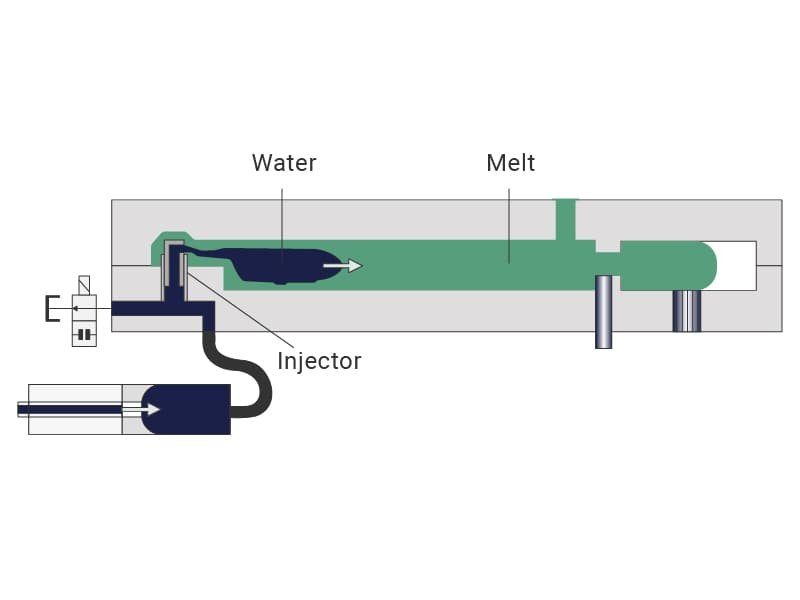
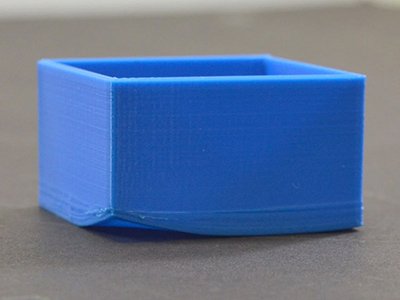
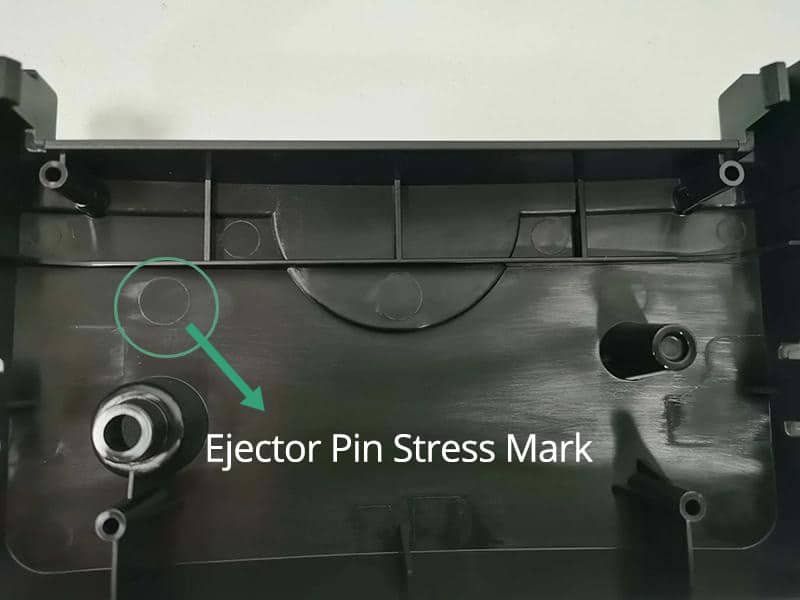
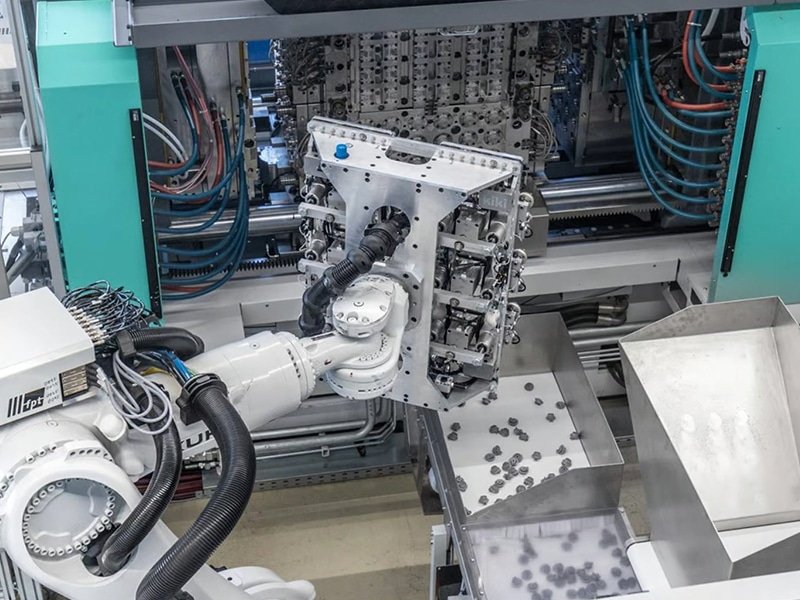
As a process built on controlled material flow and cooling, injection molding makes DFM largely a matter of managing how the melt fills and solidifies. The design should keep wall thickness uniform to reduce sink marks and warping, use sufficient draft angles for clean ejection, and avoid unnecessary undercuts that require sliding cores. For assembly, molded parts suit integrated snap-fits, living hinges, and alignment features that reduce fastener count and help parts self-locate.
CNC Machining
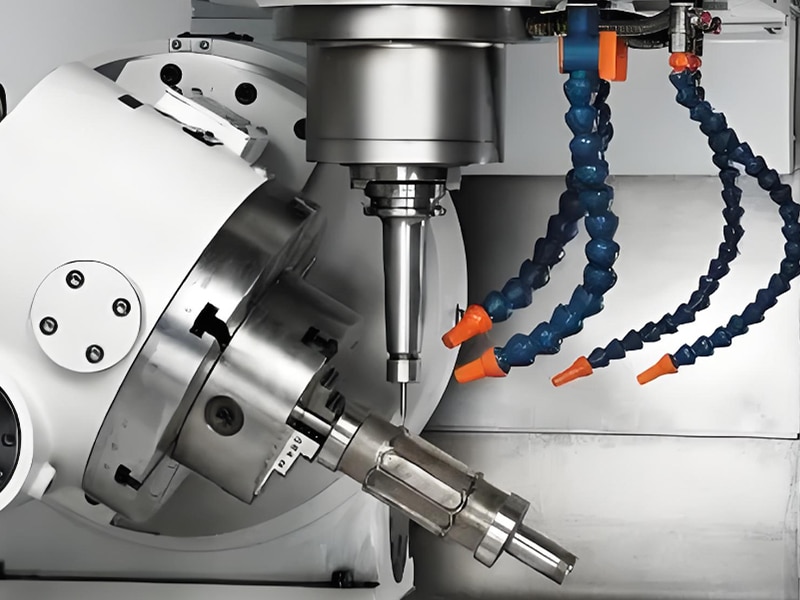
Because material is removed rather than formed, DFM for CNC machining centers on tool accessibility and part geometry. The design should avoid deep, narrow pockets and small internal radii that increase tool deflection and wear, using standard cutting tools with straightforward access. Tolerancing should follow how the part will mate and leave clearance for fastener access during assembly.
3D Printing
With parts built layer by layer, DFM ensures greater geometric design freedom for 3D printing. Minimizing overhangs reduces support material and print time, while appropriate wall thickness prevents fragile or failed prints. This same freedom allows interlocking joints or hinges to be printed directly in place, skipping manual assembly.

Material Selection in DFMA
Material selection is a key part of DFMA. A suitable material should meet functional requirements while also being compatible with the selected manufacturing process and production conditions.
Availability
A material may be suitable for the part, but if the required type, form, or quantity is difficult to source, it can lead to production delays, particularly if a long lead time or limited supply is discovered only after tooling production has begun. Substituting an unavailable material late in the assembly process may shift its fit or joining behavior with mating parts that were already qualified.
Cost
Material cost is determined not only by the unit price of the material but also by process-related scrap, material loss from runners, sprues, or support structures, and the material’s sensitivity to process variations that may increase rejection rates. For example, a higher-grade alloy needed for a press-fit joint, or a resin compatible with ultrasonic welding, can raise material cost beyond what standalone part production would demand.
Thermal Expansion
Materials expand and contract at different rates when exposed to temperature changes. The coefficient of thermal expansion should be considered when selecting materials, especially for assemblies containing multiple materials. Differences in thermal expansion can affect dimensional stability, loose fit, and long-term performance during operation.
Shrinkage
Materials shrink as they cool or cure, with the extent varying according to the material grade and wall thickness. So tooling must be sized to compensate in advance. Because shrinkage varies between materials, mating parts made in different materials can drift out of their intended fit even when each was molded correctly to specification.
Compatibility between Materials
Contact between dissimilar materials can introduce risks such as galvanic corrosion, differential wear, and chemical incompatibility. These risks also determine which joining method is even viable. For example, dissimilar plastics usually cannot be ultrasonic or solvent-welded and need fasteners or adhesive instead. Evaluating these interactions during design helps ensure material compatibility and long-term product performance.