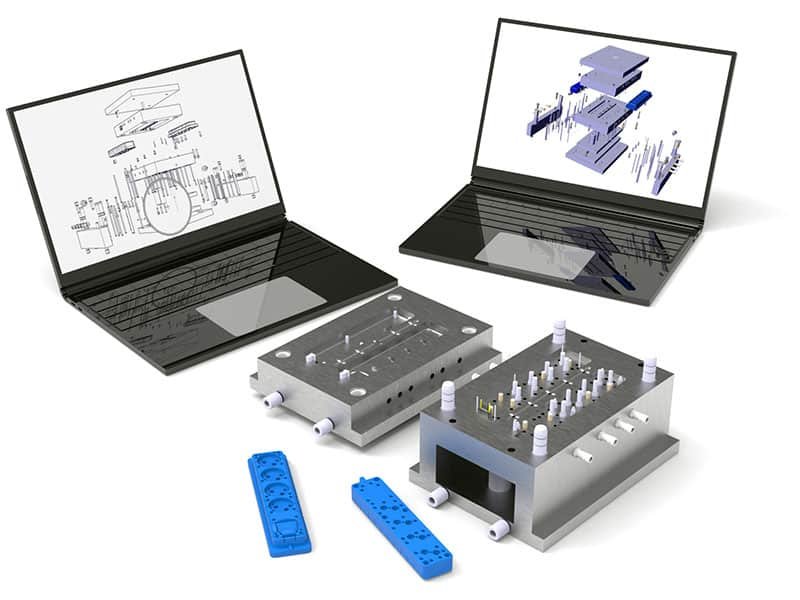
Making a flawless plastic component requires absolute precision from the initial design phase to final mass production. So, advanced tools like mold flow analysis software must be used. Mold flow analysis helps predict how molten plastic moves through an injection mold before production begins. For a project involving thin walls, long flow paths, multiple gates, or tight dimensional requirements, this early insight can help reduce costly mold changes and improve part consistency.
What is Mold Flow Analysis
Mold flow analysis is a computer-based study of plastic injection molding. When plastic pellets melt and enter a mold, they undergo rapid changes in viscosity, shear rate, and temperature. The analysis combines a 3D part model, proposed mold layout, material data, and estimated processing conditions. The software then calculates how the plastic is likely to behave during filling, packing, and cooling.
It can reveal potential injection molding defects, such as short shots, air traps, weld lines, pressure peaks, uneven cooling, shrinkage, and warpage, and bridges the gap between digital CAD models and physical production reality. The results depend on the quality of the model, material data, and process assumptions, so analysis supports engineering decisions rather than guaranteeing a perfect result.

When Should Mold Flow Analysis be Used?
Flow analysis of injection molds is most valuable during the early design stage, after the initial 3D part geometry is established and before mold tooling is finalized. At this stage, analysis can identify potential filling, cooling, and dimensional issues while design changes remain relatively straightforward.
The following example shows how the process works for a plastic electronic enclosure.
- Prepare the model. The 3D model of the enclosure includes thin walls, internal ribs, mounting bosses, and snap-fit features. The proposed gate, runner, and cooling layouts are added to the model for analysis.
- Choose the material. The enclosure uses ABS resin. The mold flow analysis software uses the ABS resin’s viscosity, thermal properties, and shrinkage data to predict its behavior during molding.
- Set process conditions. The analysis uses estimated melt temperature, mold temperature, injection speed, and packing pressure based on the selected material and proposed molding process.
- Run the calculation. The mold flow analysis predicts how the ABS resin fills the enclosure. The results show that a thin section near the far end may require excessive injection pressure. The analysis also identifies a potential weld line near a mounting boss.
- Review and refine. Adjust the position of the gate. A second analysis compares the new filling pattern, pressure distribution, and weld-line location to determine whether the changes improve mold performance.
The accuracy of the results depends on the quality of the input data. For example, using the wrong ABS grade can produce inaccurate pressure and shrinkage predictions. Reliable material data and realistic molding parameters help make the analysis more useful for mold design decisions.
5 Types of Mold Flow Analysis
Mold flow analysis covers several aspects of injection molding, from selecting suitable materials to evaluating filling behavior, predicting warpage, and optimizing processing parameters.
Material Selection
Material selection analysis evaluates how different resin grades perform under the proposed molding conditions.
- Flow characteristics: Compare the flowability of candidate resins under planned molding conditions. For thin-walled parts or long flow paths, favor materials with higher flowability to reduce filling pressure.
- Mechanical properties: Match material strength, stiffness, and toughness to the part’s intended use. Choose stiffer grades for rigid structural parts and tougher materials for components exposed to impact.
- Thermal behavior and shrinkage: Compare predicted shrinkage and warpage across candidate materials. For parts with tight tolerances, favor materials that offer more predictable dimensional stability under the planned molding conditions.
- Processing efficiency: Compare processing temperatures and cooling times of materials to assess production efficiency. When materials meet the same performance requirements, favor options with shorter feasible cycle times and lower material costs.
Filling Analysis
Molten plastic must advance smoothly through intricate cavities without trapping air pockets or causing excessive pressure spikes. Mold flow analysis software calculates exact clamp tonnages and injection pressures required to push material into every corner of the geometry and also determine whether the plastic can reach all features within the available filling time and pressure range. They can also show where the flow front divides and later meets.
As the polymer front advances, air inside the cavity must escape through vents. Filling analysis identifies potential air traps, helping determine suitable locations for vent pins or parting line vents. Proper vent placement promotes complete cavity filling and reduces the risk of uneven packing and burn marks caused by compressed trapped air.
Flow Analysis
Flow analysis of injection molds examines how the melt moves through the complete feed system and cavity, including the sprue, runners, gates, and part geometry. It can assess flow resistance, pressure drop, flow balance, and the way different flow fronts meet.
Filling analysis and flow analysis are closely related. Filling analysis usually emphasizes the progression of cavity filling, while a broader flow study can examine how the feed system and part geometry influence that progression. For example, a mold uses several gates to fill a wide panel. The flow fronts meet near a visible surface, creating a potential weld line. The analysis can help compare gate positions and flow paths so the meeting point moves to a less critical area.
Warpage Analysis
Warpage analysis predicts how a molded part may deform as it cools and shrinks. Uneven cooling and differential shrinkage between the surface and core can create residual stresses, causing the part to twist, bow, or distort after ejection. Plastic flow analysis combines filling, packing, and cooling data to predict these stress patterns and identify areas at risk of warpage.
By analyzing predicted deflection before mold production, the mold geometry can be intentionally modified with an opposing distortion to compensate for expected warpage and improve the dimensional accuracy of the finished part.

Process Optimization
Flow analysis of injection molds helps optimize processing parameters before full-scale production, reducing the need for repeated machine trials. By simulating different injection speeds, packing pressures, and melt temperatures, it helps identify a suitable processing window for stable molding. Optimizing these parameters in advance can shorten machine setup time, minimize scrap rates, and improve consistency across production batches.
The Benefits of Conducting a Mold Flow Analysis
A well-planned mold flow analysis provides technical insights to evaluate design and process decisions before committing to expensive changes. It helps identify potential risks early and guides practical improvements before production begins.
- Fewer Late Mold Changes: Identify potential mold design and processing issues before the mold is completed, reducing costly rework and tooling modifications after initial trials and helps keep projects on schedule
- More Reliable Part Quality: Evaluate risks related to short shots, weld lines, sink marks, shrinkage, and warpage to improve part appearance, dimensional accuracy, and consistency.
- Better Material and Mold Decisions: Compare material grades and mold configurations under the same simulated conditions to identify suitable options for the part’s performance requirements and existing mold design.
- More Efficient Trial Runs: Use analysis results to establish suitable processing parameters and focus physical trials on critical settings, reducing guesswork and helps narrow down suitable process settings, and speeds up the transition to stable production.
Conclusion
Mold flow analysis helps turn potential injection molding problems into questions that can be evaluated before tooling is complete. Implementing comprehensive flow analyses early in the development timeline helps control project costs, shorten time to market, and improve part quality throughout production. Erye provides injection molding mold support and can review your part geometry, material requirements, and molding risks as part of a project quote.