
Material properties play an important role in determining whether an injection-molded part can achieve the required performance. Among these properties, brittleness affects how materials respond to impact, stress, and environmental conditions, which directly influences part reliability and durability. Understanding material brittleness can help you make better decisions when choosing plastics for injection-molded components.
What Is Brittleness in Materials
Brittleness refers to the tendency of a material to fracture or break with little deformation under stress. A brittle material generally has limited ability to absorb impact energy and low resistance to sudden loads. In practical applications, materials with higher brittleness are more likely to crack under sudden impact or excessive stress, whereas tougher materials can stretch or deform before failure.
For plastic materials, brittleness does not always indicate poor performance. Some applications require materials with high stiffness, dimensional stability, or hardness, even when flexibility is limited. The key is selecting a material that provides the right balance of properties based on the specific requirements of the final part and its intended application.
Common Types of Brittle Materials
Brittle materials can be found across different industries, including plastics, metals, ceramics, and construction materials.
Glass
Glass is one of the most recognizable examples of a brittle material. Unlike many crystalline materials, glass has an amorphous atomic structure, which means its atoms do not form an organized pattern that allows internal movement when stress is applied.
So stress tends to concentrate around small defects or weak areas. Once a crack begins to form, it can quickly spread through the material, causing sudden fracture. For example, a glass container dropped onto a hard surface usually breaks into sharp fragments instead of bending or changing shape.

Ceramics
Ceramics are another common group of brittle materials. This category includes materials used in industrial and consumer applications such as cement, porcelain, bricks, pottery, and other ceramic products.
The brittleness of ceramics mainly comes from their rigid atomic bonding structure. Strong ionic and covalent bonds prevent atoms from sliding past one another, making it difficult for the material to deform when external forces are applied. When stress exceeds their capacity, cracks can quickly develop and spread, leading to sudden fracture.

Graphite
Graphite is a unique example of a brittle material because it has a layered crystalline structure. The atoms within each layer are strongly bonded, while the connections between different layers are relatively weak.
This structure allows graphite layers to slide over one another. That is why it can be used in applications such as pencils and lubricants. However, the combination of strong internal bonding and weak connections between layers also contributes to its characteristic brittle behavior. It makes graphite prone to cracking or breaking when exposed to excessive stress.

Low-Plasticity Alloys
Materials such as cast iron and certain titanium or magnesium alloys have limited plastic deformation capability compared with more ductile metals. For example, cast iron contains carbon-rich structures that can create stress concentration points within the material. When exposed to impact or tensile forces, these areas can become the starting points for cracks, allowing fractures to spread quickly.
While these materials can provide advantages such as high hardness, wear resistance, and compressive strength, their limited ductility makes them more likely to experience brittle fracture.
Brittle Plastics
Some plastic materials used in injection molding can show brittle behavior depending on their molecular structure and material composition. For example, acrylic (PMMA) and polystyrene (PS) provide excellent rigidity, dimensional stability, and surface appearance but have lower impact resistance compared with tougher engineering plastics. Under sudden impact or excessive stress, these materials are more likely to crack rather than deform.
In addition, factors such as temperature, additives, processing conditions, and the actual working environment can also influence whether a plastic part becomes more susceptible to cracking.
Factors That Cause Materials to Become Brittle
Material brittleness is influenced by various factors. While some materials are naturally brittle due to their internal structure, others may become more fragile over time because of changes in temperature, aging, or improper processing.
Material Composition
Different polymers have different molecular arrangements, which determine how easily they can deform under stress. Factors such as additives and fillers can also influence the balance between stiffness and toughness. For example, mineral fillers such as calcium carbonate and talc are commonly used to improve rigidity, dimensional stability, and wear resistance.
However, excessive amounts of these fillers may reduce impact resistance by limiting polymer chain movement and making the material less capable of deforming under stress.
Temperature and Environmental Exposure
Temperature changes and long-term environmental exposure can significantly affect material toughness. Low temperatures can reduce molecular movement within plastics. Similarly, prolonged exposure to UV radiation, moisture, or chemicals can gradually degrade the polymer structure. These will both reduce the material’s toughness and make it more likely to crack when subjected to impact or stress.
For example, ABS parts may perform well under normal indoor conditions but become more brittle over time when exposed to cold temperatures and continuous UV radiation, increasing the risk of cracking during use. Therefore, selecting a material that can maintain its mechanical properties under actual operating conditions is essential for preventing premature failure.
Processing Conditions
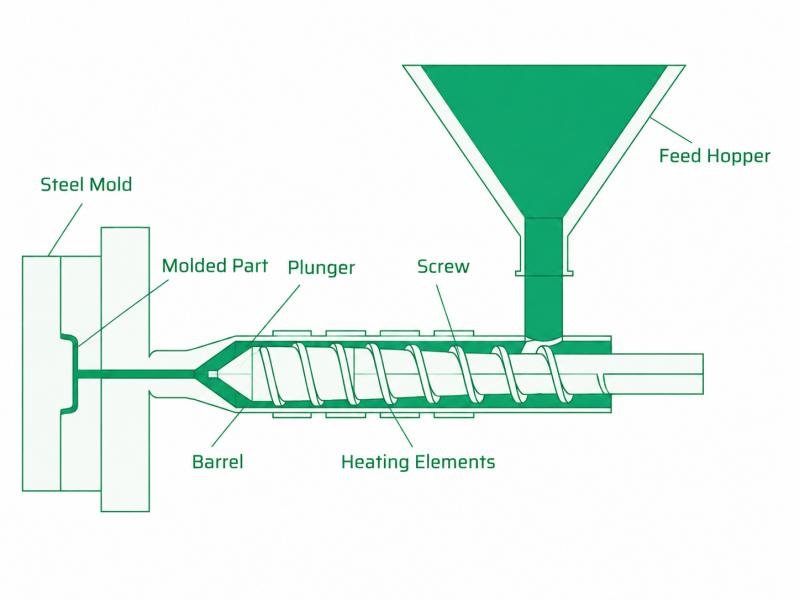
During injection molding, processing conditions can directly affect the final material properties. Excessive processing temperatures, improper cooling, or prolonged exposure to heat may cause polymer degradation and damage molecular chains. As a result, molded parts may experience reduced impact resistance and increased brittleness. Therefore, proper material handling and process control help maintain the expected mechanical performance of injection molded components.
Mechanical Stress and Part Usage
The way a part is used also influences the likelihood of brittle failure. When materials are exposed to repeated impacts, vibration, constant loads, or sudden forces, cracks may gradually form and spread, especially in materials with limited flexibility. Therefore, understanding the expected working conditions is important when selecting a suitable material.
Why Material Brittleness Matters
Understanding material brittleness is important because material selection directly affects the reliability and service life of finished parts. For injection molded components, excessive brittleness may result in:
- Cracking during assembly
- Reduced impact resistance
- Failure under repeated loading
- Shorter product lifespan
- Poor performance in harsh environments
Therefore, the right material choice can help ensure that injection molded parts achieve reliable performance while reducing the risk of premature cracking or failure during use.
How to Reduce Brittleness in Injection Molded Parts
Once the causes of brittleness are understood, the next step is addressing them at each stage of part development. The following approaches can help reduce the risk of premature cracking and improve the long-term reliability of injection molded parts.
- Material Selection: Recommend suitable engineering plastic alternatives based on the application and apply toughening strategies such as rubber toughening, copolymerization, and controlled filler content.
- Environmental Adaptation: Select weather-resistant material grades, and validate performance through targeted testing, such as drop-weight and low-temperature impact testing.
- Post-Processing: Apply annealing to materials prone to residual stress, such as PC and PMMA, to relieve internal stress generated during molding.
- Storage and Transportation: Control the temperature and humidity of storage conditions to prevent moisture absorption or aging that leads to brittleness, and avoid drops, impacts, or excessive compression during transportation and assembly
Conclusion
Material brittleness is an important consideration when evaluating the long-term performance of injection molded parts. While some brittle materials can provide advantages such as high rigidity, hardness, and dimensional stability, their tendency to crack may create challenges in applications involving impact, repeated stress, or demanding environments.
With professional material selection support and injection molding expertise, Erye can help you identify suitable plastic materials that meet your performance requirements and achieve reliable, durable parts for different applications.