ABS Plastic Manufacturing Guide
What Is ABS – What Is ABS Stand for?
ABS plastic material full form is Acrylonitrile-Butadiene-Styrene. It is a terpolymer made by combining three monomers:
- Acrylonitrile contributes chemical resistance and thermal stability.
- Butadiene gives toughness, impact resistance, and helps performance at low temperature.
- Styrene adds rigidity, gloss, and processability (ease of molding).
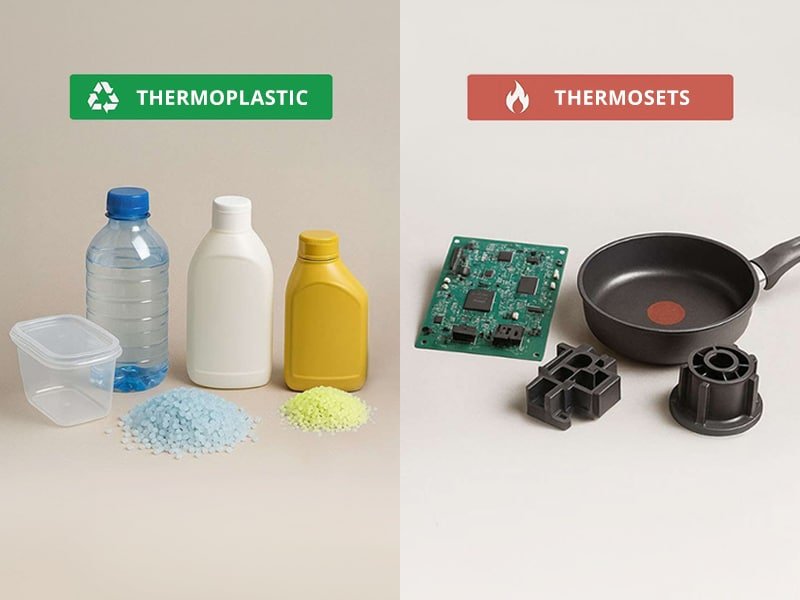
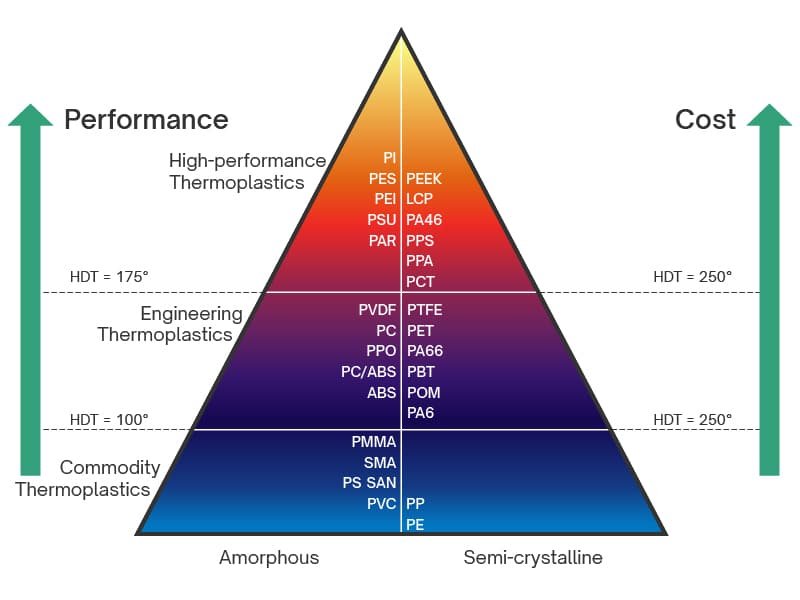
As a thermoplastic, ABS softens when heated and solidifies when cooled, allowing it to be molded. It is amorphous—meaning no sharp melting point—and has a glass transition temperature around 105 °C.
Different Types of ABS
Below are several common ABS grades. Each has modifications so it suits particular applications. Understanding the differences helps you choose the right ABS part for your needs.
General-Purpose ABS
A balanced grade offering moderate toughness, good surface finish, and straightforward molding behavior; optimal for enclosures, housings, or consumer goods.
High-Impact ABS
Higher butadiene content or tougher rubber inclusions make it more resistant to shocks and drops; it is used in bumpers, safety parts, or items subject to rough handling.
Heat-Resistant ABS
Modified to retain stiffness and dimensional stability at elevated temperatures; useful when parts will be exposed to heat (e.g., equipment near motors or under lighting).
Flame-Retardant ABS
ABS grade with added flame retardant compounds to meet UL or other safety standards; used for electrical enclosures, switches, or appliances.
UV / Weather Stabilized ABS
ABS that includes UV stabilizers or special additives to resist sunlight, color fading, and degradation when used outdoors. Ideal for outdoor fixtures or exposed aesthetic parts.
Properties and Features of ABS
ABS combines strength, toughness, and good surface appearance. Its core properties—impact resistance, ease of molding, dimensional stability, and aesthetic finish—make it widely used for plastic parts that must perform well and look good. Below are key properties of ABS.
Physical Properties of ABS Plastic
- High impact resistance
- High rigidity
- Heat and chemical resistance
- High electrical insulating properties
- Abrasion and stain resistance
- Structural/Dimensional stability
- Good surface brightness
- Weldability/Moldability
Chemical Properties
- Dilute Acid: Very Good
- Dilute Alkalis: Very Good
- Oils and Greases: Very Good
- Aliphatic Hydrocarbons: Moderate
- Aromatic Hydrocarbons: Poor
- Halogenated Hydrocarbons: Poor
- Alcohols: Poor (variable)
Mechanical Properties of ABS Plastic
- Elongation at break: 10 – 50 %
- Elongation at yield: 1.7 – 6 %
- Flexibility (Flexural modulus): 1.6 – 2.4 GPa
- Hardness Shore D: 100
- Density: 1.06 g/cmÂł
- Stiffness (Flexural modulus): 1.6 – 2.4 GPa
- Strength at break (Tensile): 29.8 – 43 MPa
- Strength at yield (Tensile): 29.6 – 48 MPa
- Toughness (Notched Izod impact at room temperature): 200 – 215 J/m
- Toughness at low temperature (Notched Izod Impact at low temperature): 20 – 160 J/m
- Heat deflection temperature: 98 °C (208 °F) at 0.46 MPa
Electrical Properties of ABS Plastic
- Dielectric Constant: 2.7- 3.2
- Dielectric Strength: 15.7 -34kV/mm
- Arc resistance: 60-120 sec
- Dissipation factor: 50 – 190 x 10-4
- Volume Resistivity: 14 – 16 x 1015Â Ohm.cm
Advantages & Disadvantages of ABS Plastic
Below are the clear pros and cons of using ABS plastic for injection-molded parts, with each point stated and then explained. As a manufacturer, understanding these helps you decide whether ABS is the right material for your part’s performance, cost, and environment.
Advantages of ABS Plastic
Excellent impact toughness
Good balance of strength and rigidity
Surface quality and aesthetic flexibility
Ease of processing and manufacturability
Decent chemical resistance in everyday environments
Disadvantages of ABS Plastic
Poor UV and weather stability without protection
ABS tends to degrade under prolonged sunlight—yellowing, loss of gloss, become brittle unless UV stabilizers or coatings are used.
Limited high temperature performance
Above ~80-100 °C, ABS begins to soften, lose rigidity, or deform under load; thus not well suited for high-heat continuous service without special grades.
Flammability and smoke during combustion
ABS is combustible; when burned, may produce toxic or irritating smoke and fumes. Flame retardant formulations are needed for safety-critical applications.
Vulnerability to strong solvents and chemicals
Certain solvents (e.g. ketones, esters, aromatic hydrocarbons) attack ABS, causing swelling, surface damage, or loss of mechanical properties.
Thermal expansion and dimensional instability
ABS has a relatively high coefficient of thermal expansion compared to some engineering plastics, which means dimensions can change with temperature; tight tolerances are harder to maintain in extreme temperature swings.
ABS Plastic Manufacturing Process
ABS plastic parts can be produced using various manufacturing processes; each process affects cost, precision, finish, and suitability. Below are six common manufacturing methods.
Injection Molding
CNC Machining
3D Printing
Extrusion
Blow Molding
Thermoforming
ABS Plastic Application
ABS is used in many industries. Typical applications include:
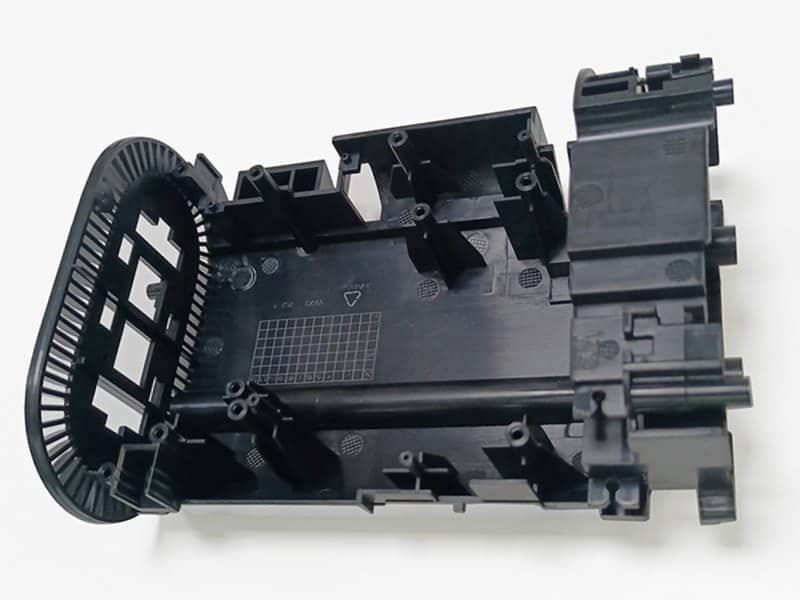
- Electronic housings, switch and plug shells, consumer device covers.
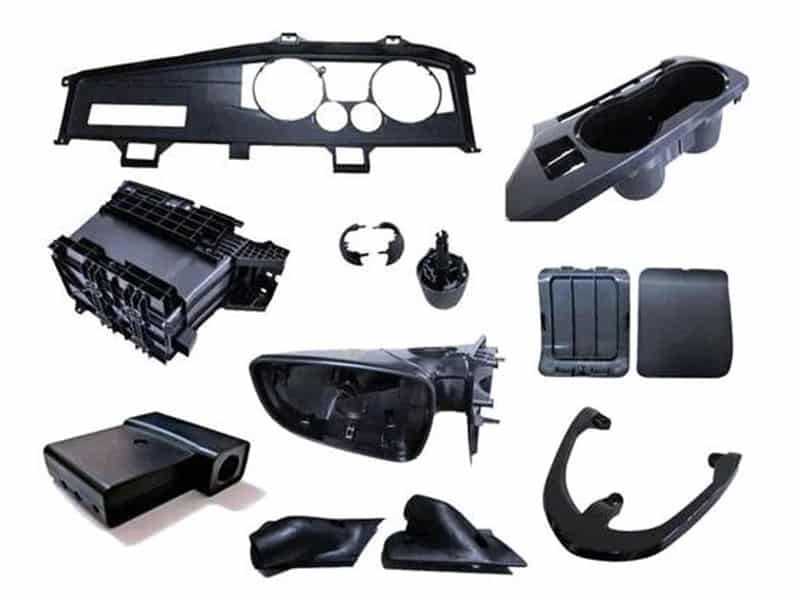
- Automotive interior parts like dashboards, knobs, and trims.
- Toys (e.g., building blocks), handheld tools, protective casings.
- Appliances: fridge/freezer liners, vacuum cleaner parts, kitchen tool housings.
- Prototyping and low/medium volume production where the balance of strength, finish, and cost matters.

Materials Similar to ABS and How to Choose
ABS vs PP (Polypropylene)
Key Differences
How to Choose
ABS vs PC (Polycarbonate)
Key Differences
How to Choose
ABS vs Nylon (Polyamide)
Key Differences
How to Choose
ABS vs HDPE (High-Density Polyethylene)
Key Differences
How to Choose
ABS vs PC/ABS Blend
Key Differences
How to Choose
Get ABS Plastic Part
ABS Plastic Material FAQs
Is ABS plastic heat resistance? How well can ABS withstand heat?
ABS can typically withstand continuous operating temperatures up to about 80 °C; above that it begins to soften and lose stiffness.
What are common uses of ABS plastic?
ABS is often used for consumer electronics housings, automotive interior panels, toy parts like LEGO bricks, appliances, and protective enclosures.
Does ABS plastic resist UV exposure?
Without UV stabilizers, ABS degrades under sunlight—yellowing, loss of toughness, surface cracking. With additives or coatings, UV resistance improves.
Is ABS plastic strong? How strong is ABS plastic in mechanical terms?
ABS has moderate strength: tensile strengths generally in the 40-50 MPa range; good impact strength; but less strong than some engineering plastics like polycarbonate.
What is ABS plastic temperature rating?
For continuous use, roughly -20 °C to 80 °C; HDT (Heat Deflection Temperature) around 80-100 °C; glass transition temperature (~when it softens) about 105 °C.
Is ABS plastic BPA free?
Generally yes—ABS does not inherently contain bisphenol A (BPA), because its chemical composition is based on acrylonitrile, butadiene, and styrene. Use certified grades to ensure no unintended additives.
Is ABS material safe or is ABS toxic?
ABS is considered safe for many uses; under normal use it does not release toxic substances. However, overheating or burning ABS can generate harmful gases (e.g. styrene or acrylonitrile). Choose good quality ABS and avoid overheating.
Is ABS flexible?
ABS has some degree of flexibility depending on thickness and grade; it can bend or deflect under load without breaking but is not rubbery—thin walls or snap-fits show flexibility while large rigid parts are stiff.
Related Resources of ABS Plastic Manufacturing
Plastics have become a primary material in modern vehicle manufacturing. The use of automotive plastic
Polymer materials are BY FAR the most unique materials in modern manufacturing. You see them
In the food and beverage industry, safety is paramount. Every component that comes into contact
The plastic melting point plays a critical role in injection molding, directly impacting material flow,
Compared to traditional materials such as metals, ceramics, and laminated glass, plastic has the disadvantage
It is important to avoid common mistakes in plastic material selection during the injection molding process. It is a