PVC Injection Molding
Durable, flexible, and cost-effective—PVC injection molding is ideal for producing high-performance plastic parts.
Erye Offer PVC Injection Molding Service to Specific to Your Needs!
PVC (Polyvinyl Chloride) injection molding is a manufacturing process used to produce durable, chemically resistant, and cost-effective plastic parts. With excellent flexibility, impact strength, and weather resistance, PVC is widely used in industries such as construction, medical, automotive, and consumer goods. Due to its heat sensitivity, precise processing conditions and specialized equipment are required to ensure optimal results.
- Material Expertise: Proper formulation control to enhance heat resistance, flexibility, or durability.
- Precision Molding: Tight tolerances and smooth surface finishes for complex parts.
- Insert & Overmolding: Integration with metal or other plastics for multi-material components.
- High & Low Volume Production: Scalable solutions to meet different manufacturing demands.
- Post-Molding Services: Secondary processing, assembly, and custom packaging options.
What is PVC Injection Material?
Polyvinyl Chloride (PVC) is a thermoplastic polymer known for its excellent durability, chemical resistance, and cost-effectiveness. Composed of vinyl chloride monomers, PVC is unique in its ability to be rigid or flexible, depending on the formulation and additives used. It exhibits strong resistance to moisture, corrosion, and UV exposure, making it ideal for both indoor and outdoor applications. Additionally, PVC has inherent flame-retardant properties due to its high chlorine content, further enhancing its suitability for electrical and construction applications.
Types of PVC
- Rigid PVC (RPVC) – High-strength, impact-resistant, used in pipes, fittings, and structural components.
- Flexible PVC (FPVC) – Enhanced with plasticizers for flexibility, found in medical tubing, cables, and seals.
- CPVC (Chlorinated PVC) – Improved heat resistance, ideal for hot water pipes and industrial applications.
- UPVC (Unplasticized PVC) – No plasticizers, offering superior rigidity and weather resistance, often used in window frames and doors.
PVC Injection Molding Services
| Service | Details |
|---|---|
| Maximum Part Size | 2500mm x 2000mm (98 in. x 78 in.) |
| Recommended Wall Thickness | 0.89 mm and 3.81 mm(0.035 to 0.150 inches) |
| Color Options | Any color according to RAL or Pantone Code |
| Standard Finishes | SPI and VDI |
| Mold Ownership | Customer owned with mold maintenance |
| Mold Life | Unlimited (If the PVC injection mold worn out, Erye will cover the cost of new mold) |
PVC Injection Molding Design Guide
Designing PVC injection molded parts requires consideration of the material's properties, including its flow behavior, shrinkage rate, and thermal sensitivity. Following are the key design guidelines.
| Item | Description |
|---|---|
| Wall Thickness | Maintain uniform wall thickness (typically 2.0–4.0 mm) to prevent warping and ensure even cooling. Avoid sudden transitions that may cause stress concentrations. |
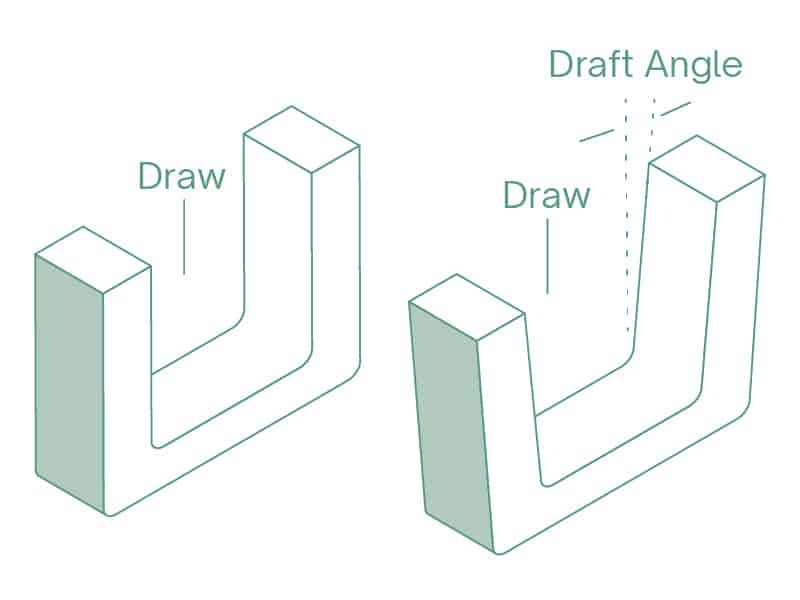
| Draft Angles | Apply at least 1.5°–2.0° of draft to facilitate easy ejection from the mold, reducing the risk of surface defects. |
| Ribs and Reinforcements | Use ribs instead of thick walls to improve strength without excessive material use. Keep rib thickness at 50–60% of the main wall thickness to prevent sink marks. |
| Rib and Boss Design | Ribs should be 50–60% of the main wall thickness to avoid sink marks. Bosses should have generous fillets to reduce stress. |
| Fillets and Corners | Sharp corners can lead to stress concentration and weak points. Use fillets with a minimum radius of 0.5× the wall thickness to improve part durability. |
| Shrinkage Compensation | PVC has a low shrinkage rate (0.2%–0.5%) compare to other plastics, but proper mold design should account for this to maintain dimensional accuracy. |
Start PVC Injection Molding Project
Get high-quality PVC injection molded parts! Contact with Erye to request a quote!
Advantages of PVC Injection Molding
Excellent Chemical Resistance
PVC resists acids, alkalis, oils, and many chemicals, making it suitable for fittings, valves, medical parts, and industrial components.
Good Flame Resistance
Its natural flame-retardant property, and it tends to self-extinguish when the flame source is removed.
Cost-Effective Material
PVC is generally affordable and widely available, helping reduce production costs for high-volume parts.
Good Electrical Insulation
PVC is commonly used in electrical housings and cable-related components because of its insulating properties.
Can Be Formulated for Different Properties
PVC can be modified into rigid or flexible grades depending on the application requirements.
Disadvantages of PVC Injection Molding
Not Ideal for High-Temperature Applications
Standard PVC has limited heat resistance and may soften or deform under elevated temperatures.
Environmental and Regulatory Concerns
Some PVC formulations use additives or plasticizers that face environmental scrutiny in certain industries or regions.
Can Become Brittle in Cold Conditions
Rigid PVC may crack under impact in low-temperature environments if not properly modified.
Relatively Low Impact Resistance
Standard PVC is generally less impact-resistant than ABS or polycarbonate unless modified.
Application of Molded PVC Products
Construction & Building
- Electrical conduit fittings
- Pipe fittings
- Window and door profiles
- Roofing membranes
- Wall panels
Electronics & Electrical
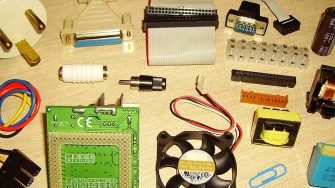
- Cable insulation and connectors
- Switch housings
- Battery cases
- Electrical enclosures
Consumer Goods
- Tool handles
- Storage containers
- Plumbing accessories
- Toys and figurines
- Furniture fittings
Medical & Healthcare
- IV connectors
- Catheter components
- Blood collection tubes
- Respiratory masks
- Medical housings
Additonal Options for PVC Parts
Case Study
Vacuum Cleaner Plastic Mold Manufacturing
How we guide brand owners through mold design and manufacturing? This case shows how we worked side-by-side with the client to build the mold that brought their vacuum cleaner to market.
Related PVC Injection Molding Resources
Scientific injection molding is a structured, data-driven approach designed to achieve consistent part quality and
On-demand manufacturing offers a flexible and efficient alternative to traditional manufacturing models. This innovative approach
Reaction Injection Molding (RIM), is a specialized manufacturing process tailored for producing plastic parts, particularly