
Medical devices must perform reliably because even a small defect can affect their function, safety, or usability. Medical injection molding provides a practical way to produce these precise components at different production volumes. This article explains how medical injection molding works, how it differs from traditional injection molding, the injection process used, which materials are commonly used, and what quality and regulatory requirements you should consider when selecting a solution.
What Is Medical Injection Molding
Medical injection molding is the most common method of modern medical device manufacturing. The process is similar to conventional injection molding. It uses injection molding principles to form molten plastic into precise shapes. The main difference is that the molded components are intended for medical applications, so the production requirements are more demanding.
Medical injection molding can produce both simple and complex components, from small disposable parts to housings and components used in diagnostic and surgical equipment. It provides consistent dimensions, stable part quality, and efficient production for a wide range of medical plastic components.
Medical Injection Molding vs. Traditional Injection Molding
Medical injection molding is a specialized discipline that addresses the unique demands of medical applications. The differences between it and traditional injection molding can be categorized across four main areas: regulatory compliance, material selection, process precision, and documentation.
Material Selection
Material choice is a critical consideration in medical molding. Medical-grade plastics must be biocompatible, sterilization-resistant, and suitable for the intended application. Common materials include PEEK, PC, PP, PEI, and medical-grade ABS. These polymers can withstand autoclaving, gamma sterilization, or ethylene oxide (ETO) sterilization without degrading. In contrast, traditional injection molding often uses general-purpose plastics such as standard PP or PS, which are not suitable for human contact or sterilization processes.
Process Precision
Medical components often require tight dimensional tolerances, smooth surface finishes, and defect-free surfaces to ensure proper function and patient safety. Medical injection molding relies on techniques like scientific molding, mold flow analysis, and in-line monitoring to maintain consistency. Traditional injection molding can tolerate higher variability, as minor surface imperfections or dimensional deviations may not affect non-medical applications.
Regulatory Compliance
Medical injection molding is heavily regulated. It must meet requirements such as ISO 13485, FDA 21 CFR Part 11 and Part 820, and Good Manufacturing Practices (GMP). These standards govern not only product quality but also documentation, traceability, and process validation.
Documentation and Traceability
In medical injection molding, every batch of material, mold, and production run must be traceable. Detailed records cover raw materials, process parameters, inspections, and test results. Traditional injection molding places less emphasis on full traceability and focuses instead on production efficiency.
Common Materials for Medical Injection Molding

Medical injection molding relies on specialized thermoplastics that meet strict biocompatibility, sterilization, and durability standards like ISO 10993 and USP Class VI.
- Polyethylene (PE), available as HDPE (high-density) or LDPE (low-density), offers excellent chemical resistance, impact strength, and biocompatibility. It’s cost-effective and withstands steam sterilization. It is commonly used in disposable medical products.
- Polypropylene (PP) is lightweight, chemically resistant, and highly durable, with strong resistance to moisture, impact, and radiation. Commonly used for syringes, IV connectors, surgical trays, and implant spacers, it supports thin-wall molding and repeated sterilization cycles without degradation.
- Polycarbonate (PC) provides high transparency, impact resistance, and dimensional stability. It’s biocompatible and handles high temperatures. It is suitable for components that require visual inspection or toughness.
- Polystyrene (PS), often high-impact (HIPS), delivers clarity, rigidity, and low cost, with good dimensional stability and gamma radiation resistance. It’s widely used for Petri dishes, culture trays, diagnostic kits, and disposable labware.
- Medical-grade Nylon 6/6 or 12 Nylon offers superior strength, flexibility, abrasion resistance, and low moisture absorption. Applications include catheter components, gears, fasteners, and orthopedic devices.
- Medical-grade ABS combines toughness, impact resistance, and easy moldability with a smooth finish, suitable for non-sterile housings and instrument cases. It’s lightweight and sterilizable. It is widely used in non-invasive applications.
- Polyetheretherketone (PEEK) is a high-performance engineering plastic with exceptional mechanical strength, chemical resistance, and biocompatibility. It withstands autoclaving and body fluids and is used in spinal cages, trauma plates, and dental components.
- Silicone provides flexibility, biocompatibility, and high-temperature stability for seals, gaskets, and catheter tips.
- TPEs offer elasticity similar to silicone and faster processing, ideal for soft-touch grips, valves, and drug delivery components that require repeated flexing.
It is important to note that unwanted substances should not migrate from the plastic into the surrounding environment, particularly in pharmaceutical or implantable applications. They should maintain performance over time, with resistance to aging, environmental stress cracking, and UV exposure where applicable.
Key Techniques in Medical Injection Molding
Different medical components require different molding techniques based on their geometry, material, surface requirements, and functional needs. Several injection molding techniques are commonly used in medical applications to produce precise and consistent parts.
Two-Shot Injection Molding
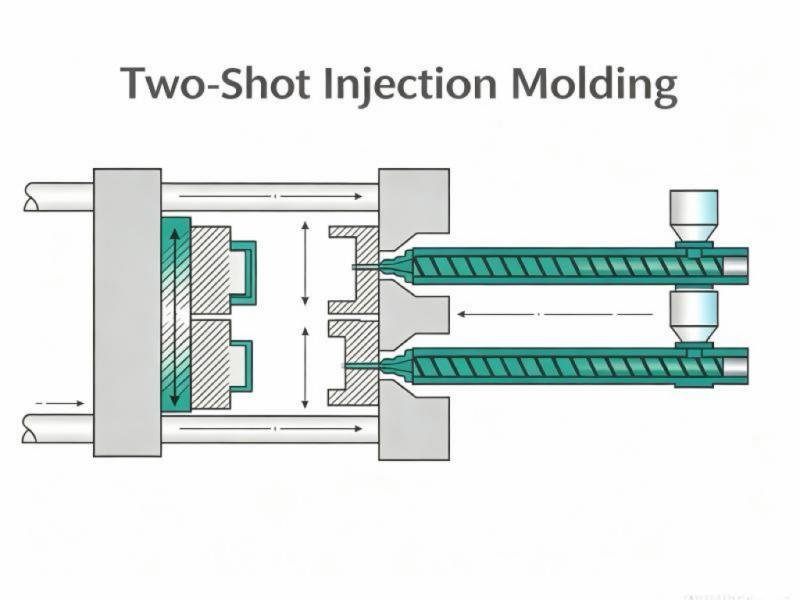
Two-shot injection molding uses two different materials or colors in a single molding cycle. In medical injection molding, it can combine rigid and flexible materials in one component, allowing different areas of a medical part to provide different functions.
Insert Molding
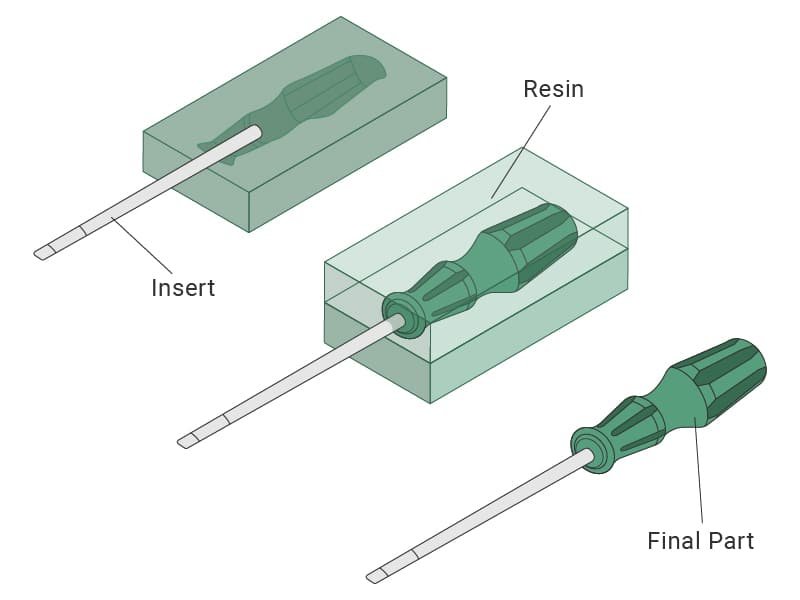
Insert molding places a metal or other preformed component inside the mold before plastic is injected around it. The plastic bonds with the insert as it forms, creating an integrated component. This technique is suitable when a medical component needs stronger structural support, secure embedded components, or a more integrated design.
Overmolding
Overmolding adds one material over an existing molded component to create a multi-material part. In the medical industry, it is used when a component needs a softer or more protective outer layer while retaining the strength and structure of the underlying material. For example, it can improve grip, sealing, cushioning, or protection functions.

Micro Injection Molding
Micro injection molding is used to produce extremely small plastic components with fine features and tight dimensional requirements. The process is well suited to medical applications that require miniature components, such as diagnostic devices, drug delivery systems, and small surgical or laboratory components.
Thin-Wall Injection Molding
Thin-wall injection molding produces components with reduced wall thickness while maintaining the required strength and dimensional accuracy. It can help reduce material usage and part weight while supporting compact medical device designs.
Gas-Assisted Injection Molding
Gas-assisted injection molding introduces gas into the mold cavity during the molding process to form hollow sections and reduce material thickness. In medical equipment, it can be used for larger housings, handles, and structural components that need to remain rigid without becoming unnecessarily heavy. Reducing material in thick sections can also improve dimensional stability and minimize sink marks.
Regulatory Standards of Medical Injection Molding
Medical injection molding is governed by a set of quality, safety, and traceability standards that are designed to protect patients and ensure consistent device performance.
Medical Device Regulations
- FDA 21 CFR Part 820: Defines quality system requirements for medical device manufacturers in the U.S., including design controls, process validation, production records, and corrective actions.
- EU MDR 2017/745: Covers the safety and performance of medical devices in the EU, including clinical evaluation, post-market surveillance, technical documentation, and conformity assessment.
Quality Management Standards
- ISO 13485: The main quality management standard for medical device manufacturing. It covers document control, supplier management, traceability, corrective actions, and consistent processes from design through production.
- ISO 10993: Evaluates the biological safety of medical devices and materials that contact the body. Testing can cover cytotoxicity, sensitization, irritation, and other biological risks based on the type and duration of contact.
- USP Class VI: Evaluates the biocompatibility of plastics used in medical and pharmaceutical applications through tests such as systemic toxicity, intracutaneous reactivity, and implantation. It is commonly referenced when selecting medical-grade injection molding materials.
Manufacturing and Process Controls
- Process validation under IQ (Installation Qualification), OQ (Operational Qualification), and PQ (Performance Qualification): Verifies that injection molding equipment, processes, and outputs consistently meet specifications.
- ISO 14644 Cleanroom Standards (Class 7 or 8): Define controlled environments limiting airborne particles and microbes during medical injection molding.
Key Considerations in Medical Injection Molding
Medical injection molding requires careful control of materials, production conditions, processes, and quality checks to ensure consistent and reliable medical components.
- Material handling: Proper drying, storage, and handling help preserve material properties and biocompatibility.
- Contamination control: Components require controlled molding environments to minimize contamination. Class 7 cleanrooms under ISO 14644-1 are commonly used for components with strict cleanliness requirements.
- Process control: Scientific molding, in-line monitoring, and process validation help maintain consistent dimensions and reduce defects such as warping, sink marks, and voids.
- Inspection and traceability: Dimensional inspection, functional testing, and batch records verify that components meet specified quality and regulatory requirements.
Applications of Medical Injection Molding
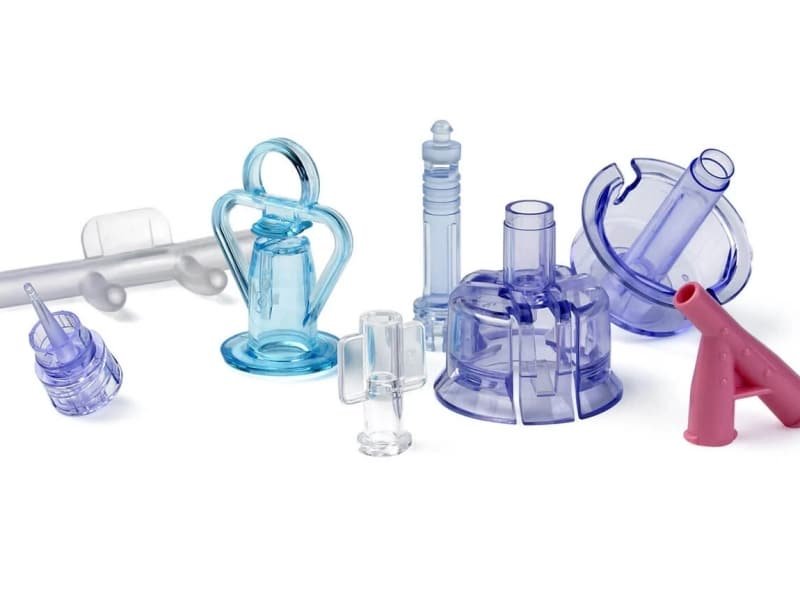
Medical injection molding is ideal for a wide range of applications:
- Syringes and IV connectors
- Vials
- Sample containers
- Diagnostic cartridges
- Blood collection components
- Scalpel handles, trays, and surgical tool housings
The Future of Medical Injection Molding
Medical devices are moving toward smaller sizes, more complex structures, and more specialized functions. These changes are creating new requirements for the way plastic components are molded.
Smaller and More Complex Components
Portable diagnostic devices and minimally invasive tools leave less space for plastic components. Micro injection molding and thin-wall molding make it possible to produce smaller parts with the features and dimensional accuracy these devices require.
Advanced Medical Materials
New medical-grade polymers and material formulations will expand the range of applications for plastic components. High-performance materials with improved biocompatibility, chemical resistance, and sterilization resistance can support more demanding medical environments.
Smarter Process Control
Digital monitoring and automated inspection can provide more detailed control over molding conditions and part quality. Greater use of real-time data can help identify process changes earlier and improve consistency throughout production.
More Sustainable Production
The medical industry is looking for ways to lower the environmental impact of plastic products without affecting safety or performance. Injection molding is moving in this direction through lower material consumption, more energy-efficient equipment, and the use of recyclable plastics when their properties meet the requirements of the application.
Conclusion
Medical injection molding is focused on regulatory compliance, biocompatible materials, tight tolerances, and stringent quality control. It is the preferred method for producing high-precision, sterilizable, and safe medical components. For compliant production support, Erye’s plastic injection molding service can support material selection, tooling, validation, and repeatable part production.