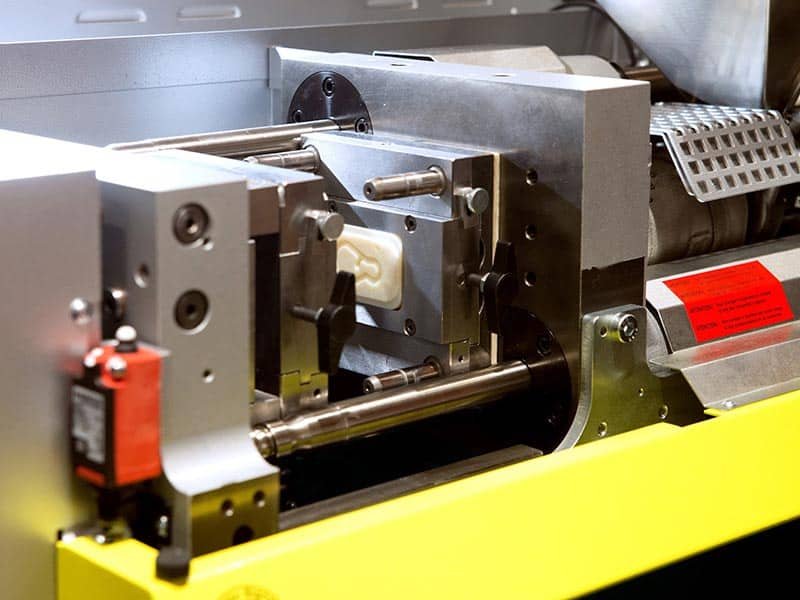
When it comes to injection molding, the tooling materials not only affect the quality and precision of the final product but also impact the cost and efficiency of the manufacturing process. Tooling material refers to the substances used to construct the molds that shape molten plastic into final products. Common options include various steels and aluminum, each suited to different production needs. Selecting the right material for molds ensures durability, reduces production time, and optimizes cost-effectiveness.
Popular Injection Molding Tooling Material Options
There is a wide variety of tooling materials used in injection molding, each with its own strengths and weaknesses. While these materials serve different purposes based on the specific needs of the project, the most common options include the following:
- Aluminum
- S50C
- P20
- NAK80
- H13
- S136
- 718H
1. Aluminum
Aluminum conducts heat effectively, which allows for shorter cooling times during the injection cycle. This results in increased production rates compared to some steel alternatives. The material’s lower density contributes to reduced weight in the mold, simplifying handling and setup. However, aluminum has lower hardness levels, typically around 70-100 HB, which limits its resistance to wear from abrasive fillers in plastics.
Aluminum is often selected for prototyping and low-volume production runs. It suits projects where a quick turnaround is necessary, such as initial testing of consumer products or automotive components. For injection mold material selection, aluminum is appropriate when the part geometry is simple, and the resin is not highly abrasive, like unfilled polypropylene or polyethylene.
Mold life with aluminum generally ranges from 5,000 to 100,000 cycles. This lifespan can vary based on factors such as the type of plastic used and the maintenance practices applied. Regular inspections and surface treatments can extend its usability, but it remains shorter than that of tool steel materials.
2. S50C
S50C is a carbon steel commonly employed as a tooling material in basic injection molding setups. It offers a balance between cost and mechanical strength, with hardness values typically between 180 and 220 HB after pre-hardening. This steel resists deformation during machining, which helps maintain dimensional accuracy in the mold cavities. However, it lacks strong corrosion resistance, making it less ideal for environments with high humidity or acidic resins.
As the materials for mold making, it is chosen for its weldability, which facilitates repairs without extensive downtime. Injection mold material selection favoring S50C often occurs in cost-sensitive projects where high precision is not the primary requirement.
The mold life for S50C tools is usually between 50,000 and 200,000 cycles. This can decrease if the mold encounters aggressive materials or inadequate cooling systems. Proper heat treatment and surface coatings can improve its performance in such scenarios.
3. P20
P20 is a pre-hardened tool steel material widely used in injection molding due to its consistent hardness of 28-32 HRC. It provides good polishability. The material’s uniform structure minimizes distortion during the machining process, which reduces lead times in tool production. P20 also demonstrates solid resistance to wear from standard thermoplastic resins.
Common applications involve medium to high-volume manufacturing, such as electronics enclosures and automotive interior parts. When considering injection mold material selection, P20 is selected for its reliability in producing detailed components without frequent tool replacements. As a tool steel material, it supports texturing and engraving for enhanced part aesthetics.
Mold life for P20 typically extends from 500,000 to 1,000,000 cycles. This durability makes it suitable for sustained operations, though it may require additional hardening for use with filled resins that increase abrasion.
4. NAK80
NAK80 serves as a precipitation-hardened tooling material with hardness levels of 40-43 HRC. It can achieve high-quality surface finishes, often mirror-like. The steel’s composition includes elements that enhance thermal stability, reducing the risk of cracking under repeated heating and cooling cycles.
NAK80 is utilized for molds producing medical devices, lenses, and consumer electronics with cosmetic requirements. The NAK80 tool is preferred in precision engineering, where minimal defects are tolerated.
The expected mold life is 500,000 to over 1,000,000 cycles. Factors like resin compatibility and cycle time optimization can influence this range, ensuring longer service in controlled conditions.
5. H13
H13 is a hot-work tool steel material known for its performance in elevated temperature environments. With hardness ranging from 45-52 HRC after heat treatment, it resists thermal fatigue and maintains structural integrity during prolonged exposure to heat. The chromium content in H13 improves its toughness and ability to handle impact loads.
H13 is commonly used in industries such as automotive, aerospace, and heavy equipment manufacturing, where molds need to withstand harsh conditions and high-temperature environments.
Mold life can exceed 1,000,000 cycles, potentially reaching 2,000,000 with effective cooling channels and regular maintenance. This extended lifespan supports cost efficiency in large-scale operations.
6. S136
S136 is a stainless steel variant used as a tooling material, offering corrosion resistance suitable for challenging conditions. Hardened to 48-52 HRC, it provides high purity levels that reduce inclusions and improve overall mold quality. Its composition allows for excellent polishing, resulting in defect-free surfaces on molded items.
S136 is used for producing high-precision, high-quality molds in industries such as medical devices, food packaging, and high-end consumer goods. It is particularly suitable for molds that need to meet strict hygiene standards.
Mold life generally falls between 500,000 and 1,500,000 cycles. It performs particularly well in scenarios involving chemical exposure, outlasting non-stainless alternatives.
7. 718H
718H is a modified pre-hardened tool steel material with a hardness of 30-36 HRC. It incorporates nickel to enhance toughness and uniformity across large mold sections. This steel machine is efficient and resists warping, making it practical for complex tool designs.
718H is commonly used in aerospace, automotive, and medical industries, where molds need to endure extreme conditions and still produce high-quality parts consistently.
The mold life ranges from 500,000 to 1,000,000 cycles, providing consistent output in varied manufacturing contexts
Choosing the Right Injection Mold Tooling Material
Selecting the right tooling material is a key factor in ensuring the efficiency and success of an injection molding project. Several factors must be taken into account when making this decision:
Production Volume: If you’re working with low to medium-volume production, materials like aluminum or P20 steel may be more cost-effective. For high-volume runs, more durable materials like H13 or 718H are better suited due to their ability to withstand the demands of mass production.
Mold Life Requirements: The longevity of a mold is critical, especially in industries requiring continuous production. Materials like NAK80 and S136 offer longer mold life, which can justify the higher initial cost for longer-term projects.
Material of the Molded Part: The type of material being molded plays a significant role in tooling material selection. For high-temperature plastics, tool steels like H13 are better suited, as they can withstand the heat and pressure of these materials.
Cost: The cost of tooling materials can vary significantly, with aluminum being the least expensive option and high-end tool steels like 718H being much more costly.
Machinability: Tool steels and alloys like P20 and S50C are easier to machine compared to harder materials like 718H, which can require more advanced equipment for precision manufacturing.
What Does Erye Molding Use to Make Injection Molds?
At Erye, we take great care in selecting the right tooling materials to meet the specific needs of our clients. For prototypes and low-volume runs, we often opt for aluminum or P20 steel, which offer the right balance of cost-effectiveness and durability. For higher-volume production, we utilize more robust materials like H13 or 718H. Want to start a new injection molding project? Welcome to contact us and get a custom injection molding service.