Adding text, lettering, and symbols to manufactured parts is a common requirement driven by various factors, including functional necessity, legal compliance, and corporate branding. Text can serve as assembly instructions, provide critical safety warnings, or simply display a company logo. Monogram logos and letters are essential marketing elements, and incorporating these features directly into the mold offers the significant benefit of saving the expense of stick-on or painted labels. Designing a product name or company logo on a part is a regular occurrence, but this small detail can create large problems if approached incorrectly.
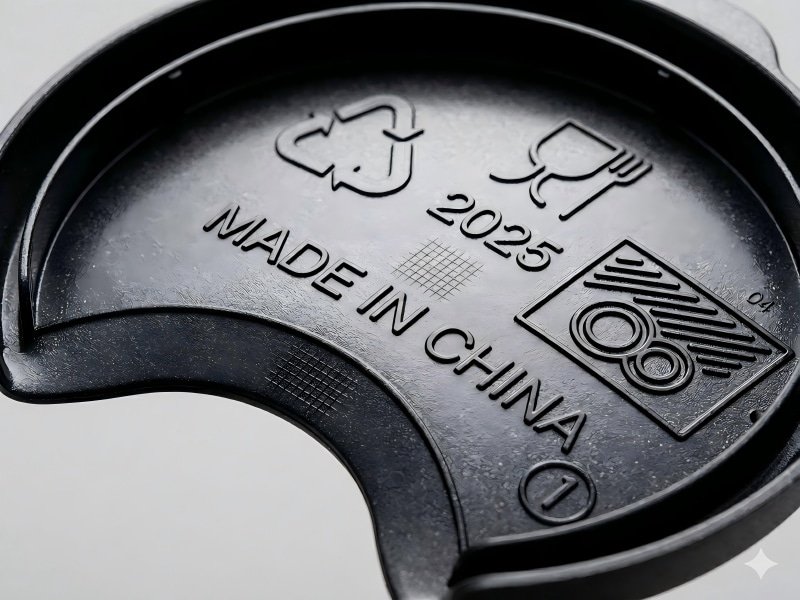
Text on a plastic lid is a common feature, but this small detail can create large problems if approached incorrectly.
The method chosen for incorporating text is highly dependent on the manufacturing process, the material used, and the desired visual and durability outcome.
Symbol and Text Design on Molded Parts
When adding text during the primary manufacturing process, the core decision revolves around engraving/debossing (cutting into the surface) versus embossing (raising the text from the surface). For molded plastic parts, embossing into the mold is the preferred approach because:
- Raised text is directly tooled into the mold, eliminating secondary processes.
- It simplifies molding and reduces manufacturing time and expenses.
- Mold polishing is easier, and molds last longer compared to debossed text.
- Embossed text is easier to read and collects less dust or debris.
- Removable mold inserts allow changes in text without reworking the entire mold.

Design Tips for Embossed Text and Lettering in Injection Molded Parts
The preferred approach for injection molded plastic parts to design the text such that it is milled into the mold, resulting in embossed text (raised lettering) on the final plastic part. The following outlines the best practices for incorporating embossed text features into injection molded parts, including height, font, and alignment rules.
- Type Preference: Embossed (raised from the surface)
- Text Size: Typical height is 0.2~0.5mm, and the line width is 0.3~0.8mm
- Minimum Size: At least 20 points or larger.
- Font Style: Bold Sans-Serif fonts are mandatory to ensure consistent wall thickness for milling. Recommended examples: Century Gothic Bold, Arial, Verdana.
- Text Alignment: Align the text perpendicular to the parting line for easier mold ejection.
- Draft/Release Angle: Add 1°–2° draft on vertical faces (up to 3°–5° on textured surfaces) and fillets on sharp corners to aid ejection and mold filling.
- Feature Location: Avoid placing text at the top of tall features (e.g., tall ribs).
- Corner Fillets: Sharp corners in text (e.g., in the legs of “K”, cross-bars of “T”) should be given fillets of at least ~0.2–0.5 mm to facilitate mould filling, reduce stress concentrations, and improve tooling life.
The minimum acceptable stroke width, text height (projection) and draft angle depend on factors including the resin shrinkage, mold surface texture, and finish requirement. For example, heavily textured surfaces may require higher text projection and larger draft angles for legibility and clean ejection.
Other Methods to Realize Symbols on Molded Parts
When the design requirements go beyond the capabilities of standard CNC machining or basic injection molding such as requiring fine detail, multi-color logos, special textures, or illumination, specialized post-processing and advanced molding techniques are necessary. These methods introduce additional manufacturing steps but allow for greater versatility, durability, and unique visual effects. The following summarizes the characteristics, advantages, and disadvantages of various methods used to add logos, letters, and symbols to molded products. Pad Printing and Silk Screen Printing fall under Post-Processing (Printing); Laser Engraving under Post-Processing (Marking); and the remaining methods such as Double Injection Molding, Integrated Mold, Inlay/Veneer etc belongs to Advanced Integration techniques.
Pad Printing
Key Feature: Ink transferred via silicone pad from etched plate
Advantages: Prints on curved surfaces, fast, fine lines, multi-color
Disadvantages: Thin ink layer, no texture, not for large areas
Silk Screen Printing
Key Feature: Ink pushed through patterned screen
Advantages: Textured print, suitable for large areas
Disadvantages: Not for curved surfaces
Laser Engraving
Key Feature: Laser etches surface or inside transparent materials
Advantages: Precise, permanent, textured
Disadvantages: Color cannot be changed
Double Injection Molding
Key Feature: Two colors/materials injected in same mold
Advantages: Durable, integrated, two-tone, glass-like
Disadvantages: Requires dual-injection machine
Integrated Mold
Key Feature: Logo formed in mold (raised or recessed)
Advantages: Cost-effective, permanent, 3D effects
Disadvantages: Limited by mold complexity
Inlay/Veneer
Key Feature: Contrasting material inserted or applied
Advantages: Unique textures/colors, raised/recessed
Disadvantages: Adds assembly/multi-step process
Depressed Painting
Key Feature: Logo in recessed area, then electroplated
Advantages: Contrasting color/metallic effect
Disadvantages: Risk of warping, careful material choice
Partial Polishing / Hot Stamping
Key Feature: Metal/ceramic logo polished or foil applied
Advantages: Metallic texture, professional finish
Disadvantages: Needs heat-resistant material
Hollow Out
Key Feature: Mold void filled with molten plastic
Advantages: Accurate negative-space replication, high volume
Disadvantages: Requires dedicated mold
Logo Shines
Key Feature: Light-transmitting logo with internal LEDs
Advantages: Illuminated, high visual impact
Disadvantages: Needs electronics and translucent materials
Standards and Regulatory Requirements
Marking molded parts with text, symbols, or identification codes is not only useful for branding and traceability but is also required under several international standards. These standards ensure consistent material identification, enable recycling and waste management, and support regulatory compliance for various industries such as automotive, electronics, and packaging. Among the most recognized frameworks are ISO and ASTM standards, which define uniform systems for marking plastic products and their materials.
Below provides an overview of major international standards governing the identification and marking of molded plastic parts. These standards ensure global consistency, assist in material traceability, and support sustainability through easier sorting and recycling of end-of-life components.
ISO 11469:2016 – Plastics Identification of plastic products
This standard provides a uniform system for marking plastic products using abbreviated symbols from ISO 1043. The symbols specify the material used in the plastic item. Uniform system for marking plastic parts with abbreviated codes between “> <” for handling, recycling, and disposal.
Relevant Reference: ISO 11469:2016, Clause 4
Symbols Example:
- “>ABS<” for acrylonitrile-butadiene-styrene
- “>PP-GF30<” for polypropylene with 30% glass fiber
- “>hdpe<” for high-density polyethylene
ASTM D7611 – Resin Identification Code (RIC)
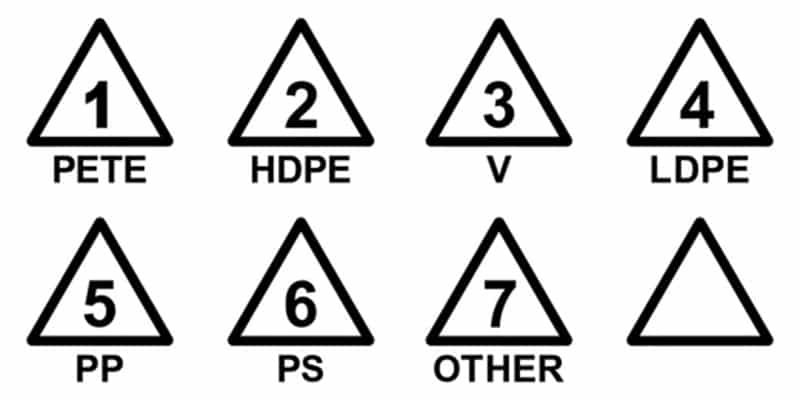
ASTM D7611 complements the ISO 11469 standard, introducing a triangular recycling symbol along with the resin number and abbreviation to facilitate sorting, recovery, and recycling of plastics. It is a triangular recycling code showing resin number and abbreviation for sorting and recycling.
Relevant Reference: ASTM D7611, Section 4.3
Symbols Example:
- 2 HDPE – High-Density Polyethylene
- 1 PET – Polyethylene Terephthalate
ISO 16396-1:2022 – Polyamide Nomenclature
ISO 16396-1:2022 provides detailed nomenclature and data blocks for polyamides. It includes the polymer type, additives, fillers, and mechanical properties for specific plastic products. It is classified based on processing method, additives, and reinforcement.
Relevant Reference: ISO 16396-1:2022, Clause 6
Symbols Example:
- PA6 for Polyamide 6
- PA66 for Polyamide 66
Conclusion
The successful integration of text and symbols into molded parts requires a multi-faceted approach, balancing the fundamental goals of permanence, aesthetic flexibility, and regulatory compliance. Embossed text is preferred for injection molding due to its readability, durability, and manufacturing efficiency, following best practices such as proper draft angles, fillets, and height. When advanced visual effects or multi-material designs are required, post-processing methods like pad printing, laser engraving, and advanced integration techniques such as double injection molding or inlay are employed. Furthermore, adherence to international standards such as ISO 11469 and ASTM D7611 ensures material traceability, regulatory compliance, and sustainability through proper identification and recycling of molded products.