
What is EPDM Injection Molding
EPDM injection molding uses Ethylene Propylene Diene Monomer (EPDM) rubber compounds to create molded rubber components. EPDM is a synthetic elastomer made from ethylene, propylene, and diene monomer, offering excellent flexibility, durability, and resistance to ozone, UV radiation, weathering, heat, and moisture. These material characteristics allow EPDM rubber to maintain stable performance under challenging environmental conditions. Through injection molding technology, EPDM compounds can meet specific design and performance requirements.
Why Use Injection Molding for EPDM
- Suitable for High-Volume Production: The automated nature of EPDM injection molding allows continuous production with repeatable cycles.
- Better Dimensional Accuracy and Consistency: Injection molding allows accurate control of parameters such as material flow and temperature, resulting in more stable dimensions and uniform quality.
- Reduced Labor Requirements and Production Waste: The automated nature of injection molding minimizes manual handling and optimizes material use, reducing waste.
- Maintains EPDM Material Performance:The controlled molding environment allows EPDM rubber to retain its key properties, including excellent weather resistance, flexibility, and long-term durability.
EPDM Injection Molding Process
The EPDM injection molding process involves multiple stages that transform raw rubber compounds into finished molded components.
1. EPDM Compound Preparation
Raw EPDM rubber is combined with various additives, including fillers, curing agents, plasticizers, and stabilizers, to achieve the desired characteristics such as hardness, elasticity, and durability. Proper formulation control is essential because the compound composition directly affects molding performance and final part properties.
2. Material Conditioning and Plasticizing
3. Injection into the Mold Cavity
4. Vulcanization and Curing
5. Cooling and Trimming
After curing is completed, the molded EPDM component is cooled and removed from the mold. Following demolding, additional finishing operations may be required to remove excess rubber or flash generated during molding. The finished EPDM parts are then inspected to verify dimensions, surface quality, and material performance.

Process Conditions for EPDM Injection Molding
Achieving high-quality EPDM molded parts requires precise control of several processing parameters. Factors such as temperature, injection pressure and speed, and cooling time all influence final product reliability.
Temperature Control
In general, mold and nozzle temperatures are commonly controlled within approximately 50°C to 100°C. The injection and mold temperatures must be adjusted according to the specific rubber formulation. Proper temperature settings allow the EPDM compound to achieve suitable flow characteristics while preventing premature curing during injection.
Injection Pressure and Speed
Curing and Cooling Time
Applications for EPDM Injection Molding
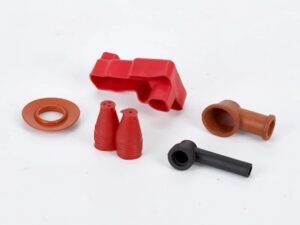
Automotive Industry
The automotive industry widely uses EPDM molded parts for exterior sealing and protection applications. These components help prevent water intrusion and minimize noise and vibration. Common applications include door seals, window channels, trunk seals, wire harness grommets, and vibration isolators.
Construction Industry
EPDM’s excellent weather resistance allows it to withstand prolonged exposure to sunlight, rain, and temperature fluctuations, making it an ideal material for outdoor construction applications. It is commonly used to produce roofing accessories, edge seals, and other protective components.
Electrical Industry
EPDM injection molding is widely applied in electrical applications where insulation and environmental protection are required. Molded EPDM components include cable boots, wire grommets, connector seals, and protective covers.
Industrial Machinery
Beyond sealing applications, EPDM is commonly used for vibration management in industrial equipment and transportation systems. Common applications include vibration isolators, dampers, bushings, and shock-absorbing components.
Conclusion
EPDM injection molding is a practical solution for producing rubber components that require reliable performance, consistent quality, and efficient manufacturing. With its ability to support complex designs and high-volume production, this molding method is widely used for various industrial requirements. As an experienced rubber molding manufacturer, we provide professional EPDM injection molding services, helping customers develop high-quality EPDM rubber products that meet their project requirements and industry standards.