
POM Plastic Manufacturing Guide
What Is POM – What Does POM Stand For?
POM plastic full form is Polyoxymethylene, also commonly called Acetal, Polyacetal, or Delrin® (a well-known brand name).
POM is a semi-crystalline engineering thermoplastic made from repeating formaldehyde-based molecular chains. Its molecular structure gives the material high stiffness, low friction, excellent fatigue resistance, and outstanding dimensional stability.
Key characteristics of POM include:
- High mechanical strength and rigidity
- Excellent wear and abrasion resistance
- Low moisture absorption
- Smooth surface finish and low friction behavior
- Good dimensional consistency for precision components
Different Types of POM
Below are several common POM grades. Each type is modified for specific applications and performance requirements.
Homopolymer POM
Offers higher stiffness, hardness, and tensile strength. It performs well in precision mechanical parts that require excellent rigidity and wear resistance.
Copolymer POM
Provides improved thermal stability and better resistance to hydrolysis and chemicals compared to homopolymer grades. Commonly selected for industrial and automotive components.
Glass-Filled POM
Reinforced with glass fibers to increase stiffness, dimensional stability, and load-bearing capability. Suitable for structural parts under mechanical stress.
UV-Stabilized POM
Contains UV stabilizers to reduce degradation from sunlight exposure. Used for outdoor mechanical parts or exposed applications.
Low-Friction / Lubricated POM
Modified with internal lubricants such as PTFE or silicone additives into POM resin to reduce friction and wear. Ideal for gears, bushings, sliders, and moving assemblies.
Properties and Features of POM
POM combines strength, precision, and low-friction performance. Its balance of dimensional stability, fatigue resistance, and machinability makes it widely used for precision engineering plastic parts.
Below are the key properties of POM.
Physical Properties of POM Plastic
- High stiffness and rigidity
- Excellent wear and abrasion resistance
- Low coefficient of friction
- Excellent fatigue resistance
- Low moisture absorption
- Good dimensional stability
- Smooth surface finish
- Good machinability
- Low creep under long-term load
- Good electrical insulation properties
Chemical Properties
- Dilute Acids: Moderate
- Dilute Alkalis: Good
- Oils and Greases: Excellent
- Fuels and Solvents: Good
- Aromatic Hydrocarbons: Moderate
- Strong Acids: Poor
- Oxidizing Agents: Poor
- Alcohols: Good
Mechanical Properties of POM Plastic
- Elongation at break: 15 – 40 %
- Flexural modulus: 2.5 – 3.5 GPa
- Hardness Rockwell: M80 – M90
- Density: 1.41 – 1.43 g/cm³
- Tensile strength: 60 – 75 MPa
- Compressive strength: High
- Impact resistance: Moderate to good
- Coefficient of friction: Low
- Heat deflection temperature: 100 – 140 °C depending on grade
- Continuous operating temperature: approximately -40 °C to 100 °C
Electrical Properties of POM Plastic
- Dielectric Constant: 3.6 – 4.0
- Dielectric Strength: 19 – 25 kV/mm
- Volume Resistivity: High
- Arc Resistance: Good
- Dissipation Factor: Low
Advantages & Disadvantages of POM Plastic
Below are the main advantages and disadvantages of POM plastic material. Understanding these characteristics helps determine whether POM is suitable for your product’s mechanical, environmental, and dimensional requirements.
Advantages of POM Plastic
Excellent dimensional stability
Low friction and self-lubricating properties
High stiffness and mechanical strength
Excellent wear and fatigue resistance
Low moisture absorption
Disadvantages of POM Plastic
Poor UV resistance without stabilization
Standard POM does not perform well under prolonged sunlight exposure. Without UV stabilizers, the material may discolor, become brittle, or lose mechanical properties over time.
Sensitive to strong acids and oxidizers
Although POM resists many chemicals, it is vulnerable to strong acids, chlorine-based chemicals, and oxidizing environments, which can cause material degradation.
Difficult to bond or paint
Because of its low surface energy, adhesives, coatings, and paints do not adhere easily to POM without special surface treatments.
Relatively high thermal expansion
Like many thermoplastics, POM expands and contracts with temperature changes. This must be considered in precision assemblies with tight tolerances.
Flammability concerns
Standard POM grades are combustible and may release formaldehyde-containing gases during overheating or combustion. Flame-retardant POM grades may be required for electrical or safety-sensitive applications.
POM Plastic Manufacturing Process
POM plastic parts can be produced using several manufacturing methods. The best process depends on part geometry, tolerance requirements, production volume, and surface finish expectations.
Injection Molding
CNC Machining
Extrusion
Overmolding
POM Plastic Applications
POM is widely used in industries that require precision, wear resistance, and reliable mechanical performance.
Typical applications include:
- Gears, bearings, bushings, and rollers
- Automotive fuel system and interior mechanical components
- Conveyor system parts and industrial machinery components
- Snap-fit connectors and precision housings
- Electrical switches and insulating components
- Consumer products requiring smooth movement and durability
- Valve bodies, pump parts, and fluid handling components


Materials Similar to POM and How to Choose
POM vs Nylon (PA)
Key Differences
How to Choose
POM vs ABS
Key Differences
How to Choose
POM vs PTFE
Key Differences
How to Choose
POM vs HDPE
Key Differences
How to Choose
POM vs UHMW-PE
Key Differences
How to Choose
Get POM Plastic Part
POM Plastic Material FAQs
Can POM be used outdoors?
Standard POM has limited UV resistance and may become brittle after long-term sunlight exposure. UV-stabilized grades are recommended for outdoor use.
Is POM plastic strong?
Yes. POM is a strong engineering plastic. In practical use, POM is strong enough for gears, bushings, rollers, clips, and load-bearing moving parts, but it is not as impact-resistant as polycarbonate.
Is POM suitable for food contact applications?
Yes, but only specific certified grades. Standard industrial POM is not automatically food-safe unless certification is provided.
What temperature can POM withstand?
POM typically works well in temperatures from around -40 °C to 100 °C during continuous use, and can reach short-term peak temperature around 120 °C. Above 100 °C, POM starts to lose stiffness and dimensional accuracy.
Does POM warp easily?
POM has good dimensional stability, but like many semi-crystalline plastics, improper molding conditions or uneven wall thickness may cause warping.
What surface finish does POM have?
POM naturally provides a smooth, low-friction surface finish, normally glossy or semi-gloss appearance after molding, and has very low surface roughness compared with ABS or PP.
Is POM expensive?
POM is more expensive than commodity plastics like ABS or PP, but it offers better mechanical performance and wear resistance for engineering applications.
Is POM chemically resistant?
POM resists oils, fuels, greases, and many industrial chemicals well, but it performs poorly against strong acids and oxidizing agents.
Related Resources of POM Plastic Manufacturing
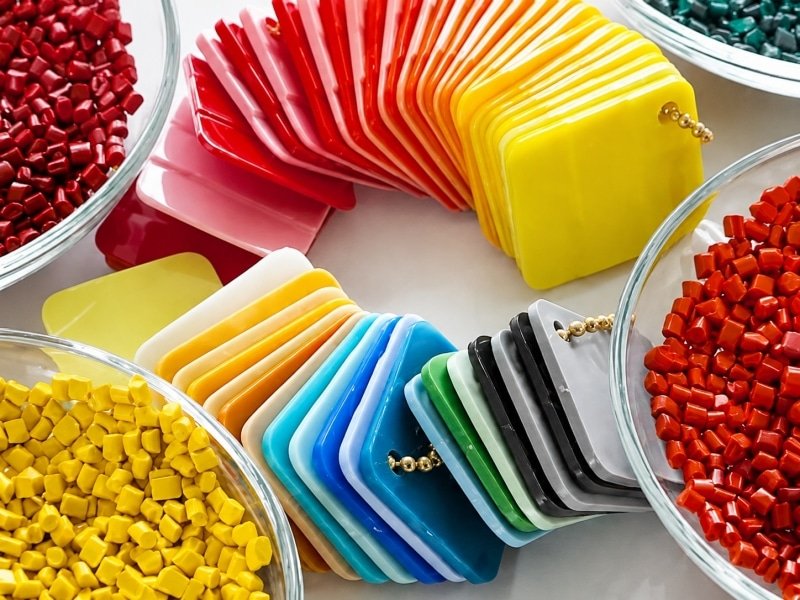
Plastic material selection is one of the most important decisions in the injection molding process.
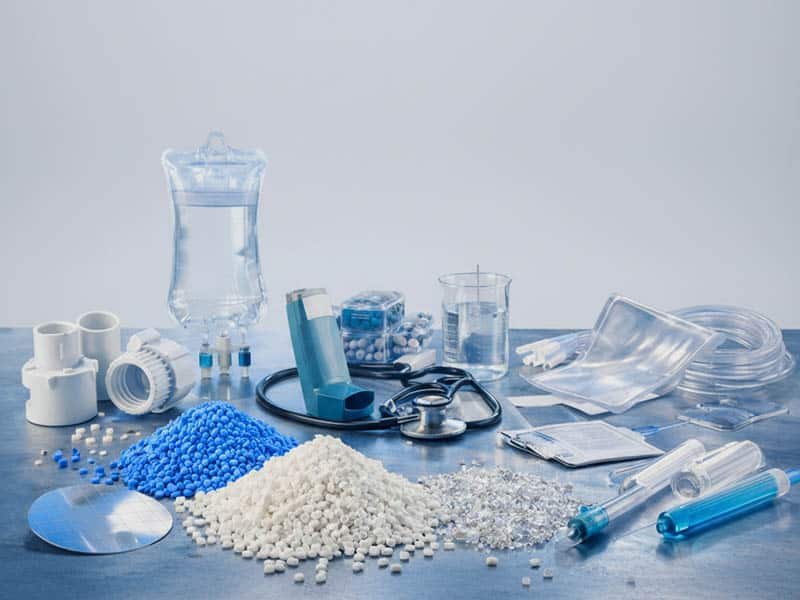
Plastics for medical devices provide safer, more cost-effective, and customizable solutions compared to traditional materials.
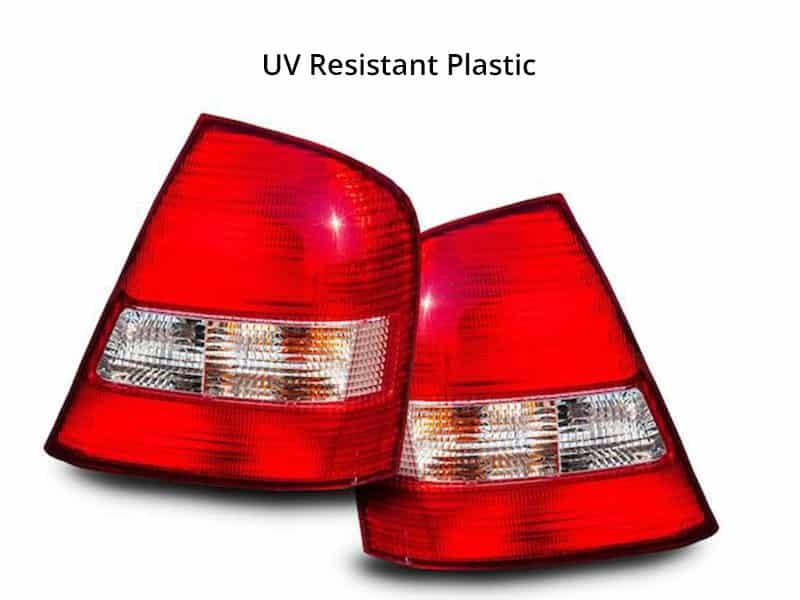
Ultraviolet (UV) radiation from sunlight causes gradual degradation in many plastic materials. This process, known
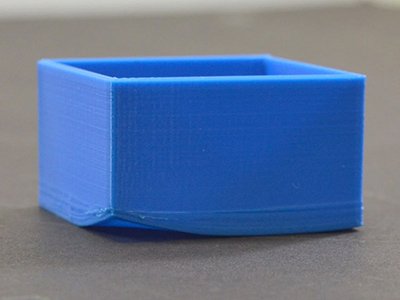
Dimensional control is a central concern in injection molding. Even when the mold is precisely
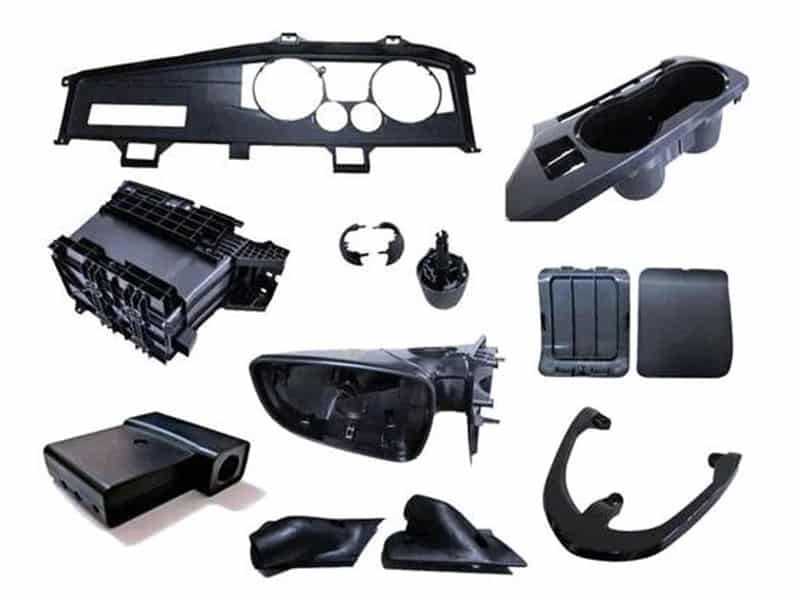
Plastics have become a primary material in modern vehicle manufacturing. The use of automotive plastic
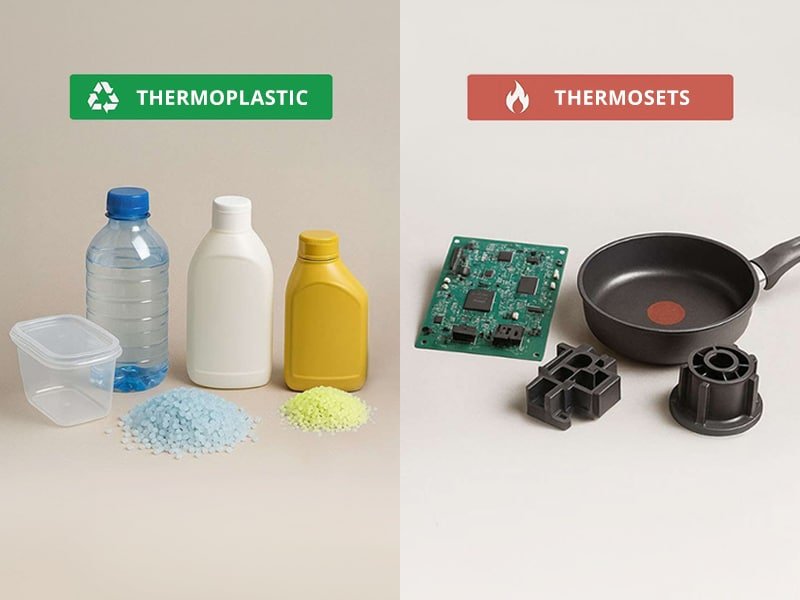
Polymer materials are BY FAR the most unique materials in modern manufacturing. You see them